



| HEADLINE |

|

Dutch-Bangladesh cooperation can expand safe drinking water access: Ambassador
Published : Friday, 14 August, 2026 at 5:35 PM
Observer Online Desk


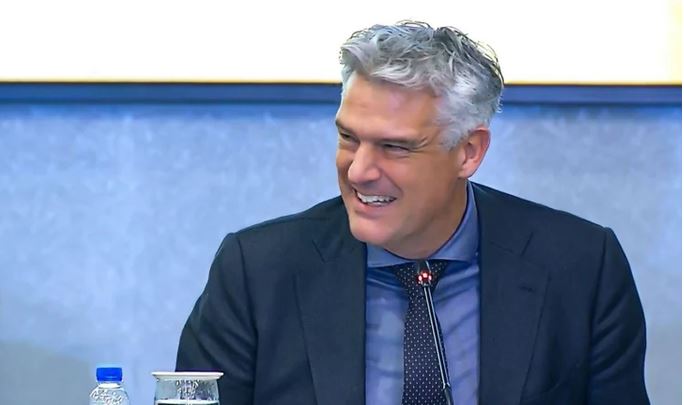
Dutch Ambassador Joris Van Bommel said that cooperation between the Netherlands and Bangladesh can help expand access to safe drinking water, particularly in climate-vulnerable communities, through public-private partnerships.
He made the remarks while speaking to journalists during a visit to the Building Water Business programme of Max Foundation at Dudholmou in Bakerganj of Barishal on Thursday, said a press release here today.
The ambassador visited the facility to observe how smart, low-maintenance piped water systems, combined with digital payment solutions, enable efficient operations, transparent revenue collection and financially sustainable water services in climate-vulnerable areas.
Joris Van Bommel said the two countries had much in common when it came to water management, as both are shaped by deltas, rivers and the sea.
"Water, delta, sea and rivers provide a strong basis for cooperation between the Netherlands and Bangladesh," he said, stressing that water cooperation should also ensure access to drinking water for everyone.
The ambassador said his visit, together with Max Foundation and Max Social Enterprise, was aimed at seeing how the "last mile" of water connectivity could be addressed so that communities could get piped water at their homes.
He said access to tap water was important not only for improving the quality of water but also for reducing the burden on women and girls, who often have to travel considerable distances to collect water.
The ambassador said the experience in Barishal demonstrated that sustainable water services could be developed through cooperation among the government, private sector and communities.
"We sincerely believe that that's a sustainable solution to make sure that every household in Bangladesh do get access to water in the house, but also that it's affordable in a public-private partnership perspective way," he said.
He said the visit to the off-grid water facilities in Barishal had also provided an opportunity to see how such systems were operating at the community level.
Van Bommel expressed satisfaction at seeing the Netherlands work with Bangladeshi communities and companies through Max Foundation and Max Social Enterprise to improve access to water. "We can make a difference if we work together with companies and with communities," he said.
Max Foundation Founder and Director Joke Le Poole said the organisation had started working more than two decades ago, initially focusing on water, sanitation and hygiene as essential means of preventing child deaths.
She said the organisation chose Bangladesh because of its high needs and population density and began its work in Barishal with water wells. Many of those wells, she noted, were still functioning after 15 to 20 years.
However, as people's economic capacity increased, they began seeking better access to water, she said, adding that piped water at home could bring significant health benefits and that people were willing to pay for such services.
Max Foundation Bangladesh and Nepal Country Director Dr ATM Tariqul Islam said Max Foundation and Max Social Enterprise had developed a business-based solution for piped drinking water in Barishal and Patuakhali.
Unlike aid- or donation-dependent projects, the model is designed to operate through a Market Based Solution to water supply. Customers pay in monthly basis for the water they receive, he added.
He said the initiative had so far established around 100 water grids and was gradually introducing improvements such as solar power and automation to reduce operating costs and make the businesses more financially sustainable.
According to Dr Tariqul, improved access to piped water had also contributed to reductions in skin and stomach diseases, while women were benefiting from shorter distances to collect water and improved access to household bathrooms and wash facilities.
Dutch Embassy First Secretary (Water and Climate) Klaassen Inge Senior Financial Advisor Aminul Islam and Max Social Enterprise Managing Director Yameen farook were present during the visit.
He made the remarks while speaking to journalists during a visit to the Building Water Business programme of Max Foundation at Dudholmou in Bakerganj of Barishal on Thursday, said a press release here today.
The ambassador visited the facility to observe how smart, low-maintenance piped water systems, combined with digital payment solutions, enable efficient operations, transparent revenue collection and financially sustainable water services in climate-vulnerable areas.
Joris Van Bommel said the two countries had much in common when it came to water management, as both are shaped by deltas, rivers and the sea.
"Water, delta, sea and rivers provide a strong basis for cooperation between the Netherlands and Bangladesh," he said, stressing that water cooperation should also ensure access to drinking water for everyone.
The ambassador said his visit, together with Max Foundation and Max Social Enterprise, was aimed at seeing how the "last mile" of water connectivity could be addressed so that communities could get piped water at their homes.
He said access to tap water was important not only for improving the quality of water but also for reducing the burden on women and girls, who often have to travel considerable distances to collect water.
The ambassador said the experience in Barishal demonstrated that sustainable water services could be developed through cooperation among the government, private sector and communities.
"We sincerely believe that that's a sustainable solution to make sure that every household in Bangladesh do get access to water in the house, but also that it's affordable in a public-private partnership perspective way," he said.
He said the visit to the off-grid water facilities in Barishal had also provided an opportunity to see how such systems were operating at the community level.
Van Bommel expressed satisfaction at seeing the Netherlands work with Bangladeshi communities and companies through Max Foundation and Max Social Enterprise to improve access to water. "We can make a difference if we work together with companies and with communities," he said.
Max Foundation Founder and Director Joke Le Poole said the organisation had started working more than two decades ago, initially focusing on water, sanitation and hygiene as essential means of preventing child deaths.
She said the organisation chose Bangladesh because of its high needs and population density and began its work in Barishal with water wells. Many of those wells, she noted, were still functioning after 15 to 20 years.
However, as people's economic capacity increased, they began seeking better access to water, she said, adding that piped water at home could bring significant health benefits and that people were willing to pay for such services.
Max Foundation Bangladesh and Nepal Country Director Dr ATM Tariqul Islam said Max Foundation and Max Social Enterprise had developed a business-based solution for piped drinking water in Barishal and Patuakhali.
Unlike aid- or donation-dependent projects, the model is designed to operate through a Market Based Solution to water supply. Customers pay in monthly basis for the water they receive, he added.
He said the initiative had so far established around 100 water grids and was gradually introducing improvements such as solar power and automation to reduce operating costs and make the businesses more financially sustainable.
According to Dr Tariqul, improved access to piped water had also contributed to reductions in skin and stomach diseases, while women were benefiting from shorter distances to collect water and improved access to household bathrooms and wash facilities.
Dutch Embassy First Secretary (Water and Climate) Klaassen Inge Senior Financial Advisor Aminul Islam and Max Social Enterprise Managing Director Yameen farook were present during the visit.
Loading...
Loading...
Also read





Editor : Iqbal Sobhan Chowdhury
Published by the Editor on behalf of the Observer Ltd. from Globe Printers, 24/A, New Eskaton Road, Ramna, Dhaka.
Editorial, News and Commercial Offices : Aziz Bhaban (2nd floor), 93, Motijheel C/A, Dhaka-1000.
Phone: PABX- 41053001-06; Advertisement: 41053012; 01793317829, 01550707291, E-mail: [email protected], [email protected] Online: email: [email protected] 41053014; 01550707297 Advertisement: 01550707296
Published by the Editor on behalf of the Observer Ltd. from Globe Printers, 24/A, New Eskaton Road, Ramna, Dhaka.
Editorial, News and Commercial Offices : Aziz Bhaban (2nd floor), 93, Motijheel C/A, Dhaka-1000.
Phone: PABX- 41053001-06; Advertisement: 41053012; 01793317829, 01550707291, E-mail: [email protected], [email protected] Online: email: [email protected] 41053014; 01550707297 Advertisement: 01550707296


