



| HEADLINE |

|

Rooppur to add 300 MW of electricity to national grid in Sept
Published : Monday, 17 August, 2026 at 1:30 PM
Observer Online Report


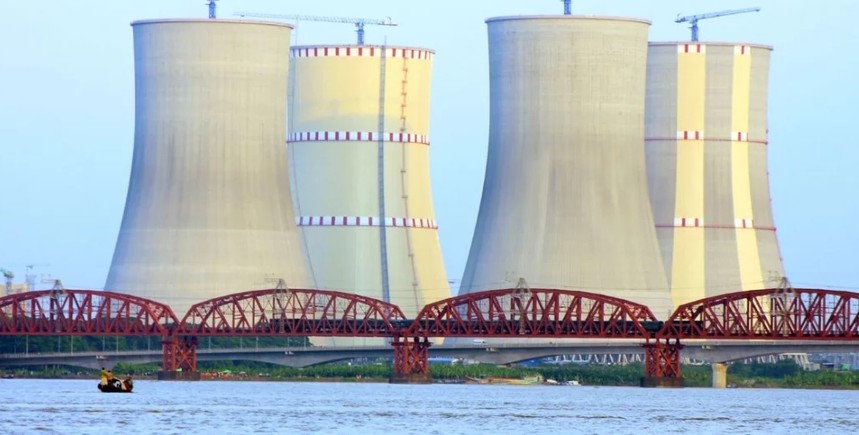
If everything goes as planned, the first unit of the Rooppur Nuclear Power Plant is expected to begin supplying electricity to the national grid on a trial basis in September.
Initially, the unit will supply 300 megawatts of electricity. To meet this target, final-stage technical tests are now being carried out intensively at the power plant. If the trial supply is successful, the unit is expected to enter full commercial operation within the following few months, marking a new chapter in the country’s overall energy security.
Bangladesh is currently facing a power generation crisis due largely to a shortage of gas for gas-fired power plants, resulting in increasing load-shedding.
Against this backdrop, the Rooppur plant has repeatedly emerged as an alternative source of electricity. People are also waiting to see when the plant will begin supplying power to the national grid.
According to sources, uranium fuel has already been loaded into the reactor of the first unit. More than 100 tests have been successfully completed in two phases, while the remaining tests are being completed in stages.
The Bangladesh Atomic Energy Regulatory Authority is approving each stage after verification and assessment. Once operational, the plant will be capable of generating electricity continuously 24 hours a day. After a fuel loading, a unit can generate electricity for around 18 months. It may then need to remain shut down for up to about two months for refuelling.
For transmitting electricity from Rooppur, infrastructure involving the Baghabari 230kV, Bogura 400kV and another 400kV facility in Gopalganj was initially planned. Most of these facilities have already been commissioned. However, further preparations are needed to transmit electricity at full capacity.
Power and Energy Minister Iqbal Hasan Mahmud Tuku said, “The national grid system is not yet fully capable of coordinating with the rapid power generation of the nuclear power plant. If this coordination is not properly established, the country’s power supply system could collapse at any time.”
He further added, “Therefore, alongside working with the Bangladesh Power Development Board (BPDB), we are bringing in experts from countries experienced in nuclear power management and foreign consultants to carry out the necessary upgrades and preparations.”
Dr Khandaker Golam Moazzem, research director at the Centre for Policy Dialogue (CPD), said, “A number of payments related to the Rooppur Nuclear Power Plant remain pending. Since the United States and European countries have imposed various sanctions on financial transactions involving Russia, there are some restrictions on these transactions.”
Initially, the unit will supply 300 megawatts of electricity. To meet this target, final-stage technical tests are now being carried out intensively at the power plant. If the trial supply is successful, the unit is expected to enter full commercial operation within the following few months, marking a new chapter in the country’s overall energy security.
Bangladesh is currently facing a power generation crisis due largely to a shortage of gas for gas-fired power plants, resulting in increasing load-shedding.
Against this backdrop, the Rooppur plant has repeatedly emerged as an alternative source of electricity. People are also waiting to see when the plant will begin supplying power to the national grid.
According to sources, uranium fuel has already been loaded into the reactor of the first unit. More than 100 tests have been successfully completed in two phases, while the remaining tests are being completed in stages.
The Bangladesh Atomic Energy Regulatory Authority is approving each stage after verification and assessment. Once operational, the plant will be capable of generating electricity continuously 24 hours a day. After a fuel loading, a unit can generate electricity for around 18 months. It may then need to remain shut down for up to about two months for refuelling.
For transmitting electricity from Rooppur, infrastructure involving the Baghabari 230kV, Bogura 400kV and another 400kV facility in Gopalganj was initially planned. Most of these facilities have already been commissioned. However, further preparations are needed to transmit electricity at full capacity.
Power and Energy Minister Iqbal Hasan Mahmud Tuku said, “The national grid system is not yet fully capable of coordinating with the rapid power generation of the nuclear power plant. If this coordination is not properly established, the country’s power supply system could collapse at any time.”
He further added, “Therefore, alongside working with the Bangladesh Power Development Board (BPDB), we are bringing in experts from countries experienced in nuclear power management and foreign consultants to carry out the necessary upgrades and preparations.”
Dr Khandaker Golam Moazzem, research director at the Centre for Policy Dialogue (CPD), said, “A number of payments related to the Rooppur Nuclear Power Plant remain pending. Since the United States and European countries have imposed various sanctions on financial transactions involving Russia, there are some restrictions on these transactions.”
Loading...
Loading...
Also read







Editor : Iqbal Sobhan Chowdhury
Published by the Editor on behalf of the Observer Ltd. from Globe Printers, 24/A, New Eskaton Road, Ramna, Dhaka.
Editorial, News and Commercial Offices : Aziz Bhaban (2nd floor), 93, Motijheel C/A, Dhaka-1000.
Phone: PABX- 41053001-06; Advertisement: 41053012; 01793317829, 01550707291, E-mail: [email protected], [email protected] Online: email: [email protected] 41053014; 01550707297 Advertisement: 01550707296
Published by the Editor on behalf of the Observer Ltd. from Globe Printers, 24/A, New Eskaton Road, Ramna, Dhaka.
Editorial, News and Commercial Offices : Aziz Bhaban (2nd floor), 93, Motijheel C/A, Dhaka-1000.
Phone: PABX- 41053001-06; Advertisement: 41053012; 01793317829, 01550707291, E-mail: [email protected], [email protected] Online: email: [email protected] 41053014; 01550707297 Advertisement: 01550707296


