



| HEADLINE |

|

Water hyacinth, illegal fishing put Barni Baor ecosystem at risk
Published : Wednesday, 19 August, 2026 at 12:00 AM
Our Correspondent


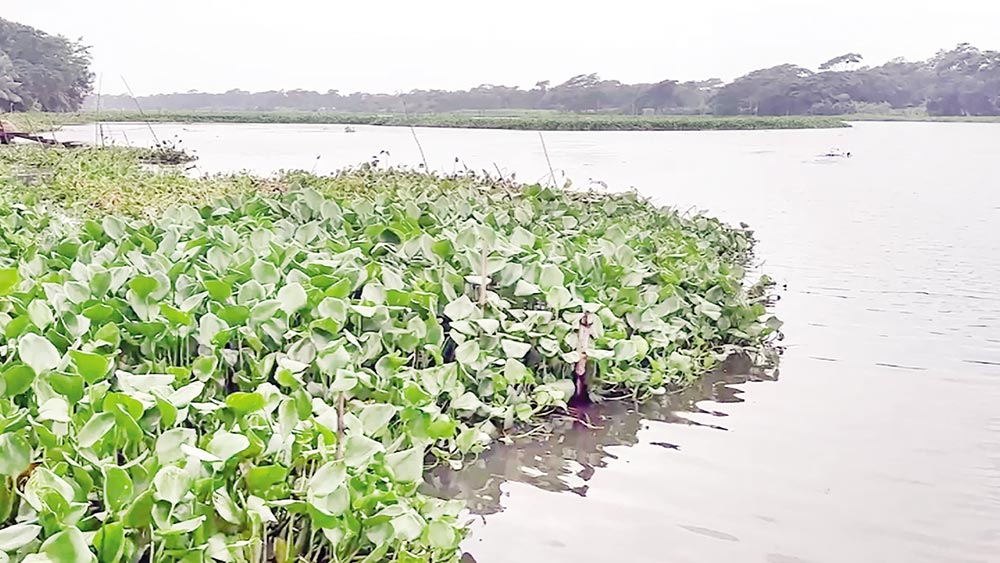 GOPALGANJ, Aug 18: Once famous for its fish, the historic Barni Baor in Gopalganj is now facing an existential threat due to the spread of water hyacinth, siltation, illegal fishing and the destruction of aquatic life.
The vast wetland, spread across parts of Gopalganj Sadar and Tungipara upazilas, was once one of the region's richest natural fishing grounds. Hundreds of fishing families depended on it for their livelihood.
The baor was once home to various native fish species, including rui, katla, mrigel, boal, shol, tengra, koi and punti. Fishermen would set out in their boats early in the morning and return with nets full of fish, which they sold to support their families.
But the situation has changed significantly over the years.
Water hyacinth has spread across several parts of the baor, while heavy siltation has reduced water depth in many areas. As a result, normal water flow is disrupted for much of the year outside the monsoon season.
Locals also alleged that illegal fishing has worsened the situation. The use of banned Chinese nets and electric shocks is destroying fish eggs, fry and other aquatic species, posing a wider threat to the wetland's ecosystem.
Nazrul Molla and Ganesh Biswas, local fishermen, said fish catches had declined sharply compared with the past.
“Earlier, we could catch plenty of fish in the baor. Hundreds of fishing families once depended on it. Now, even after spending an entire day in the water, we often catch very little,” they said.
With incomes falling, many fishermen have been forced to seek alternative livelihoods. Some have taken up day labouring, while others have started small businesses, they said.
“Earlier, one day's fishing was enough to support a family. Now our income has fallen sharply because there is so little fish,” the fishermen said.
Locals demanded stronger and more regular drives against illegal fishing. They also called for planned dredging to remove silt and initiatives to clear water hyacinth to restore the baor's navigability.
Gopalganj District Fisheries Officer Md Rafiqul Islam said the authorities were taking steps to protect the wetland's biodiversity.
“Patrolling and drives against illegal fishing are being conducted, while fish sanctuaries are being established to ensure safe breeding and movement of fish,” he said.
However, he said limited manpower was restricting regular monitoring of the vast wetland.
Experts said the Barni Baor could regain its ecological health if its navigability is restored through planned dredging, water hyacinth is removed, fish sanctuaries are expanded, banned nets and electric fishing are stopped, and regular monitoring is ensured.

Loading...
Loading...
Also read



Editor : Iqbal Sobhan Chowdhury
Published by the Editor on behalf of the Observer Ltd. from Globe Printers, 24/A, New Eskaton Road, Ramna, Dhaka.
Editorial, News and Commercial Offices : Aziz Bhaban (2nd floor), 93, Motijheel C/A, Dhaka-1000.
Phone: PABX- 41053001-06; Advertisement: 41053012; 01793317829, 01550707291, E-mail: [email protected], [email protected] Online: email: [email protected] 41053014; 01550707297 Advertisement: 01550707296
Published by the Editor on behalf of the Observer Ltd. from Globe Printers, 24/A, New Eskaton Road, Ramna, Dhaka.
Editorial, News and Commercial Offices : Aziz Bhaban (2nd floor), 93, Motijheel C/A, Dhaka-1000.
Phone: PABX- 41053001-06; Advertisement: 41053012; 01793317829, 01550707291, E-mail: [email protected], [email protected] Online: email: [email protected] 41053014; 01550707297 Advertisement: 01550707296


