



| HEADLINE |

|

Umrah booking mistakes in Bangladesh that cost pilgrims more than money
Published : Thursday, 20 August, 2026 at 10:09 PM
Md. Nasir Uddin Rejon


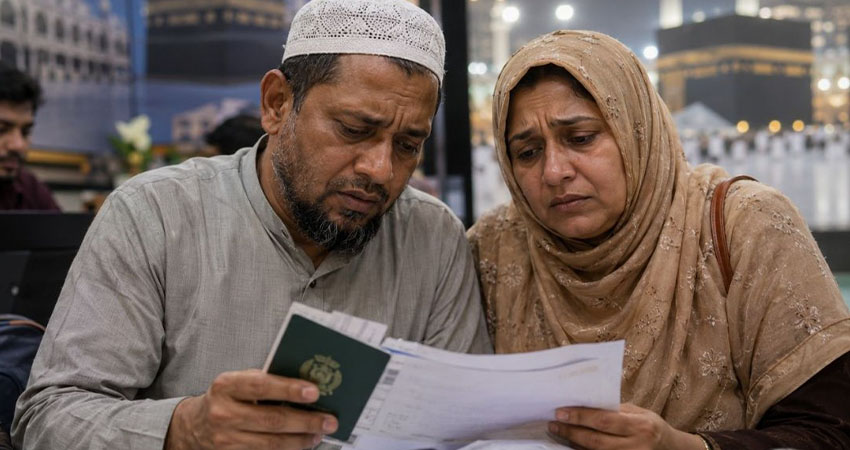
Collected Photo
Every year, pilgrims arrive in Makkah having already lost something they cannot get back.
Sometimes it is money. A hotel that turns out to be forty minutes from Masjid al-Haram instead of the ten minutes they were promised. A visa that was never properly submitted. A package price that looked affordable until the airline surcharges arrived.
Sometimes it is time. A family that booked too close to Ramadan and ended up paying double, or booked too late in the season and lost their preferred departure window entirely.
And sometimes, it is the quality of the ibadah itself. A pilgrim so exhausted from logistics problems, so unsettled by accommodation issues, so stressed about money that they spent the majority of their time in Makkah managing problems instead of praying.
I have spent 15 years arranging Umrah journeys for Bangladeshi pilgrims. I have personally performed Umrah. I have sat with families whose Umrah was exactly what they prayed for. I have also sat with families for whom the journey went wrong in ways that were entirely preventable.
These are the mistakes that appear most often. They are not complicated. They are simply not well understood by most Bangladeshi pilgrims before they commit to a booking.
Mistake 1: Trusting Hotel Star Ratings Without Asking for the Distance
This is the single most common source of disappointment in Umrah travel from Bangladesh.
A 3-star hotel is a 3-star hotel. But a 3-star hotel 900 metres from Masjid al-Haram and a 3-star hotel 200 metres from Masjid al-Haram are completely different experiences. The distance is not a preference issue for most pilgrims. It is a physical reality issue. In Makkah, a pilgrim attending five daily prayers at the Haram walks the hotel-to-mosque route multiple times every day. For a 7-day package with six Makkah nights, that 900-metre walk adds up to over 50 kilometres of extra walking across the trip on prayer visits alone. For elderly pilgrims or anyone with knee or heart conditions, it is genuinely dangerous in the summer heat.
Many Umrah agencies in Bangladesh advertise hotel star ratings prominently and walking distance vaguely. When you ask, the answer is often "close to Haram" without a specific figure.
Always ask for the distance in metres and confirm which Haram gate is nearest to the hotel entrance. That single question changes the conversation from vague marketing to a verifiable fact.
Mistake 2: Booking Too Close to the Travel Date
Most Bangladeshi pilgrims underestimate how long the Umrah visa process takes.
Standard Umrah visa processing from Bangladesh takes 3 to 7 working days when all documents are complete and correctly submitted. During Ramadan season, processing regularly extends to 15 to 21 working days. If you submit documents with any error, such as a name mismatch, an expired passport, or a photograph that does not meet Saudi specifications, the processing clock resets entirely.
Pilgrims who contact agencies two weeks before a Ramadan Umrah departure expecting a guaranteed visa are setting themselves up for a very stressful outcome. The agencies that promise visa delivery in those situations are often the ones who later cannot deliver.
Book your Umrah package at least 4 to 6 weeks before your intended travel date for regular season. For Ramadan, 3 to 4 months is the safer window. The most desirable hotels within walking distance of Masjid al-Haram fill up months in advance during peak season. Booking late does not just risk the visa. It risks the entire trip quality.
Mistake 3: Assuming the Package Price Includes Everything
It often does not.
The base price in most Umrah package listings from Bangladesh covers visa, flights, hotel, and airport transfers. What it frequently does not cover: meals, Ziyarah tour transport (sometimes listed separately), tips for local guides, Saudi hotel security deposits, city tax at certain properties, and any service changes caused by airline schedule adjustments.
Meals are the most consistently misunderstood element. Many pilgrims assume meals are included because the package sounds comprehensive. In most standard packages from Bangladesh, breakfast is included at some hotel tiers and meals are not included at others. In Makkah and Madinah, daily meals at Bengali restaurants near the mosques typically cost SAR 15 to 20 per meal. Across a 10-day trip for a family of four, that is an expense that was never budgeted for.
Before signing anything, ask the agency to give you a written breakdown of exactly what is included and what is not. Read it. If it says "breakfast included" and nothing else, that means lunch and dinner are your own cost for the entire journey.
Mistake 4: Not Checking Meningitis Vaccination Timing
Saudi Arabia requires proof of meningitis (ACWY strain) vaccination for all Umrah pilgrims from Bangladesh without exception.
The vaccination requirement itself is widely known. What most pilgrims miss is the timing rule. The vaccination must be taken at least 10 days before departure. If you receive the vaccination 5 days before your flight, Saudi Arabia can refuse your entry at the port regardless of your valid visa.
Many pilgrims receive the vaccination in a rush after the travel dates are confirmed. The safe practice is to receive it the same week you confirm your booking, not the week before you fly. If you are managing your own vaccination without agency support, check the vaccination date on your certificate carefully and count from the vaccination date to your departure date. There must be a minimum of 10 clear days between them.
Mistake 5: Choosing a Package Based on Price Alone
Price is a factor. It should not be the only factor.
The difference between the cheapest Umrah package being advertised in Bangladesh and a properly structured package from a licensed agency is often BDT 15,000 to 25,000 per person. For many families, that gap feels large before the trip. After arriving in Makkah and discovering what the cheaper option actually delivered, the reaction is almost always the same.
The elements that compress the price in a very low-cost package are usually one or more of the following: hotel further from the Haram, shared bus transport instead of private car, a transit flight with a longer layover rather than a more direct route, or an informal operator without proper licensing who can undercut licensed agencies because they do not carry the regulatory costs.
None of these are necessarily wrong for every pilgrim. A younger, physically fit pilgrim performing Umrah for the first time on a tight budget may manage perfectly well with a 3-star hotel 800 metres from the Haram and a shared bus transfer. But that same arrangement for an elderly parent or a pilgrim with mobility needs creates problems.
The right question is not "which is the cheapest package?" It is "which package gives me what I actually need for the people who are traveling?"
Mistake 6: Ignoring the Passport Validity Rule
Saudi Arabia requires a passport with at least 6 months of remaining validity from the date of travel and at least 4 blank pages available for visa stamping.
Passport renewal in Bangladesh currently takes 3 to 6 weeks in normal circumstances and longer during peak application periods. Pilgrims who discover their passport expires within 6 months of their intended departure date, after they have already confirmed a booking, face a very difficult situation. Some lose their deposit. Some miss the trip entirely.
Check your passport expiry date today, before you begin any Umrah planning conversation. If it falls within 6 months of your intended travel date, begin the renewal process immediately before doing anything else.
For families with multiple travelers, check every passport in the group. It takes one member with an invalid passport to cause complications for the entire party.
Mistake 7: Not Having Any Plan for What Happens If Things Go Wrong
Earlier this year, thousands of Bangladeshi Umrah pilgrims were stranded in Saudi Arabia after return flights were cancelled due to regional disruptions. Many were left with no accessible support, no emergency contact in Saudi Arabia, and no clarity on what their agency could or could not do for them from Dhaka.
Before you travel, confirm three things with your agency. First, do they have a physical office or representative in Saudi Arabia, specifically in Makkah or Jeddah? Not a phone number that forwards to Dhaka. An actual person on the ground. Second, what is their emergency protocol if your return flight is cancelled or severely delayed? Third, what does their refund and rebooking policy actually state in writing?
An agency that cannot answer these questions before you pay your deposit is an agency that cannot answer them when you need to call from Makkah at midnight either.
What a Properly Structured Umrah Booking Looks Like
To be clear about what this process should involve: a reliable Umrah booking from Bangladesh includes visa processing through the official Nusuk platform, a confirmed hotel with a specific name and verified walking distance, a written inclusion list distinguishing what is and is not covered, payment to a registered business account with a proper receipt, pre-departure briefing on Umrah rituals and what to expect at each city, and an emergency contact number for the agency's on-ground presence in Saudi Arabia.
None of these are exceptional standards. They are the baseline of a properly organised pilgrimage service. The fact that these basics are not universal in the Bangladesh market is what creates the problems described above.
The Practical Umrah Checklist Before You Book
Before confirming any Umrah package from Bangladesh work through these points:
Check your passport expiry date and the expiry dates of every person traveling with you.
Confirm the exact hotel name and its distance from Masjid al-Haram in metres.
Get a written list of what the package includes and what it does not.
Ask whether transport for Ziyarah tours is included or charged separately.
Confirm the visa submission method and the expected processing time for your travel dates.
Book your meningitis vaccination and count 10 days forward from that date to your departure.
Ask who the on-ground contact in Saudi Arabia is and how to reach them during the trip.
Confirm payment goes to a registered business account and get a proper receipt.
Umrah is not a transaction. It is a pilgrimage. The weeks of planning before departure set the conditions for what you are actually able to do when you stand in front of the Kaaba. Getting the logistics right is not a bureaucratic inconvenience. It is part of the preparation.
- The writer is the Founder and CEO, UmrahLovers| 15 Years in Religious Travel

Loading...
Loading...
Also read








Editor : Iqbal Sobhan Chowdhury
Published by the Editor on behalf of the Observer Ltd. from Globe Printers, 24/A, New Eskaton Road, Ramna, Dhaka.
Editorial, News and Commercial Offices : Aziz Bhaban (2nd floor), 93, Motijheel C/A, Dhaka-1000.
Phone: PABX- 41053001-06; Advertisement: 41053012; 01793317829, 01550707291, E-mail: [email protected], [email protected] Online: email: [email protected] 41053014; 01550707297 Advertisement: 01550707296
Published by the Editor on behalf of the Observer Ltd. from Globe Printers, 24/A, New Eskaton Road, Ramna, Dhaka.
Editorial, News and Commercial Offices : Aziz Bhaban (2nd floor), 93, Motijheel C/A, Dhaka-1000.
Phone: PABX- 41053001-06; Advertisement: 41053012; 01793317829, 01550707291, E-mail: [email protected], [email protected] Online: email: [email protected] 41053014; 01550707297 Advertisement: 01550707296


