



| HEADLINE |

|

Pakistan rebuilds Jaish-e-Mohammed’s Bahawalpur base after Op Sindoor strikes
Published : Monday, 24 August, 2026 at 9:17 AM
Observer Online Desk


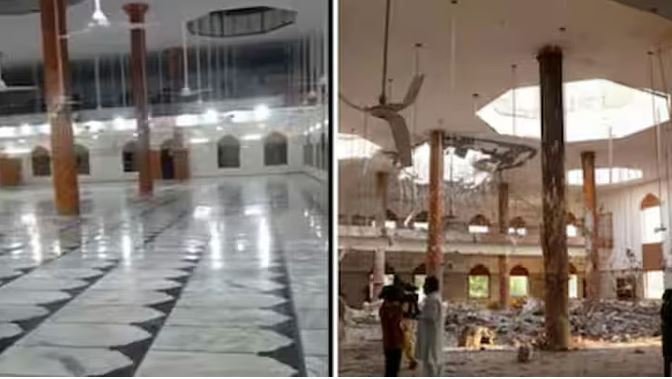
The sprawling Markaz Subhanallah complex in Pakistan’s Bahawalpur has been extensively rebuilt, according to a report by NDTV based on accessed visuals and high-level intelligence inputs.
The complex, identified with UN- and US-designated terror group Jaish-e-Mohammed (JeM), was severely damaged during India's precision strikes under Operation Sindoor last year.
The reconstruction has completely erased the physical scars of the missile impacts. Craters have been filled, structural breaches repaired, and the central hall restored with fresh plaster, paint, and polished marble.
Beyond the main complex, damaged extended structures -- including the Madrasa Al-Sabir indoctrination centre and residential quarters for terror commanders -- were cleared to make way for new facilities, rendering the site fully operational once again.
Crucially, intelligence inputs cited by NDTV indicate that the Pakistani establishment provided PKR 250 million in cash instalments to the UN- and US-designated terrorist outfit JeM.
Of this sum, approximately PKR 110 million was reportedly channelled directly into rebuilding the facility's central hall, pointing to direct state-level financing and enablement.
With JeM chief Masood Azhar reportedly incapacitated by illness, daily operations at the headquarters have transitioned to his brothers Talha Al-Saif and Mohinuddin Aurangzeb (alias Ammar Alvi).
Meanwhile, intelligence places both Masood Azhar and Rauf Asghar under state protection in the Nawabshah area of Sindh, shielded from Indian law enforcement.
The rapid, funded restoration of the Bahawalpur base underscores New Delhi's long-standing position: while military action like Operation Sindoor may temporarily dismantle terror infrastructure, Pakistan's underlying security ecosystem continues to actively sustain, finance, and shield cross-border terror groups.
The complex, identified with UN- and US-designated terror group Jaish-e-Mohammed (JeM), was severely damaged during India's precision strikes under Operation Sindoor last year.
The reconstruction has completely erased the physical scars of the missile impacts. Craters have been filled, structural breaches repaired, and the central hall restored with fresh plaster, paint, and polished marble.
Beyond the main complex, damaged extended structures -- including the Madrasa Al-Sabir indoctrination centre and residential quarters for terror commanders -- were cleared to make way for new facilities, rendering the site fully operational once again.
Crucially, intelligence inputs cited by NDTV indicate that the Pakistani establishment provided PKR 250 million in cash instalments to the UN- and US-designated terrorist outfit JeM.
Of this sum, approximately PKR 110 million was reportedly channelled directly into rebuilding the facility's central hall, pointing to direct state-level financing and enablement.
With JeM chief Masood Azhar reportedly incapacitated by illness, daily operations at the headquarters have transitioned to his brothers Talha Al-Saif and Mohinuddin Aurangzeb (alias Ammar Alvi).
Meanwhile, intelligence places both Masood Azhar and Rauf Asghar under state protection in the Nawabshah area of Sindh, shielded from Indian law enforcement.
The rapid, funded restoration of the Bahawalpur base underscores New Delhi's long-standing position: while military action like Operation Sindoor may temporarily dismantle terror infrastructure, Pakistan's underlying security ecosystem continues to actively sustain, finance, and shield cross-border terror groups.
Loading...
Loading...
Also read






Editor : Iqbal Sobhan Chowdhury
Published by the Editor on behalf of the Observer Ltd. from Globe Printers, 24/A, New Eskaton Road, Ramna, Dhaka.
Editorial, News and Commercial Offices : Aziz Bhaban (2nd floor), 93, Motijheel C/A, Dhaka-1000.
Phone: PABX- 41053001-06; Advertisement: 41053012; 01793317829, 01550707291, E-mail: [email protected], [email protected] Online: email: [email protected] 41053014; 01550707297 Advertisement: 01550707296
Published by the Editor on behalf of the Observer Ltd. from Globe Printers, 24/A, New Eskaton Road, Ramna, Dhaka.
Editorial, News and Commercial Offices : Aziz Bhaban (2nd floor), 93, Motijheel C/A, Dhaka-1000.
Phone: PABX- 41053001-06; Advertisement: 41053012; 01793317829, 01550707291, E-mail: [email protected], [email protected] Online: email: [email protected] 41053014; 01550707297 Advertisement: 01550707296


