



| HEADLINE |

|

Trump weighs new 7.5pc tariff on China over cheap exports
Published : Tuesday, 25 August, 2026 at 2:18 PM
Observer Online Desk


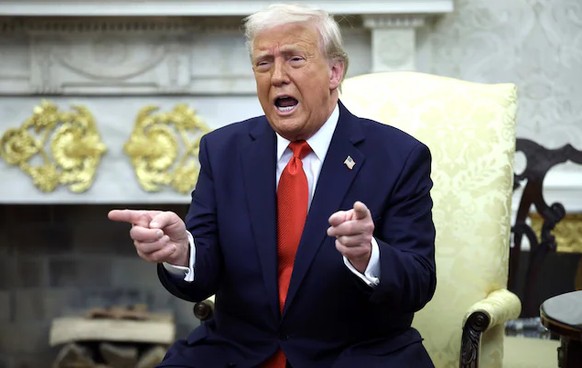
US President Donald Trump is considering imposing a new 7.5% tariff on Chinese goods, accusing Beijing of flooding global markets with cheaply priced products, according to people familiar with the matter.
Two of three people who spoke to The Associated Press on condition of anonymity said the proposed tariff is being considered at a level that officials believe would not threaten the current one-year trade truce between the United States and China.
The move is also expected to avoid disrupting a planned meeting between Trump and Chinese President Xi Jinping in late September.
The possible tariff appears to be an effort by the Trump administration to pursue tougher trade measures after the US Supreme Court earlier this year rejected Trump's broader plan for sweeping tariffs.
Following the court decision, the administration announced in March that it would investigate China's industrial overcapacity and its rules on forced labour. Similar investigations were also launched into several other economies over alleged unfair trade practices.
It remains unclear whether Washington is close to making decisions on those other investigations, which include the European Union, Japan, India, South Korea, Vietnam, Taiwan, Bangladesh, Mexico, Thailand and several other countries.
The White House and the US Trade Representative's office did not respond to requests for comment on the possible tariff.
China's embassy in Washington said trade and economic disputes should be handled through negotiations rather than unilateral tariffs. It also rejected accusations that China has a problem with industrial overcapacity.
The investigation into China's excess industrial capacity was launched under Section 301 of the US Trade Act of 1974, which allows the president to impose tariffs on countries accused of unfairly harming US businesses or trade.
New tariff would add to existing duties
The people familiar with the discussions stressed that Trump has not made a final decision and could still abandon or change the proposal.
If imposed, the new tariff would be added to existing duties on Chinese products, including tariffs of 10% to 12.5% announced last month for 60 economies. The administration accused those countries of failing to properly enforce a ban on goods produced through forced labour.
China and several other countries protested those tariffs.
Beijing has also rejected US claims of industrial overcapacity as Washington prepares to release the findings of its investigation.
China's large production capacity in industries such as automobiles, solar panels, cement and steel has become a growing concern among its trading partners.
Chinese leaders have sought to rebalance the economy, but weak domestic demand has encouraged companies to expand into overseas markets. Rising exports helped push China's trade surplus to nearly $1.2 trillion last year, a record level.
China's Commerce Ministry has said the country has never deliberately sought to maintain a large trade surplus.
Iran sanctions add to tensions
The tariff discussions come as the US Treasury Department announced Monday that it is preparing new secondary sanctions against countries that continue doing business with Iran.
China is Iran's biggest trading partner.
The US says the new sanctions are intended to increase pressure on Iran's already weakened economy as the conflict involving the US, Israel and Iran approaches its sixth month.
Treasury Secretary Scott Bessent gave few details about the planned sanctions and did not identify which countries could face penalties.
Two of three people who spoke to The Associated Press on condition of anonymity said the proposed tariff is being considered at a level that officials believe would not threaten the current one-year trade truce between the United States and China.
The move is also expected to avoid disrupting a planned meeting between Trump and Chinese President Xi Jinping in late September.
The possible tariff appears to be an effort by the Trump administration to pursue tougher trade measures after the US Supreme Court earlier this year rejected Trump's broader plan for sweeping tariffs.
Following the court decision, the administration announced in March that it would investigate China's industrial overcapacity and its rules on forced labour. Similar investigations were also launched into several other economies over alleged unfair trade practices.
It remains unclear whether Washington is close to making decisions on those other investigations, which include the European Union, Japan, India, South Korea, Vietnam, Taiwan, Bangladesh, Mexico, Thailand and several other countries.
The White House and the US Trade Representative's office did not respond to requests for comment on the possible tariff.
China's embassy in Washington said trade and economic disputes should be handled through negotiations rather than unilateral tariffs. It also rejected accusations that China has a problem with industrial overcapacity.
The investigation into China's excess industrial capacity was launched under Section 301 of the US Trade Act of 1974, which allows the president to impose tariffs on countries accused of unfairly harming US businesses or trade.
New tariff would add to existing duties
The people familiar with the discussions stressed that Trump has not made a final decision and could still abandon or change the proposal.
If imposed, the new tariff would be added to existing duties on Chinese products, including tariffs of 10% to 12.5% announced last month for 60 economies. The administration accused those countries of failing to properly enforce a ban on goods produced through forced labour.
China and several other countries protested those tariffs.
Beijing has also rejected US claims of industrial overcapacity as Washington prepares to release the findings of its investigation.
China's large production capacity in industries such as automobiles, solar panels, cement and steel has become a growing concern among its trading partners.
Chinese leaders have sought to rebalance the economy, but weak domestic demand has encouraged companies to expand into overseas markets. Rising exports helped push China's trade surplus to nearly $1.2 trillion last year, a record level.
China's Commerce Ministry has said the country has never deliberately sought to maintain a large trade surplus.
Iran sanctions add to tensions
The tariff discussions come as the US Treasury Department announced Monday that it is preparing new secondary sanctions against countries that continue doing business with Iran.
China is Iran's biggest trading partner.
The US says the new sanctions are intended to increase pressure on Iran's already weakened economy as the conflict involving the US, Israel and Iran approaches its sixth month.
Treasury Secretary Scott Bessent gave few details about the planned sanctions and did not identify which countries could face penalties.
Loading...
Loading...
Also read





Editor : Iqbal Sobhan Chowdhury
Published by the Editor on behalf of the Observer Ltd. from Globe Printers, 24/A, New Eskaton Road, Ramna, Dhaka.
Editorial, News and Commercial Offices : Aziz Bhaban (2nd floor), 93, Motijheel C/A, Dhaka-1000.
Phone: PABX- 41053001-06; Advertisement: 41053012; 01793317829, 01550707291, E-mail: [email protected], [email protected] Online: email: [email protected] 41053014; 01550707297 Advertisement: 01550707296
Published by the Editor on behalf of the Observer Ltd. from Globe Printers, 24/A, New Eskaton Road, Ramna, Dhaka.
Editorial, News and Commercial Offices : Aziz Bhaban (2nd floor), 93, Motijheel C/A, Dhaka-1000.
Phone: PABX- 41053001-06; Advertisement: 41053012; 01793317829, 01550707291, E-mail: [email protected], [email protected] Online: email: [email protected] 41053014; 01550707297 Advertisement: 01550707296


