



| HEADLINE |

|
Load-shedding in Dhaka adjusted to redistribute power to rural areas


Collected Photo
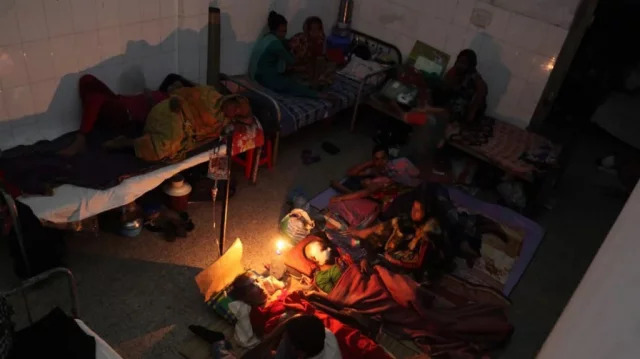
The government has taken an initiative to adjust load-shedding in Dhaka and redistribute the saved electricity to rural areas amid the ongoing power shortage, the Power Division said on Tuesday.
In a message issued on August 25, the Power Division attributed the current electricity shortage and load-shedding to fuel supply constraints, technical faults and maintenance at power plants, transmission and grid limitations, and rapidly rising demand.
Although the country has sufficient power generation capacity, inadequate fuel supplies and technical problems at several plants have reduced generation, the division said. Transmission and grid constraints, coupled with a recent surge in demand, have further worsened the situation.
To ease the pressure of load-shedding, the authorities are adjusting power cuts in areas under the Dhaka Power Distribution Company (DPDC) and Dhaka Electric Supply Company (DESCO), according to the Power Division.
The move aims to keep load-shedding at a tolerable level in rural areas and prevent prolonged outages in any particular locality. Electricity saved through load-shedding adjustments in Dhaka is being redistributed to rural and other parts of the country.
As a result, power supply to industries and other important consumer groups outside Dhaka has improved to some extent, while prolonged and frequent load-shedding in rural areas has also eased, the division said.
The government’s priority is to distribute the burden of load-shedding more evenly and prevent any particular region or category of consumers from remaining without electricity for an extended period.
The Power Division expects the situation to improve as fuel supplies increase, power plants restore their generation capacity and grid constraints are addressed.
Meanwhile, according to Power Grid Company of Bangladesh (PGCB), the country faced a load-shedding of 2,259 megawatts at around 3pm on Tuesday. National electricity demand at the time was 16,176MW, against generation of 13,917MW.
SKS








Published by the Editor on behalf of the Observer Ltd. from Globe Printers, 24/A, New Eskaton Road, Ramna, Dhaka.
Editorial, News and Commercial Offices : Aziz Bhaban (2nd floor), 93, Motijheel C/A, Dhaka-1000.
Phone: PABX- 41053001-06; Advertisement: 41053012; 01793317829, 01550707291, E-mail: [email protected], [email protected] Online: email: [email protected] 41053014; 01550707297 Advertisement: 01550707296


