



| HEADLINE |

|

Pink buses not enough for women's safety
Published : Saturday, 29 August, 2026 at 12:00 AM
Humaira Parvin


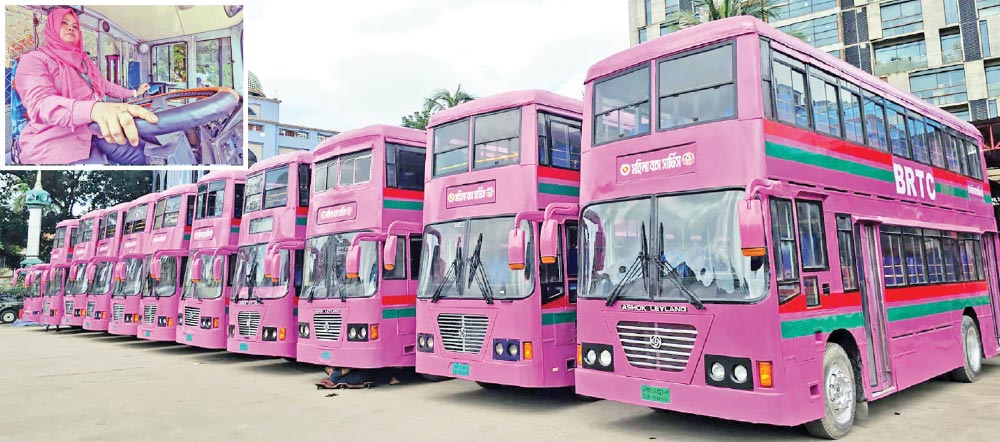 The arrival of dedicated female-only “Pink Buses”, with women drivers and conductors, CCTV, GPS tracking and electronic ticketing, has brought a familiar question back into public debate about whether segregation can truly make Dhaka’s transport system safe for women.
The Reality of Segregated Safety
The buses may offer a temporary refuge from harassment and the discomfort of overcrowded public transport. But safety does not begin and end at the bus door. Poorly lit stops, unmonitored terminals and unsafe walking routes can leave women vulnerable before and after the journey.
Echoes of Past Failures
History also offers a cautionary tale. Similar BRTC services and the 2018 private “Dolonchapa” initiative faltered because fewer than 30 buses could not serve millions of female commuters, while 30�"45-minute intervals pushed women back towards general transport. Maintenance failures and financial losses eventually led to female-only units being absorbed into regular fleets. Such failures raise questions about whether Pink Buses will become lasting infrastructure or another symbolic intervention.
The Perils of Marginalization
There is also a deeper concern that segregation could inadvertently marginalise women by allowing crews or male passengers on general buses to deny them access, shrinking women’s mobility to a fraction of the city’s transport capacity.
Roots of Unsafe Transit
The roots of insecurity lie deeper in patriarchal attitudes, objectification, institutional impunity and inadequate training in the largely unregulated private transport sector. Separate buses can address symptoms, but not these structural failures.
Digital Literacy and Adoption Gaps
Electronic ticketing, supported by Shohoz teams through hands-on POS training for conductors, could improve fare collection and curb overcharging. Yet clear instructions, transparent payment information and prepaid smart cards such as Rapid Pass are needed to bridge adoption gaps.
Need Integrated Reform
Pink Buses, therefore, may be a useful protective measure, but they cannot become a substitute for reform. Women’s safety is a right, not a privilege confined to a pink-painted vehicle. The real test is whether Bangladesh can make every bus, bus stop, street and journey safe for women.
Loading...
Loading...



Editor : Iqbal Sobhan Chowdhury
Published by the Editor on behalf of the Observer Ltd. from Globe Printers, 24/A, New Eskaton Road, Ramna, Dhaka.
Editorial, News and Commercial Offices : Aziz Bhaban (2nd floor), 93, Motijheel C/A, Dhaka-1000.
Phone: PABX- 41053001-06; Advertisement: 41053012; 01793317829, 01550707291, E-mail: [email protected], [email protected] Online: email: [email protected] 41053014; 01550707297 Advertisement: 01550707296
Published by the Editor on behalf of the Observer Ltd. from Globe Printers, 24/A, New Eskaton Road, Ramna, Dhaka.
Editorial, News and Commercial Offices : Aziz Bhaban (2nd floor), 93, Motijheel C/A, Dhaka-1000.
Phone: PABX- 41053001-06; Advertisement: 41053012; 01793317829, 01550707291, E-mail: [email protected], [email protected] Online: email: [email protected] 41053014; 01550707297 Advertisement: 01550707296


