



| HEADLINE |

|

When will it start supplying electricity?


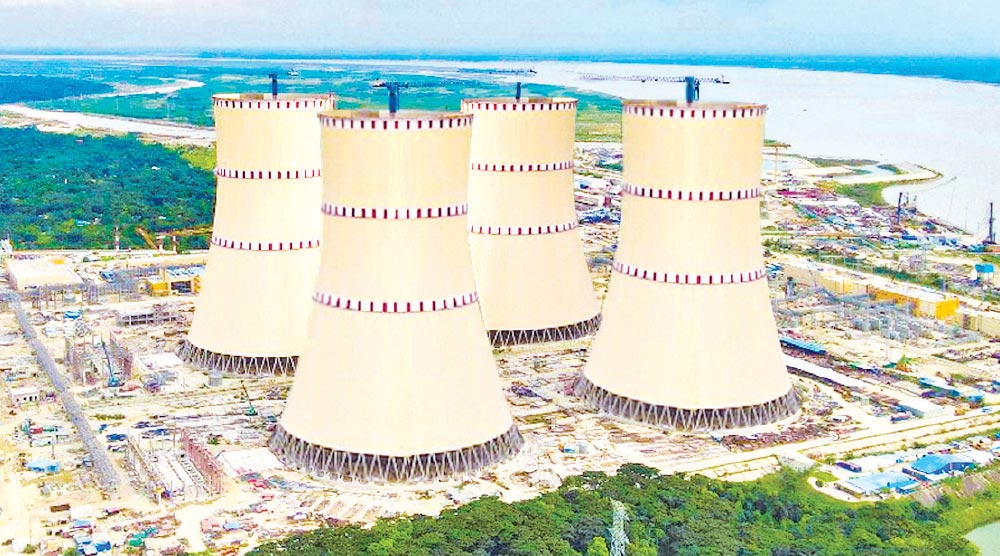 Rooppur Nuclear Power Plant (RNPP), is facing another setback as a critical safety valve has reportedly failed to meet required quality standards, raising fresh doubts over when the plant will begin supplying electricity to the national grid.
This new setback has stopped the much-waiting gala inauguration programme of the US $ 12.65 billion dollar projects, scheduled to open in September (initially in July) by the Prime Minister Tarique Rahman.
The official declined to provide a definitive generation date until all necessary tests are completed.
Officials close to the project said the valve, which plays a crucial role in regulating pressure in the reactor’s cooling system, has undergone more than one and a half months of testing using different methods but has yet to pass the required quality checks.
The plant cannot proceed without a properly functioning component. If the existing valve cannot be repaired or certified, a replacement could take six to eight months to manufacture and install.
Even if the valve problem is resolved quickly, the plant would still require another eight to 10 weeks of testing before electricity from the first unit can be reliably connected to the national grid.
 A project repeatedly pushed back
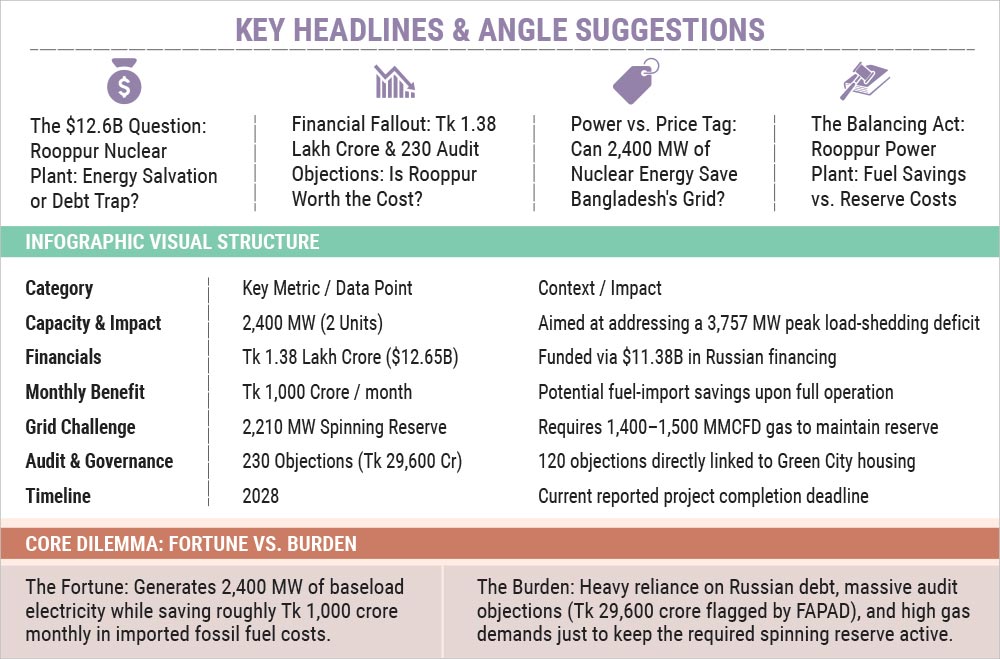
Rooppur is Bangladesh’s largest single development project, involving two nuclear units with a combined capacity of 2,400 megawatts. Each unit has a capacity of 1,200MW. It was unlike a conventional power plant and that every test was being conducted with safety as the highest priority.
Unit 1 was originally scheduled to begin operation in December 2022 and Unit 2 in October 2023. The schedule has since been revised at least seven times, with the Covid-19 pandemic, the Russia-Ukraine war and other technical and administrative complications contributing to the delays.
The project, implemented by the Bangladesh Atomic Energy Commission under the Ministry of Science and Technology, is being constructed with financial and technical support from Russia’s state nuclear corporation Rosatom through Atomstroyexport.
Nuclear fuel was loaded into Unit 1 on May 12, 2025 raising hopes that trial generation would begin soon. The initial expectation was that the unit could supply around 300MW to the national grid within months. That target has since been pushed back, and the latest safety-valve problem has thrown the revised timeline into further uncertainty. Once fully operational, the plant is expected to generate around 2,100-2,200MW of uninterrupted electricity.
Power crisis makes delays more costly
RNPP’s delay comes at a critical moment for Bangladesh’s energy sector.
The country has around 29,000MW of installed generation capacity, but fuel shortages have prevented many plants from operating at full capacity. Average peak demand is around 16,000-16,500MW, while load-shedding has recently reached 2,500-3,000MW.
Shortages of LNG and gas have affected both power generation and industry. Gas has increasingly been diverted to power plants, leaving industries struggling with inadequate supplies. Greater dependence on furnace oil has also increased government subsidies and financial losses.
The spinning-reserve problem
But even before Rooppur begins supplying power, the national grid faces a major challenge in absorbing electricity from a 1,200MW nuclear unit.
A nuclear reactor requires sufficient reserve generation capacity because a sudden shutdown can remove a huge amount of electricity from the grid almost instantly.
This reserve is known as spinning reserve�"generation capacity connected to the grid but operating below maximum output that can be increased rapidly when a major generating unit trips or demand suddenly rises.
Russian consulting firm STC UPS has recommended maintaining a minimum spinning reserve of 2,210MW to ensure frequency, voltage stability and operational safety. The recommendation includes 367MW for primary frequency control and 843MW for secondary frequency control.
According to officials, maintaining the required reserve could require approximately 1,400-1,500 million cubic feet of gas per day (MMCFD).
Petrobangla considers securing an additional 500 MMCFD of gas extremely difficult. A senior Petrobangla official reportedly warned that supplying 1,500 MMCFD of gas to power plants could severely constrain industries and other sectors.
Spent fuel and tariff remain unresolved
One of the most sensitive unresolved issues is the management of spent nuclear fuel.
Approximately one-third of the reactor fuel must be replaced every 1.5 to two years. The spent fuel is highly radioactive and remains hazardous for a very long period.
It remains unclear whether Russia will take the spent fuel back for reprocessing or whether Bangladesh will ultimately have to store it. The financial implications of either arrangement are also unclear. The proposed Waste Management Company, as well as several operation and maintenance arrangements, reportedly remain unresolved.
The tariff for Rooppur electricity has also not been finalised. Even BPDB, which is expected to purchase the electricity, reportedly does not yet have a clear idea of the eventual tariff.
Safety and management concerns
An IAEA mission conducted from August 10-27, 2025 reportedly identified concerns involving essential equipment, emergency-response systems, radiation control, staff training and project management. It also reportedly noted that some mandatory non-nuclear tests had not been completed. Questions have also been raised over project management, spare-parts inventories and the experience of senior officials.
A former BAEC official said a reactor of this type should normally move towards controlled fission and grid connection within several months, citing a Belarusian plant that connected to the grid in less than three months. $12.65 billion project faces financial pressure
Rooppur is also Bangladesh’s largest loan-dependent development project.
Meanwhile, the project’s cost has risen from around Tk 1.13 lakh crore to approximately Tk 1.38 lakh crore, partly because of the depreciation of the taka against the US dollar.
Despite all these short coming, the immediate task is to resolve the safety-valve problem without compromising safety. But the bigger challenge is to address the long list of unresolved issues surrounding the plant.
Rooppur was intended to become a symbol of Bangladesh’s technological progress and energy security. After years of delays, however, it has increasingly become a test of the country’s ability to manage a complex nuclear facility with financial discipline, technical competence and institutional accountability.

Loading...
Loading...
Also read



Editor : Iqbal Sobhan Chowdhury
Published by the Editor on behalf of the Observer Ltd. from Globe Printers, 24/A, New Eskaton Road, Ramna, Dhaka.
Editorial, News and Commercial Offices : Aziz Bhaban (2nd floor), 93, Motijheel C/A, Dhaka-1000.
Phone: PABX- 41053001-06; Advertisement: 41053012; 01793317829, 01550707291, E-mail: [email protected], [email protected] Online: email: [email protected] 41053014; 01550707297 Advertisement: 01550707296
Published by the Editor on behalf of the Observer Ltd. from Globe Printers, 24/A, New Eskaton Road, Ramna, Dhaka.
Editorial, News and Commercial Offices : Aziz Bhaban (2nd floor), 93, Motijheel C/A, Dhaka-1000.
Phone: PABX- 41053001-06; Advertisement: 41053012; 01793317829, 01550707291, E-mail: [email protected], [email protected] Online: email: [email protected] 41053014; 01550707297 Advertisement: 01550707296


