



| HEADLINE |

|

Disappearing Wetlands Endanger Bangladesh’s Ecological Balance
Published : Monday, 31 August, 2026 at 12:00 AM
Md Magem Ali Molin


 Rivers, canals, beels and haors�"these are not only the ornamentation of the topography of Bangladesh; they are the lifeblood of this country, the heartbeat of nature and the silent support of the livelihood of crores of people. For centuries these wetlands have made our agriculture fertile, rivers vibrant, native fish and biodiversity safe. But the wetlands are the most helpless in the competition of development. Natural reservoirs of the country are disappearing one after another due to encroachment, filling, construction of unplanned infrastructure, reduction of navigability of rivers and canals and multifaceted pressure of climate change. This is a profound warning about the future of Bangladesh’s environment, food security, biodiversity and sustainable development. If we fail to protect wetlands today, not only will we lose nature�"we will lose Bangladesh’s ecological balance, the basis of agriculture, people’s livelihoods, and a secure future for future generations.
The development of civilization, agriculture, economy and culture of Bangladesh is built around rivers, canals, beels and wetlands. Once vast areas of this country were rich in natural reservoirs. The role of these wetlands in retaining excess water during monsoons, providing water in dry season, breeding native fish, preserving biodiversity and protecting climate balance was immense like a nerve (vein). But due to unplanned infrastructure construction in the name of development, filling of wetlands, reduction of navigability of rivers and canals, urbanization and climate change, most of the wetlands in Bangladesh are in crisis of existence today. The current situation of Chalanbeel, the largest wetland in the north, is a reflection of that national crisis.
A beel is not just a bill; it is a huge natural ecosystem in the northern region. These wetlands, which are spread over vast areas of Natore, Pabna, Sirajganj, Naogaon and Chapainawabganj districts, have been playing an important role in agriculture, fisheries, biodiversity, groundwater recharge and local climate balance for a long time. Chalanbeel is one of the mainstays of the Northern region’s economy due to its dual characteristics of vast water bodies during the rainy season and fertile agricultural land during the dry season. But the reality is that the current account is fast losing its natural form. According to various historical surveys, in the 19th century, the flooded area of Chalanbeel was several times larger than today. At present, the extent of permanent wetlands has decreased significantly during the monsoon season. According to experts, the main reason for this change is not natural; Rather unplanned actions of people.
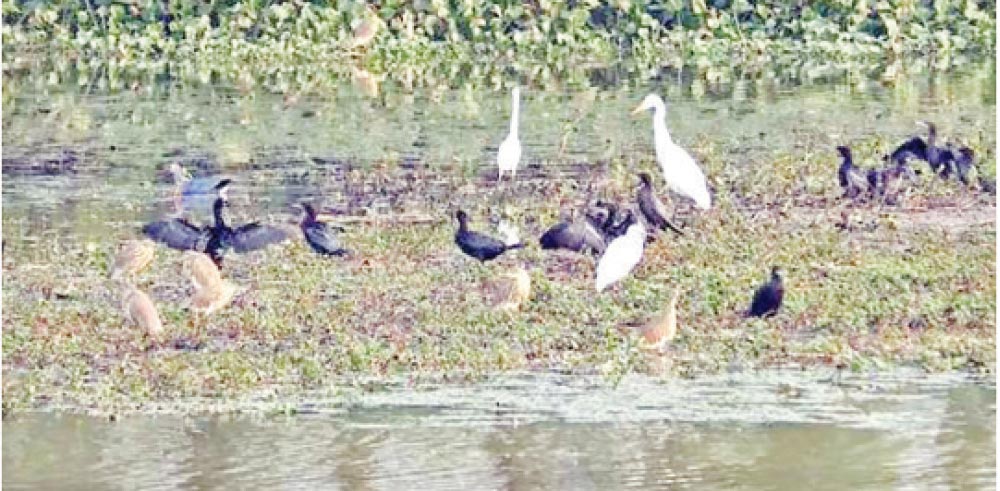 The normal water flow of Chalanbeel is obstructed due to roads constructed through the chest of the bill, inadequate bridges and culverts, indiscriminate digging of ponds, illegal encroachment, filling of wetlands and loss of navigability of rivers and canals. As the flow of Baral, Gumani and Atrai rivers has reduced, the reservoir capacity of the Bill is also decreasing. As a result, waterlogging in the monsoons and water scarcity in the dry season�"both types of problems�"are becoming increasingly acute.
This current account crisis is not an isolated incident. The same trend is seen in Haor, Baor, Beel and riverine wetlands in different parts of the country. Natural water flow is being obstructed due to encroachment, filling, pollution, and unplanned development projects. This results in the destruction of fish breeding grounds, the decline of native species, the shrinking of habitats for visiting birds and the livelihood of people who depend on wetlands.
This crisis is also a matter of deep concern at the international level. The Ramsar Convention on Wetlands and various international studies have noted that a large part of the world’s natural wetlands has been lost in the past few decades. Wetland destruction not only threatens biodiversity, but food security, availability of safe water, and climate change. That’s why many countries around the world are considering wetland conservation not only as part of environmental protection but also part of economic security.
Bangladesh is also a member state of Ramsar Convention on Wetlands. The country has several wetlands of international importance. Besides, Article 18(a) of the Constitution directs the state to preserve the environment, biodiversity, forests and natural resources. But in reality, environmental balance is often neglected in development planning. As a result, while development is progressing on the one hand, on the other hand, the degradation of natural resources is accelerating.
There is no disagreement about the need for development. But development is sustainable only when it does not conflict with nature but strengthens nature’s capabilities. The current state of the Bill is a fresh reminder of that fundamental fact. When a wetland is destroyed it is not just the environment of an area; Agriculture, food production, fisheries, disaster management and the quality of life of future generations are also affected. So protecting a bill is not just saving a bill; Rather, to secure the basis of sustainable development of Bangladesh.
The current account crisis cannot be seen as a regional problem only. It is a reflection of the overall environmental management of Bangladesh today. Haor, Beel, Baor, rivers and canals of different parts of the country are going through similar crisis. Somewhere unplanned road construction, somewhere pressure of industry and urbanization, somewhere the reduction of navigability of rivers, and somewhere else the encroachment and filling of wetlands�"all in all the natural reservoirs of the country are gradually shrinking.
Hakaluki Haor, Tanguar Haor, Hail Haor in the north-eastern region or various baors in the southwestern region have long been known as important habitats for biodiversity. But due to climate change, pollution, illegal encroachment, excessive use of pesticides and unplanned infrastructure construction, these wetlands are also facing many challenges today. As a result, the number of native fish, aquatic plants, amphibians and migratory birds is decreasing dramatically. This affects not only the environment but also the rural economy and food security.
Natural wetlands are breeding and growing areas for a significant portion of the domestic fish produced annually in Bangladesh. Many native fish breeding grounds are being destroyed as wetlands shrink. Once upon a time, shoal, gajar, taki, pabda, tengra, koi, magur, folli and various small fishes were easily available in Chalanbeel. Local fishermen and researchers point out that the natural abundance of many of these species is now much lower than before. At the same time, the reduction of aquatic plants is having a negative impact on the food chain. Globally, wetland conservation is now considered one of the most effective means of climate adaptation. The Intergovernmental Panel on Climate Change noted in their assessment that natural wetlands play a critical role in flood water retention, drought mitigation and carbon storage. On the other hand, the United Nations Environment Program and the Food and Agriculture Organization have repeatedly warned that the continued destruction of wetlands will have long-term negative effects on food production, safe water and biodiversity.
International experience says that development without nature is not sustainable. The Netherlands’ “Room for the River” programme has increased river space to restore normal river flows, restructured flood-prone areas, and integrated natural watershed conservation into development. China has invested heavily in wetland restoration in recent years. South Korea is also trying to restore ecological balance through river and wetland restoration programs. As these examples show, the true meaning of development is not just the construction of concrete infrastructure; Rather, giving equal importance to natural infrastructure.
In the case of Bangladesh, it is now necessary to change that view. Before taking up development projects, environmental impact assessment should be adopted not just as a formality but as a basis for effective policy decisions. Ensuring the normal flow of water is essential especially when building new roads, culverts, bridges or other infrastructure in sensitive wetlands like Chalanbeel. At the same time, it will not be possible to save Chalanbeel in the long term without re-dredging and regular maintenance of the rivers and hundreds of canals connected to the beel, including Baral, Gumani, Atrai.
Most importantly, we need to get out of the mindset of seeing wetlands as uncultivated or unused land. In fact, the environmental and economic services that a healthy wetland provides to the state have enormous financial value. So the question of saving the bill is not just about saving the environment; it is also a question of food security, water security, climate resilience and sustainable development.
The impact of wetland destruction may not be immediately apparent, but the long-term damage is dire. Depletion of reservoir capacity leads to increased flooding and waterlogging, and water scarcity during the dry season. Groundwater levels drop, agricultural and fisheries production suffers, and climate change risks intensify. The livelihood of thousands of people is connected with wetlands like Chalanbeel. So it is not only a question of environment but also of food security, economy and social stability.
Article 18(a) of the Constitution of Bangladesh directs the state to preserve the environment and biodiversity. But in reality, due to weak enforcement and planning, wetlands are shrinking. Environmental impact assessment should be made more effective in development projects and its recommendations should be implemented.
Many countries of the world have already understood that investing in nature means investing in future security. If Bangladesh is also to achieve sustainable development goals, wetland conservation must be brought to the centre of development planning.
Although Bangladesh is a riverine country, the country’s rivers, canals, banks and wetlands are plagued with various crises today. According to the latest data from the Bangladesh Water Development Board (BWDB), the country currently has 1,415 registered rivers, of which 430 are perennial and 985 are monsoonal. Although the total length of the country’s rivers, canals and inland waterways is about 24,000 km, most of them have lost their previous functionality due to loss of navigability, siltation, encroachment, pollution and unplanned development. At one time, about 6,000 kilometres of waterways were operational during the rainy season, but in the dry season, it reduced to about 3,900 kilometres. Similarly, the country’s wetlands are shrinking rapidly.
According to various studies, the total area of wetlands in Bangladesh is about 7�"8 million hectares, which play an essential role in the country’s ecological balance, agriculture, fisheries, biodiversity, flood control and groundwater recharge. But due to encroachment, filling, pollution, loss of navigability of rivers and canals and unplanned development, these natural reservoirs are gradually becoming endangered, which is a cause of deep concern for the sustainable development of Bangladesh.
There is no room for delay in protecting the wetlands of Bangladesh. First of all Wetland conservation laws and environmental regulations should be strictly implemented and a zero tolerance policy against encroachment, filling and indiscriminate digging of ponds should be adopted. Secondly, regular excavation and restoration activities should be strengthened to bring back the normal water flow of the country’s rivers, canals and beels, including the Chalanbeel.
Thirdly, mandatory environmental impact assessment (EIA) must be ensured before construction of new roads, bridges or other infrastructure and nature-tolerant design must be followed. Fourth, integrated wetland management should be developed involving local people, environmentalists, researchers and public representatives. Besides, from schools to mass media, public awareness should be raised on the conservation of wetlands. Remember, protecting wetlands is not just an environmental issue. This is one of the prerequisites for ensuring food security, climate resilience, biodiversity conservation and a sustainable future for Bangladesh.
The writer is Assistant Professor & Head, Department of Sociology, Rosey Mozammel Women’s Honours College
Loading...
Loading...
Also read



Editor : Iqbal Sobhan Chowdhury
Published by the Editor on behalf of the Observer Ltd. from Globe Printers, 24/A, New Eskaton Road, Ramna, Dhaka.
Editorial, News and Commercial Offices : Aziz Bhaban (2nd floor), 93, Motijheel C/A, Dhaka-1000.
Phone: PABX- 41053001-06; Advertisement: 41053012; 01793317829, 01550707291, E-mail: [email protected], [email protected] Online: email: [email protected] 41053014; 01550707297 Advertisement: 01550707296
Published by the Editor on behalf of the Observer Ltd. from Globe Printers, 24/A, New Eskaton Road, Ramna, Dhaka.
Editorial, News and Commercial Offices : Aziz Bhaban (2nd floor), 93, Motijheel C/A, Dhaka-1000.
Phone: PABX- 41053001-06; Advertisement: 41053012; 01793317829, 01550707291, E-mail: [email protected], [email protected] Online: email: [email protected] 41053014; 01550707297 Advertisement: 01550707296


