



| HEADLINE |

|

Climate Change Threatens Food Security
Published : Monday, 31 August, 2026 at 12:00 AM
AL Sharia


 In the last week of April, when farmers in the Sunamganj haor were preparing to harvest paddy, floodwaters from upstream and continuous rain submerged nearly 46,000 hectares of Boro land in Sunamganj and its surrounding areas. A fear of a nearly two lakh metric ton deficit in national rice production arose that very day. This single incident might seem isolated but when placed alongside the 2026 Global Report on Food Crises jointly published by the UN Food and Agriculture Organization and the World Food Programme, it becomes part of a larger pattern. According to the report, nearly 16 million people in Bangladesh experienced crisis-level or worse food insecurity in 2025. There is no famine and Bangladesh is not on the list of countries with the world’s most severe food crises. Yet it ranks in the top ten globally in terms of the number of people facing high levels of acute food insecurity.
 As alarming as this number seems at first glance, the context behind it is much broader. The report states that the situation improved slightly in 2025 compared to 2024, with 7.6 million people coming off the list. The report attributes this improvement to the absence of major disasters, a slight decrease in food inflation and an increase in remittance flow. However, even in a comparatively good year without any major disaster striking, Bangladesh remains in the top ten globally. This means the problem is not just about sudden floods or cyclones. Its roots lie much deeper within income instability, weak purchasing power and structural risks associated with the climate.
Climate change is a central part of this structural risk and the proof is evident in this year’s rainfall records. In April, Bangladesh experienced 75.7 percent more rainfall than normal, making it the highest in the last five years. June presented the exact opposite picture with 29 percent less rainfall than normal, marking the lowest in seven years, which directly affected the preparation of Aman seedbeds. Rainfall increased again in July by 35.6 percent above normal. These three contrasting scenarios within the same year are no coincidence. The active El Nino in the Pacific Ocean is one reason but this single factor does not shape the entire context. Rather, El Nino combined with a long-term shift has intensified the volatility. A 34-year analysis published in PLOS Climate shows that monsoon rainfall is decreasing in the central and northern regions of the country while the number of consecutive rainy days is increasing.
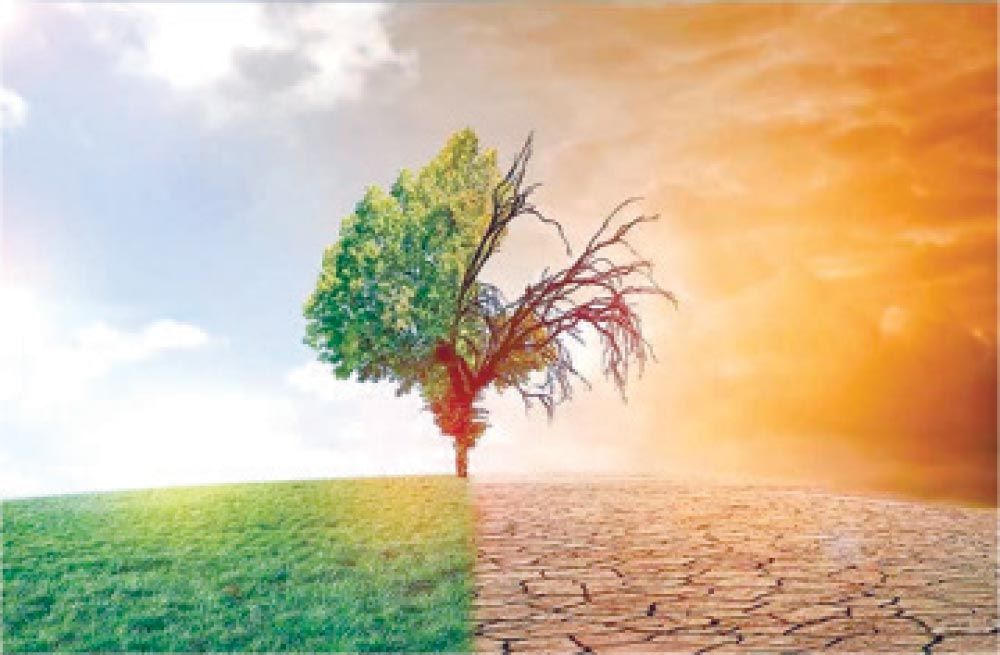 Farmers are directly at risk due to this abnormal behavior of nature. According to a study published in the Journal of Water and Climate Change, erratic rainfall in the northwestern region has prevented farmers from determining the appropriate time for planting and harvesting, causing rice yields to drop by 17 to 18 percent and wheat yields by 31 to 68 percent. The impact of high temperatures is even more severe with a recent review warning that Boro rice yields could drop by up to 32 percent. This crisis adds another layer in the coastal regions. Soil salinity in districts like Khulna and Satkhira has reached up to 40 dS per meter in some places where about 30 percent of the country’s total arable land is located. The fertile alluvial soil of the coast is gradually degrading due to repeated saltwater intrusion caused by cyclones, river erosion and weak embankments. The dual pressures of irrigation water shortage in the dry season and sudden floods during the monsoon surround coastal farmers from both sides. These figures of declining yields ultimately hit the market. Following the continuous rain in July, the prices of eggplant, bitter gourd and green chilies in Dhaka markets shot up within a week almost doubling in some places. The rice market also remained volatile with prices increasing by two to four taka per kilogram before the end of the Boro season. This price burden falls heaviest on those with the lowest incomes who lack the ability to afford alternatives.
 There is no protection for landless laborers facing seasonal unemployment, urban informal workers paying high rent or female-headed households with limited income. The crisis of food security is therefore simultaneously a question of inequality. When prices rise families reduce protein intake, shift to cheaper foods and postpone healthcare expenses.
It would be a mistake to view security solely as a question of production. Bangladesh has shown considerable success in rice production yet people remain hungry because the question is no longer whether there is enough rice but whether every family can afford to buy it. For policymakers, this means social protection programs need to be faster and more targeted so that immediate assistance arrives when prices rise or floods occur. Currently, many programs operate in isolation with weak targeting and slow administrative processes. Digital databases can mitigate this problem but only when they are regularly updated and kept free from political influence. Transparency is also needed in market management because weak competition, hoarding and a lack of information often exacerbate price hikes. Farmers do not get a fair price and consumers do not remain safe unless public stock management, timely imports when needed and a transparent flow of market information happen together.
The most crucial change is perhaps needed in perspective. Flood control, salinity management, climate-resilient seeds, crop insurance, storage facilities and forecasting systems should not be viewed as separate development projects but as integral parts of food security policy. Climate adaptation and food policy are no longer two separate files but two sides of the same crisis. Scientists warn that the way rainfall patterns shift directions within the same year and the way salinity advances toward the coast are not isolated disasters but are becoming a regular reality. Embracing this reality, we must now think about how to adapt so that a single early flood or one saline season does not collapse the entire year’s food system. But merely adapting is not enough. The burden of the crisis Bangladesh bears originates mostly elsewhere in the carbon emissions of industrialized nations, which have no direct connection to the haor farmer or the coastal fisherman. Those who have historically caused the most emissions must acknowledge their responsibility and genuinely reduce emissions as simply providing adaptation funds will not absolve them.
A straight line can be drawn from the submerged Boro fields of the haor to the soaring vegetable prices in Dhaka markets. Standing at the end of that line is the family calculating their daily meals. It is a relief that Bangladesh is not facing a famine. But the real test is not whether enough food is being produced in a normal year. The real test is on two levels. First is whether every family receives adequate and nutritious food when prices soar, floods arrive, seasonal work is lost or rain suddenly changes its character. Second is whether those who created this crisis are taking responsibility and walking the path of reducing emissions. Bangladesh still has a long way to go in that two-pronged test.
The writer is an environmental writer focusing on climate change and environmental justice

Loading...
Loading...
Also read



Editor : Iqbal Sobhan Chowdhury
Published by the Editor on behalf of the Observer Ltd. from Globe Printers, 24/A, New Eskaton Road, Ramna, Dhaka.
Editorial, News and Commercial Offices : Aziz Bhaban (2nd floor), 93, Motijheel C/A, Dhaka-1000.
Phone: PABX- 41053001-06; Advertisement: 41053012; 01793317829, 01550707291, E-mail: [email protected], [email protected] Online: email: [email protected] 41053014; 01550707297 Advertisement: 01550707296
Published by the Editor on behalf of the Observer Ltd. from Globe Printers, 24/A, New Eskaton Road, Ramna, Dhaka.
Editorial, News and Commercial Offices : Aziz Bhaban (2nd floor), 93, Motijheel C/A, Dhaka-1000.
Phone: PABX- 41053001-06; Advertisement: 41053012; 01793317829, 01550707291, E-mail: [email protected], [email protected] Online: email: [email protected] 41053014; 01550707297 Advertisement: 01550707296


