



| HEADLINE |

|

The boy once doubted for his height leaves football at its summit
Published : Monday, 31 August, 2026 at 9:51 PM
Observer Online Report


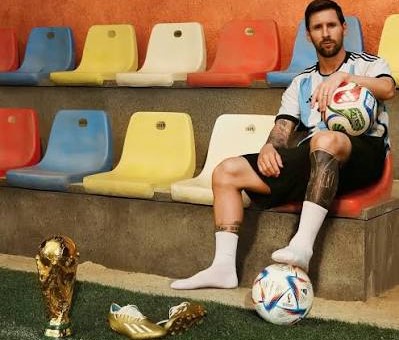
Collected Photo
The little boy from Rosario dreamed of becoming a footballer. He was just four when he would lose himself in the game every time he had a ball at his feet. But the road to that dream was never easy. As a child, Lionel Messi was diagnosed with a growth hormone deficiency, while the cost of treatment placed a heavy burden on his family. At one point, there were even doubts over whether the boy would ever be able to become a professional footballer.
Messi did not take long to answer those questions.
At just 13, Messi left Argentina for Spain, beginning a new chapter far from home. A new country, an unfamiliar environment and separation from his family were among the challenges he had to face. At Barcelona's La Masia academy, he began building himself into the player the world would eventually come to admire. His physical limitations could not stop him; instead, relentless work became one of his greatest strengths.
In 2004, at the age of just 17, Messi made his first-team debut for Barcelona. From there, there was no looking back. His dribbling, pace, precise passing and extraordinary ability to score goals gradually made him the heart of Barcelona's attack. The club that had taken him in as a teenager became the stage for a remarkable collection of records and achievements. He won La Liga, the Champions League and numerous other trophies, while reaching unprecedented heights individually.
But while his club career was filled with success, his journey with Argentina was very different.
Messi endured the pain of losing major finals with the national team. Argentina lost to Germany in the 2014 World Cup final and suffered defeats in the 2015 and 2016 Copa America finals. He faced intense criticism and was often held responsible for the team's failures. After Argentina lost to Chile in the 2016 Copa America final, Messi even announced his retirement from international football.
But Messi returned.
And that comeback changed the story.
In 2021, he finally lifted a major international trophy when Argentina defeated Brazil in the Copa America final at the Maracana. After years of waiting, Messi had his first major title with Argentina. Yet one dream remained the World Cup.
In 2022, that dream finally came true in Qatar.
Argentina were under pressure after suffering a shock defeat to Saudi Arabia in their opening match. But Messi carried the responsibility of leadership and guided his team forward, match after match. Then came the final against France.
That match felt like a reflection of Messi's entire career.
Rise and fall, joy and heartbreak, hope and disappointment�"all seemed to converge on that night in Lusail. After the final ended 3-3, Argentina prevailed in the penalty shootout. Messi finally had the World Cup in his hands.
The trophy he had waited years for, the trophy that had remained the biggest missing piece in his career, was finally his.
There were tears in his eyes - this time, tears of joy.
Messi's story did not end there. In 2021, he was forced to leave his beloved Barcelona. In 2023, he moved away from European football and began a new chapter with Inter Miami in the United States. Even as he grew older, his magic on the pitch continued.
Yet Messi's greatest achievement may not be his eight Ballon d'Or awards or the countless trophies he has won.
Perhaps his greatest achievement is that he never allowed the limitations of his childhood to determine the outcome of his life.
The boy whose physical growth once raised concerns, whose family struggled with the cost of treatment, the teenager who had to leave his country at 13 to pursue his dream, and the superstar who endured tears and criticism after repeated failures with Argentina, all eventually became the man who stood with the World Cup in his hands.
Football gave Messi countless things. But before that, Messi gave football the hardest years of his life, countless hours of training and an unwavering refusal to give up.
That is why Messi's story is more than the story of a footballer.
It is the story of holding on to an impossible dream.
The little boy from Rosario did not merely win the World Cup. He answered every question that had once been asked about whether he could make it.
-HIS
Loading...
Loading...
Also read






Editor : Iqbal Sobhan Chowdhury
Published by the Editor on behalf of the Observer Ltd. from Globe Printers, 24/A, New Eskaton Road, Ramna, Dhaka.
Editorial, News and Commercial Offices : Aziz Bhaban (2nd floor), 93, Motijheel C/A, Dhaka-1000.
Phone: PABX- 41053001-06; Advertisement: 41053012; 01793317829, 01550707291, E-mail: [email protected], [email protected] Online: email: [email protected] 41053014; 01550707297 Advertisement: 01550707296
Published by the Editor on behalf of the Observer Ltd. from Globe Printers, 24/A, New Eskaton Road, Ramna, Dhaka.
Editorial, News and Commercial Offices : Aziz Bhaban (2nd floor), 93, Motijheel C/A, Dhaka-1000.
Phone: PABX- 41053001-06; Advertisement: 41053012; 01793317829, 01550707291, E-mail: [email protected], [email protected] Online: email: [email protected] 41053014; 01550707297 Advertisement: 01550707296


