



| HEADLINE |

|
Runa Khan gets Magsaysay Award
Published : Tuesday, 1 September, 2026 at 12:00 AM
Staff Correspondent


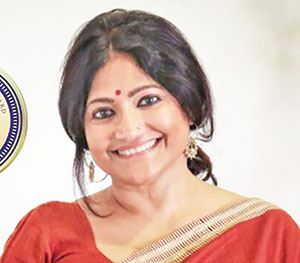 Bangladeshi social entrepreneur and development activist Runa Khan, founder and executive director of Friendship, has won Ramon Magsaysay Award 2026. It is regarded as ‘Asia’s Nobel’.
The Ramon Magsaysay Award Foundation announced the names of this year’s three recipients in Manila on Monday, marking the opening of the 68th Ramon Magsaysay Award Festival.
Singaporean diplomat, lawyer, professor and writer Tommy Koh and Myanmar human rights activist and former political prisoner Bo Chee are the other recipients. The awards will be presented in Manila on November 15 at the festival’s closing ceremony.
Khan founded Friendship in 2002 to work with marginalised and hard-to-reach communities, focusing on poverty, inequality, injustice, deprivation of essential services and climate-related challenges.
In an immediate reaction to the award, Runa told the Daily Observer, “I receive the 2026 Ramon Magsaysay Award with great happiness and profound humility.
Personally, it is a deeply meaningful recognition, but I do not see it as an individual achievement. No leader walks alone.”
She dedicated the recognition to the communities Friendship serves and its staff, saying, “I receive it on behalf of the communities who have allowed us to walk beside them, whose courage and struggles have shaped Friendship over the last 25 years, and on behalf of the entire Friendship family, whose tireless dedication makes our work possible every day.”
Runa said the award’s emphasis on “greatness of spirit” was particularly meaningful at a time of climate change, growing inequality, misinformation and uncertainty.
“For the communities we serve, I hope this recognition tells a larger story: that people who are often unseen or unheard matter, that their dignity matters, and that their resilience, knowledge and aspirations deserve the attention of the world,” she said.
Runa Khan stressed that development should go beyond providing assistance, arguing that dignity and rights require people to have greater control over their own lives.
“Our responsibility is not to decide their future for them, but to stand beside them, listen to them and help remove the barriers that prevent them from exercising their rights and opportunities,” she added.
Loading...
Loading...
Also read



Editor : Iqbal Sobhan Chowdhury
Published by the Editor on behalf of the Observer Ltd. from Globe Printers, 24/A, New Eskaton Road, Ramna, Dhaka.
Editorial, News and Commercial Offices : Aziz Bhaban (2nd floor), 93, Motijheel C/A, Dhaka-1000.
Phone: PABX- 41053001-06; Advertisement: 41053012; 01793317829, 01550707291, E-mail: [email protected], [email protected] Online: email: [email protected] 41053014; 01550707297 Advertisement: 01550707296
Published by the Editor on behalf of the Observer Ltd. from Globe Printers, 24/A, New Eskaton Road, Ramna, Dhaka.
Editorial, News and Commercial Offices : Aziz Bhaban (2nd floor), 93, Motijheel C/A, Dhaka-1000.
Phone: PABX- 41053001-06; Advertisement: 41053012; 01793317829, 01550707291, E-mail: [email protected], [email protected] Online: email: [email protected] 41053014; 01550707297 Advertisement: 01550707296


