



| HEADLINE |

|

Torosa Johur: Breaking barriers for people with disabilities
Bangladeshi researcher recognised as US 2026 Young Professional of the Year for her work in inclusive education and digital accessibility
Published : Saturday, 5 September, 2026 at 12:00 AM
Women's Oun Desk


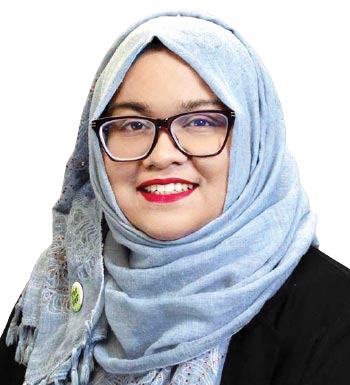 Bangladeshi researcher Torosa Johur has been named the 2026 Young Professional of the Year by Greater Grand Forks Young Professionals (GGFYP) in North Dakota, USA, in recognition of her professional achievements and contributions to the Grand Forks community.
Torosa received the award at a ceremony held at The Olive Ann Hotel on March 3. Her recognition highlights the growing international contribution of Bangladeshi researchers working in inclusive education, digital accessibility and learning disabilities.
Torosa’s academic journey began in Bangladesh. She completed her honours and master’s degrees in Communication Disorders at the University of Dhaka. She is currently pursuing a PhD in Teaching and Leadership at the University of North Dakota (UND), where she also works as a teaching instructor.
Her professional and research work focuses on digital accessibility and learning disabilities, with particular attention to creating more inclusive online education for students with disabilities and special educational needs.
As education increasingly moves online, accessibility has become an important issue. A digital classroom may appear convenient for most students, but inaccessible learning materials can create significant barriers for students with disabilities. For example, a visually impaired student may be unable to properly read a PDF through a screen reader, while a student with hearing impairment may struggle to follow a video without captions. Students with dyslexia or dysgraphia can also face difficulties when digital content is poorly structured or presented.
Torosa’s work aims to address such barriers and promote an educational environment where technology provides equal opportunities for all learners.
At the University of North Dakota, she has also worked as an accessibility reviewer, examining digital learning materials and online course content. Her work includes reviewing PDFs, PowerPoint presentations, videos, tables, headings, alternative text for images and captions to ensure that educational resources can be accessed by students with different needs.
She works with frameworks and approaches related to Universal Design for Learning (UDL), the Americans with Disabilities Act (ADA) and Web Content Accessibility Guidelines (WCAG) to support more inclusive digital education.
A significant part of her work focuses on teachers. According to her research interests, technology alone cannot create an inclusive classroom. Teachers also need appropriate training and guidance to develop accessible digital content and adopt teaching practices that respond to diverse learning needs.
Her PhD research explores the role of teachers in creating inclusive classrooms and ways to better prepare educators for this responsibility. She is also interested in connecting her background in speech-language pathology with modern educational technology and research to develop sustainable approaches to inclusive education.
Torosa has also conducted research and awareness activities related to learning disabilities, including dysgraphia. Looking ahead, she plans to explore the potential of artificial intelligence (AI) and virtual reality (VR) to develop platforms that can help train teachers in inclusive education.
The importance of accessibility extends beyond students with disabilities. Captions, for instance, can support students with hearing impairment while also helping anyone who prefers to watch educational videos without sound. Similarly, clear layouts and well-structured digital materials can improve the learning experience for all students.
For Bangladesh, Torosa’s work carries particular relevance as educational institutions increasingly adopt online learning platforms, digital books, video lectures and online assignments. Ensuring that these resources are accessible from the beginning could help create a more equitable education system.
Her achievement in the United States is therefore more than a personal milestone. It represents the contribution of a young Bangladeshi researcher to a global movement for inclusive education and digital equality.
As technology continues to transform education, Torosa Johur’s work reflects an important principle: digital progress becomes truly meaningful when technology opens doors for everyone rather than creating new barriers for those who need support the most.

Loading...
Loading...
Also read



Editor : Iqbal Sobhan Chowdhury
Published by the Editor on behalf of the Observer Ltd. from Globe Printers, 24/A, New Eskaton Road, Ramna, Dhaka.
Editorial, News and Commercial Offices : Aziz Bhaban (2nd floor), 93, Motijheel C/A, Dhaka-1000.
Phone: PABX- 41053001-06; Advertisement: 41053012; 01793317829, 01550707291, E-mail: [email protected], [email protected] Online: email: [email protected] 41053014; 01550707297 Advertisement: 01550707296
Published by the Editor on behalf of the Observer Ltd. from Globe Printers, 24/A, New Eskaton Road, Ramna, Dhaka.
Editorial, News and Commercial Offices : Aziz Bhaban (2nd floor), 93, Motijheel C/A, Dhaka-1000.
Phone: PABX- 41053001-06; Advertisement: 41053012; 01793317829, 01550707291, E-mail: [email protected], [email protected] Online: email: [email protected] 41053014; 01550707297 Advertisement: 01550707296


