



| HEADLINE |

|
KNOW YOUR RIGHTS
What the Law Says About Dishonoured Cheques?
Published : Saturday, 5 September, 2026 at 12:00 AM
M A Latif


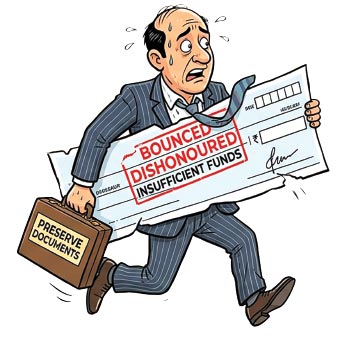 A dishonoured cheque can lead to criminal proceedings as well as separate civil action for recovery of money in Bangladesh. The process is governed primarily by Sections 138 to 141 of the Negotiable Instruments Act, 1881, which prescribe strict deadlines from presentation of the cheque to filing of a complaint.
Notice within 30 days
A cheque must be presented within six months of issue or its validity period, whichever is earlier. Following dishonour for insufficient funds or exceeding the bank arrangement, the payee must serve a written demand notice on the drawer within 30 days of receiving information of dishonour.
30 days to pay
The drawer gets 30 days to make payment after receiving the notice. Failure to pay creates the cause of action for a Section 138 case. The complaint must be filed within one month thereafter.
Court and punishment
Under the 2026 amendment, cheques up to Tk 5 lakh fall under the jurisdiction of a First Class or Metropolitan Magistrate. Cases above Tk 5 lakh are tried by a court not below the rank of Joint Sessions Judge or Metropolitan Joint Sessions Judge.
Conviction may result in up to one year’s imprisonment, a fine of up to three times the cheque amount, or both. Up to the cheque’s face value may be paid to the holder from the realised fine.
Trial, punishment and appeal
The prosecution must prove the cheque’s issuance, dishonour, timely notice, non-payment and compliance with limitation. The accused may challenge the cheque, transaction or notice.
Conviction may result in up to one year’s imprisonment, a fine of up to three times the cheque amount, or both. Up to the cheque value may be paid to the holder from the fine.
Under Section 138A, an appellant must deposit at least 50 per cent of the cheque amount before filing an appeal.
The writer is a Researcher and Law Reporter
Loading...
Loading...



Editor : Iqbal Sobhan Chowdhury
Published by the Editor on behalf of the Observer Ltd. from Globe Printers, 24/A, New Eskaton Road, Ramna, Dhaka.
Editorial, News and Commercial Offices : Aziz Bhaban (2nd floor), 93, Motijheel C/A, Dhaka-1000.
Phone: PABX- 41053001-06; Advertisement: 41053012; 01793317829, 01550707291, E-mail: [email protected], [email protected] Online: email: [email protected] 41053014; 01550707297 Advertisement: 01550707296
Published by the Editor on behalf of the Observer Ltd. from Globe Printers, 24/A, New Eskaton Road, Ramna, Dhaka.
Editorial, News and Commercial Offices : Aziz Bhaban (2nd floor), 93, Motijheel C/A, Dhaka-1000.
Phone: PABX- 41053001-06; Advertisement: 41053012; 01793317829, 01550707291, E-mail: [email protected], [email protected] Online: email: [email protected] 41053014; 01550707297 Advertisement: 01550707296


