



| HEADLINE |

|

Road Safety Foundation: 481 dead in 513 road accidents
Published : Monday, 7 September, 2026 at 12:38 PM
Observer Online Report


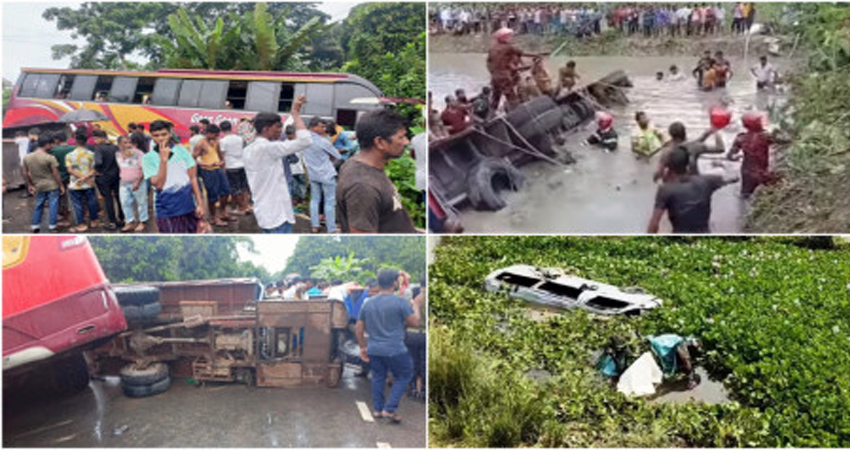
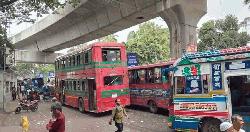
Collected Photo
At least 481 people were killed and 664 others injured in 513 road accidents across the country in August, reflecting a 15.65 per cent increase in daily fatalities compared to July.
The Road Safety Foundation released the figures in a report signed by its Executive Director Saidur Rahman on Monday (September 7).
The daily average death toll rose from 13.41 in July to 15.51 in August. The statistics were compiled from nine national dailies, 17 online portals, electronic media, and internal data.
Motorcycle accidents accounted for the highest casualties, with 176 deaths in 183 crashes, representing 36.59 per cent of the total fatalities. Pedestrians comprised 21.20 per cent of deaths with 102 killed, while 67 drivers and assistants lost their lives, accounting for 13.92 per cent.
Additional fatalities included 37 bus passengers, 51 occupants of trucks and lories, 11 in private cars or microbuses, 78 three-wheeler passengers, 21 in locally made vehicles, and five cyclists or rickshaw riders.
Regional highways saw the highest proportion of incidents at 42.30 per cent with 217 crashes, followed by 163 on national highways, 71 on urban roads, and 62 on rural roads.
Loss of vehicle control caused 38 per cent of all accidents, followed by 126 head-on collisions and 106 pedestrian run-overs. A total of 749 vehicles were involved, including 194 motorcycles, 112 three-wheelers, 108 trucks, and 103 buses.
Dhaka Division recorded the highest casualties with 144 deaths in 172 accidents, whereas Barishal Division registered the lowest with 14 deaths in 15 crashes.
Bogura emerged as the deadliest single district with 37 fatalities, while the capital Dhaka saw 23 deaths and 54 injuries across 48 accidents. Waterways and railways recorded additional casualties, with six killed in seven river accidents and 27 dead in 34 railway track incidents.
The foundation identified excessive speed, vehicle defects, driver fatigue, unregulated working hours, and weak traffic management as primary accident drivers. Recommendations included restructuring the Road Safety Council, enforcing modern vehicle safety features, removing expired vehicles, forming dedicated service lanes for slow vehicles, and establishing company-based modern bus services in the capital.
-SA

Loading...
Loading...
Also read





Editor : Iqbal Sobhan Chowdhury
Published by the Editor on behalf of the Observer Ltd. from Globe Printers, 24/A, New Eskaton Road, Ramna, Dhaka.
Editorial, News and Commercial Offices : Aziz Bhaban (2nd floor), 93, Motijheel C/A, Dhaka-1000.
Phone: PABX- 41053001-06; Advertisement: 41053012; 01793317829, 01550707291, E-mail: [email protected], [email protected] Online: email: [email protected] 41053014; 01550707297 Advertisement: 01550707296
Published by the Editor on behalf of the Observer Ltd. from Globe Printers, 24/A, New Eskaton Road, Ramna, Dhaka.
Editorial, News and Commercial Offices : Aziz Bhaban (2nd floor), 93, Motijheel C/A, Dhaka-1000.
Phone: PABX- 41053001-06; Advertisement: 41053012; 01793317829, 01550707291, E-mail: [email protected], [email protected] Online: email: [email protected] 41053014; 01550707297 Advertisement: 01550707296


