



| HEADLINE |

|
News Analysis
Prime Minister's India visit: Can it be an astute diplomacy?
Published : Tuesday, 15 September, 2026 at 12:00 AM
Observer Special


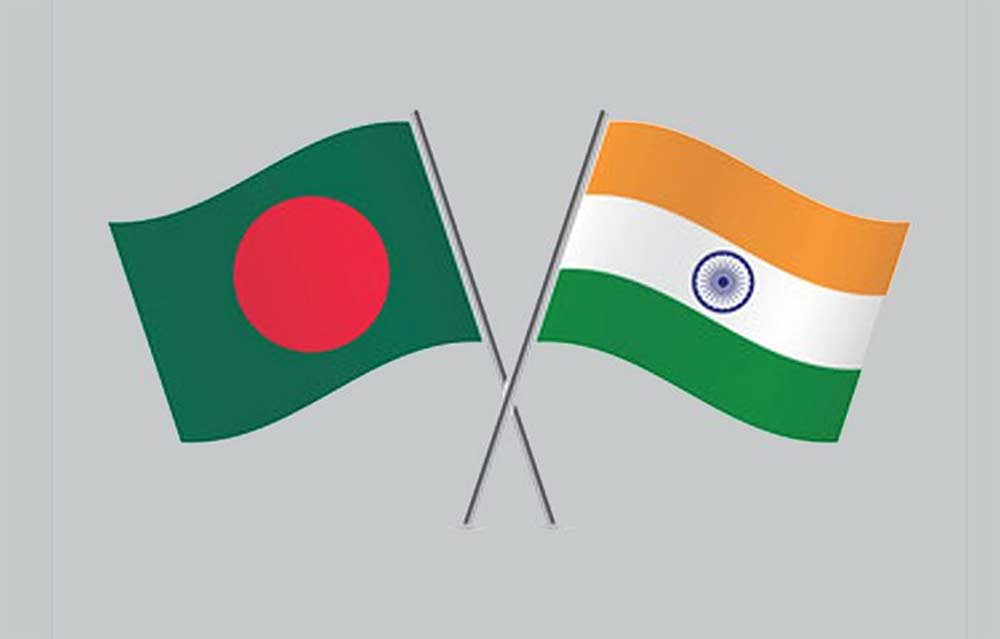 In diplomacy, “waiting” can sometimes be the most dangerous word of all. Time spent waiting can quietly carry a relationship past critical deadlines, taking with it opportunities that may never return. Many believe that relations between Dhaka and Delhi now stand at precisely such a moment.
The unease that has marked ties between the two neighbours over the past two years is no longer confined to political rhetoric or mutual dissatisfaction. The Teesta and Ganges waters, trade, land ports and the supply of essential commodities are becoming increasingly entangled, with one difficulty feeding into another. At the same time, the absence of regular and direct political communication between the heads of government of the two countries has become increasingly difficult to ignore.
For several months now, there has been discussion about a possible visit to India by Prime Minister Tarique Rahman. Yet no specific date has been finalised. Delhi has said it has no new information about the visit. Dhaka’s position is that there is no need to rush into it unless an “appropriate environment” has first been created.
A state visit, after all, is not merely an exercise in courtesy. It carries political significance, symbolic value and expectations. But this is precisely where a fundamental question arises: in diplomacy, should one wait for the right atmosphere to emerge, or should the atmosphere itself be created through dialogue?
The present reality of Dhaka-Delhi relations makes the second option more compelling. Geography does not accommodate resentment.
The most important truth about Bangladesh-India relations is not written in any diplomatic document. It is written on the map. Bangladesh shares land borders with India on three sides. The two countries are connected by the flows of numerous common rivers. These rivers do not recognise borders. At the same time, substantial trade moves through land ports. Goods, raw materials and essential commodities cross the border. In other words, the political situation in Dhaka, even in India, may change, but the geographical relationship between the two countries does not.
That is why relations with India are not simply a matter of preference in Bangladesh’s foreign policy. They are an inescapable part of its reality.
This does not mean that Bangladesh must agree with India on every issue. Every neighbour has its share of differences and disputes. That is a perfectly normal feature of international relations. And dialogue is the only way to resolve such issues. It is easy to damage relations with a neighbour. There will always be those willing to fuel such tensions. The mature course, and the one that serves the interests of the people, is to keep the door open while working to resolve the outstanding and evolving issues.
This is where a state visit becomes necessary. In Middle East despite wars and disputes the top level visits are reality. Even in BRICS it happened.
Meanwhile, the three-decade term of the Ganges Water Sharing Treaty is due to expire in December this year. Bangladesh has formed a high-level expert committee to review the agreement and has formally sent a proposal to Delhi. There is a harsh lesson in the nature of time here. Political discomfort can wait for a few months. The expiry of a treaty cannot.
Imports and exports are central to Bangladesh-India economic relations. Through land ports, India supplies Bangladesh with certain essential commodities that, because of geography, can be sourced through the easiest and cheapest route. This is a win-win situation for both countries.
Yet even here, questions of various kinds about equality and inequality are raised through the cheap rhetoric of anti-India sentiment. Bangladesh imports because it needs these goods and because the route is geographically easier and economically advantageous. The same principle applies to India. If the need arises and the arrangement is advantageous, India too will import from Bangladesh. This is a question of need. And need does not understand excuses.
Rice, wheat, sugar, onions, ginger and garlic-the prices of these everyday commodities often become a very real measure of a government’s popularity or unpopularity. When global markets become volatile, ensuring supplies of such products from India becomes important for Bangladesh. But when the need is most urgent, obtaining assurances on quotas or supply-related decisions can take time. The longer the administrative process, the greater the uncertainty in the market.
A regular mechanism for dialogue at the highest level, however, could create the space for swift political decisions in such situations. In other words, diplomacy has consequences far beyond conference rooms. It reaches the market, the kitchen and the farmer’s field. Any issue can be resolved more easily through dialogue at the highest level.
In March 2025, a recommendation to halt imports of Indian yarn by land routes in order to protect the local textile industry created a new complication. Then, in talks between the two countries last August, the reopening of border haats, the full restoration of land-port operations and the lifting of restrictions on yarn imports came up for discussion. There is also a goal of finalising the Comprehensive Economic Partnership Agreement, or CEPA, by the end of the year.
These initiatives are important. But they cannot be treated as isolated administrative decisions. As Bangladesh moves towards graduation from the category of least developed countries, the framework of its future commercial relationship with India will become even more consequential. That relationship cannot be reduced to the arithmetic of imports and exports. It must be viewed through the wider lens of markets, investment, supply chains and a long-term economic partnership.
It is worth remembering that silence can sometimes send even simple solutions into cold storage. When there is no regular communication between the top leaderships of two countries, something peculiar happens: small incidents acquire a life of their own and begin to grow into larger ones.
There is also a misconception about the proposed India visit that needs to be avoided. A state visit does not mean that all the problems in the relationship have been resolved. Nor does a visit mean that one side has bowed to the other.
Rather, a state visit can provide an opportunity to bring differences directly to the political negotiating table.
Bangladesh can therefore seek a healthy balance between emotion and reality in its relations with India. Several important deadlines are now approaching in Dhaka-Delhi relations. The Ganges Treaty is nearing the end of its term. The Teesta is facing a new political reality. Coordination between the two countries is also necessary to ensure the supply of essential commodities and resolve border issues.
In these circumstances, waiting for the “right atmosphere” is becoming increasingly uncertain.
Perhaps the most realistic question, therefore, should be this: will dialogue begin after relations have returned to normal, or should dialogue begin now in an effort to make relations normal?
The second path is more effective for Bangladesh.
In these circumstances, Prime Minister Tarique Rahman’s visit to India is not a more political issue. Nor is it a guarantee that all the problems between the two countries will be resolved. But it could open a necessary political door for closer ties with better mutual understanding and respect.
Beyond that door lie the Teesta, the Ganges, the border and trade. Beyond it also lies the willingness to build mutual trust and respect to national sovereignty.
There is no way to escape geography. Rivers cannot be stopped. Borders cannot be moved. Bangladesh cannot afford to harm itself by creating tensions along the routes of trade.
Pragmatism, therefore, is the only way forward.
And the first step on that path could be a visit. Should Bangladesh pursue a defensive policy or it will take up an aggressive diplomacy?
To delay the visit in the name of creating the “right atmosphere” may, in the end, produce the opposite result. The longer the wait, the greater the possibility that the atmosphere itself will become even less conducive. Future unpredictable issues may spoil the whatever conducive atmosphere now exists.
The mystic poet Lalon Sai put it simply: Once time has passed, the work cannot be done.
Loading...
Loading...
Also read



Editor : Iqbal Sobhan Chowdhury
Published by the Editor on behalf of the Observer Ltd. from Globe Printers, 24/A, New Eskaton Road, Ramna, Dhaka.
Editorial, News and Commercial Offices : Aziz Bhaban (2nd floor), 93, Motijheel C/A, Dhaka-1000.
Phone: PABX- 41053001-06; Advertisement: 41053012; 01793317829, 01550707291, E-mail: [email protected], [email protected] Online: email: [email protected] 41053014; 01550707297 Advertisement: 01550707296
Published by the Editor on behalf of the Observer Ltd. from Globe Printers, 24/A, New Eskaton Road, Ramna, Dhaka.
Editorial, News and Commercial Offices : Aziz Bhaban (2nd floor), 93, Motijheel C/A, Dhaka-1000.
Phone: PABX- 41053001-06; Advertisement: 41053012; 01793317829, 01550707291, E-mail: [email protected], [email protected] Online: email: [email protected] 41053014; 01550707297 Advertisement: 01550707296


