



| HEADLINE |

|
Maulana Karim Ibn Mosobbir beyond public spotlight as candidate for role in govt
Published : Tuesday, 15 September, 2026 at 6:49 PM
Observer online report


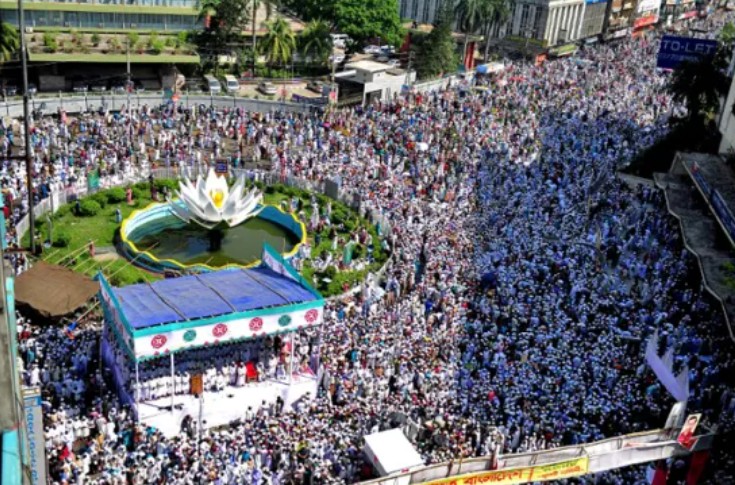
Maulana M. A. Karim Ibn Mosobbir, a former central leader of Bangladesh Hefazat-e-Islam and a participant in the 2013 Shapla Chattar movement, has emerged in political discussions as a potential candidate for a significant role in the Bangladesh government, with some of his supporters even advocating for his inclusion in the Cabinet.
But who is Maulana M. A. Karim Ibn Mosobbir beyond the public spotlight?
Karim has been known in Bangladesh for his political activities, writings and involvement in religious and social movements. His supporters describe him as an experienced, honest and patriotic figure with longstanding links to the country's political landscape.
Politically, his associates portray him as a close confidant of former BNP Chairperson Begum Khaleda Zia and a person who maintained close relations with senior BNP leaders.
Karim has also been active as a columnist and writer. His supporters describe him as an outspoken anti-fascist writer whose columns addressed political and governance issues. They claim that he faced imprisonment during the then Awami League government over his writings.
His associates further claim that the publication of several newspapers, including Dainik Amar Desh and Dainik Sangram, was halted following the publication of his columns. Such claims, however, would require verification from independent records and contemporary reports.
Karim's name also surfaced in connection with the disappearance of BNP central organisational coordinator and then-missing leader M Ilyas Ali in 2012.
According to accounts cited by his associates, Ilyas Ali had received a message on his mobile phone several days before his disappearance warning that he and Maulana M. A. Karim Ibn Mosobbir could face abduction. They said the matter was subsequently mentioned in a report published on the front page of Dainik Bangladesh Pratidin on April 28, 2012, after Ilyas Ali went missing.
Karim later became involved with Hefazat-e-Islam and participated in the organisation's 2013 Shapla Chattar movement. His supporters say he was subsequently arrested and imprisoned along with several other leaders and activists, including Maulana Junayed Babunagari, who was then regarded as a close associate of Hefazat-e-Islam chief Allama Shah Ahmad Shafi.
Following his release, Karim reportedly went into exile.
Over the years, his supporters have continued to portray him as a politically experienced and principled figure who faced persecution because of his political and ideological positions. They now argue that Bangladesh could benefit from his experience and that he should be given an important responsibility in the government.
A section of the public and his supporters have recently called for Karim to be considered for a ministerial position, describing him as capable, honest, selfless and patriotic.
They believe that Bangladesh needs experienced leaders with a commitment to public welfare, good governance and national interests, and see Maulana M. A. Karim Ibn Mosobbir as one such potential figure.
However, any assessment of his political record, past activities and claims surrounding his imprisonment, exile and links with political figures should be based on independently verifiable records and documented evidence.
M. K. L
Loading...
Loading...
Also read

Editor : Iqbal Sobhan Chowdhury
Published by the Editor on behalf of the Observer Ltd. from Globe Printers, 24/A, New Eskaton Road, Ramna, Dhaka.
Editorial, News and Commercial Offices : Aziz Bhaban (2nd floor), 93, Motijheel C/A, Dhaka-1000.
Phone: PABX- 41053001-06; Advertisement: 41053012; 01793317829, 01550707291, E-mail: [email protected], [email protected] Online: email: [email protected] 41053014; 01550707297 Advertisement: 01550707296
Published by the Editor on behalf of the Observer Ltd. from Globe Printers, 24/A, New Eskaton Road, Ramna, Dhaka.
Editorial, News and Commercial Offices : Aziz Bhaban (2nd floor), 93, Motijheel C/A, Dhaka-1000.
Phone: PABX- 41053001-06; Advertisement: 41053012; 01793317829, 01550707291, E-mail: [email protected], [email protected] Online: email: [email protected] 41053014; 01550707297 Advertisement: 01550707296


