



| HEADLINE |

|

Bangladesh's Stronger Taka Meets a Tougher World: Can the Rally Last?
Bangladesh Bank has described the currency movement as a positive development for bilateral trade. But economists say the appreciation should be viewed with cautious optimism rather than celebration.
Published : Saturday, 26 September, 2026 at 12:00 AM
Faruk Ahmed


 Bangladesh's currency has delivered one of the most unexpected financial stories in South Asia this year. After enduring years of pressure against the US dollar, the Bangladeshi Taka has quietly mounted a remarkable rally against the Indian rupee, strengthening by 11.6 percent in just two years and by 7.6 percent over the past year alone.
The appreciation is more than a foreign-exchange statistic. It has emerged as a crucial indicator of Bangladesh's changing economic landscape at a time when global oil prices remain volatile, gold is hovering near historic highs, commodity markets are vulnerable to geopolitical shocks and the dollar continues to dominate international trade.
The immediate question is whether Bangladesh has genuinely regained currency strength. The bigger question is whether the Taka can defend this position in an increasingly turbulent global economy.
The numbers tell a striking story. On September 22, 2024, one Taka bought around ₹0.70. A year later it rose to about ₹0.73. By September 22, 2026, one Taka was worth approximately ₹0.78. In reverse terms, one Indian rupee now buys around Tk1.281, compared with Tk1.429 two years ago.
In practical terms, Bangladeshi businesses now need nearly Tk0.10 less to buy one Indian rupee than they did a year earlier. That means stronger purchasing power for imports from India's vast market, offering potential savings on everything from cotton and yarn to medicines, machinery, chemicals and consumer goods.
Bangladesh Bank has described the currency movement as a positive development for bilateral trade. Executive Director and spokesperson Arif Hossain Khan says a stronger Taka reduces the local-currency cost of imports from India and can also lower travel expenses for Bangladeshis visiting India for treatment, education or tourism, provided other market factors remain unchanged.
But economists say the appreciation should be viewed with cautious optimism rather than celebration.
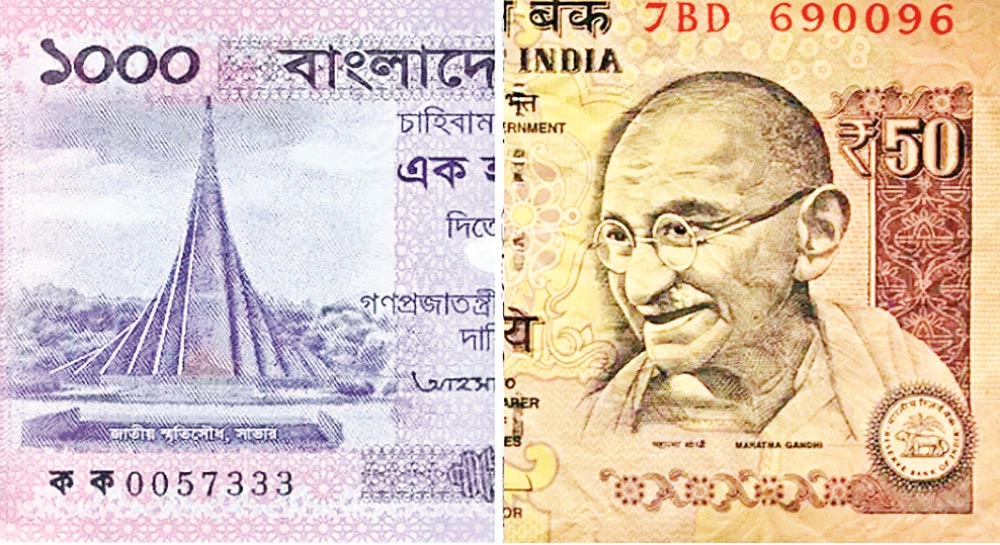 The Taka has strengthened against the rupee largely because two different stories are unfolding simultaneously. Bangladesh's foreign-exchange market has become relatively more orderly after tighter exchange-rate management, stronger remittance inflows through formal banking channels and improved dollar liquidity. At the same time, the Indian rupee has remained under pressure from expensive crude oil imports, global dollar strength and capital outflows.
The result is a rare currency advantage for Bangladesh against its largest trading partner.
The benefits could be significant. Bangladesh imports billions of dollars' worth of goods from India every year, including industrial raw materials, agricultural products, pharmaceuticals, steel, electrical equipment and automobile components. For manufacturers already struggling with high borrowing costs and inflation, even a modest reduction in import costs can improve profitability and reduce production expenses.
The textile and garment sector could gain from cheaper cotton, yarn and chemicals imported from India. Pharmaceutical manufacturers may benefit from lower-priced active ingredients. Consumers purchasing Indian medicines or household goods could also see lower costs�"if importers pass on the exchange-rate gains.
That is where the optimism begins to fade.
Foreign-exchange movements alone rarely determine retail prices. Import duties, freight charges, logistics costs, wholesale margins and market behaviour often absorb much of the currency advantage before consumers notice any difference. Bangladesh has repeatedly experienced global commodity prices falling while domestic prices remained stubbornly high.
Currency analysts argue that the stronger Taka creates an opportunity, but not a guarantee, for lower inflation.
The larger concern is sustainability.
Bangladesh's currency remains fundamentally linked to the US dollar rather than the Indian rupee. Most fuel, edible oil, wheat, fertiliser and industrial commodities are purchased in dollars. As long as the dollar dominates global trade, Bangladesh's external stability will continue to depend on its ability to earn and preserve foreign currency.
That makes global oil prices the single biggest threat to the Taka's recent success.
Crude oil markets remain highly unpredictable as geopolitical tensions in the Middle East, supply decisions by OPEC+ producers and fragile global economic growth continue to drive price swings. A sustained rise in crude prices would immediately inflate Bangladesh's fuel import bill, increase demand for dollars and place renewed pressure on foreign-exchange reserves.
Energy economists warn that Bangladesh remains one of Asia's most import-dependent energy economies. Every major increase in crude prices quickly filters through electricity generation, transport costs, manufacturing expenses and food inflation.
The Taka may be stronger against the rupee, but it cannot shield Bangladesh from an expensive dollar-denominated oil market.
Gold is flashing another warning signal.
International gold prices remain close to record highs as investors seek safety amid geopolitical uncertainty, inflation fears and expectations surrounding global interest-rate movements. Historically, rising gold prices often coincide with heightened uncertainty in currency and financial markets.
For Bangladesh, expensive gold increases import costs and widens pressure on the trade balance. It also reflects a global investment environment where investors become more cautious about emerging markets and seek safer assets.
Commodity markets present a similarly mixed picture. Prices of wheat, edible oil, rice, fertiliser, metals and industrial inputs have become more stable than during the peak of the Ukraine war, yet weather disruptions, shipping costs and geopolitical tensions continue to threaten supply chains.
A stronger Taka helps only when imported commodities are sourced from India or priced in rupees. The overwhelming share of globally traded commodities remains exposed to movements in the US dollar.
The foreign-exchange story is therefore only one chapter of Bangladesh's broader economic challenge.
Economists say five indicators will determine whether the Taka can maintain its newfound strength: foreign-exchange reserves, remittance inflows, export earnings, global oil prices and international dollar liquidity. Any deterioration in these indicators could quickly reverse recent currency gains.
Bangladesh has made progress in restoring stability after one of its most severe foreign-exchange crises. Formal remittances have recovered, exports remain resilient and Bangladesh Bank has tightened oversight of the currency market. Those improvements have eased immediate pressure on the Taka.
Yet structural vulnerabilities remain. External debt repayments for large infrastructure projects are increasing. Import demand is expected to rise as economic activity accelerates. Inflation continues to challenge household purchasing power, while foreign direct investment has yet to recover strongly enough to provide lasting support for the external account.
The appreciation against the Indian rupee therefore represents an encouraging but fragile victory.
For Bangladesh, the stronger Taka is not merely about buying cheaper Indian goods. It is a test of whether the country can convert short-term currency gains into long-term macroeconomic stability. If policymakers continue rebuilding reserves, maintain disciplined exchange-rate management, encourage export diversification and sustain remittance growth, the Taka could preserve much of its regional strength.
If global oil prices surge, commodity markets become more volatile or dollar liquidity tightens again, the currency's recent rally could prove temporary.
For now, the Taka has achieved something few expected: it has gained ground against one of Asia's most influential currencies.
The challenge now is ensuring that this unexpected triumph does not become another fleeting moment in Bangladesh's long battle for economic stability.
The writer is a seasoned financial journalist and Consulting Editor of The Daily Observer. He can be reached at [email protected].

Loading...
Loading...
Also read



Editor : Iqbal Sobhan Chowdhury
Published by the Editor on behalf of the Observer Ltd. from Globe Printers, 24/A, New Eskaton Road, Ramna, Dhaka.
Editorial, News and Commercial Offices : Aziz Bhaban (2nd floor), 93, Motijheel C/A, Dhaka-1000.
Phone: PABX- 41053001-06; Advertisement: 41053012; 01793317829, 01550707291, E-mail: [email protected], [email protected] Online: email: [email protected] 41053014; 01550707297 Advertisement: 01550707296
Published by the Editor on behalf of the Observer Ltd. from Globe Printers, 24/A, New Eskaton Road, Ramna, Dhaka.
Editorial, News and Commercial Offices : Aziz Bhaban (2nd floor), 93, Motijheel C/A, Dhaka-1000.
Phone: PABX- 41053001-06; Advertisement: 41053012; 01793317829, 01550707291, E-mail: [email protected], [email protected] Online: email: [email protected] 41053014; 01550707297 Advertisement: 01550707296


