



| HEADLINE |

|

Why Are Ordinary Americans Still Living on Streets—and What Can Bangladesh Learn?
For Bangladesh, the lesson is not to reject capitalism or growth, but to understand that growth without housing, social protection and accountable spending can leave prosperity sitting beside insecurity.
Published : Saturday, 10 October, 2026 at 12:00 AM
Faruk Ahmed


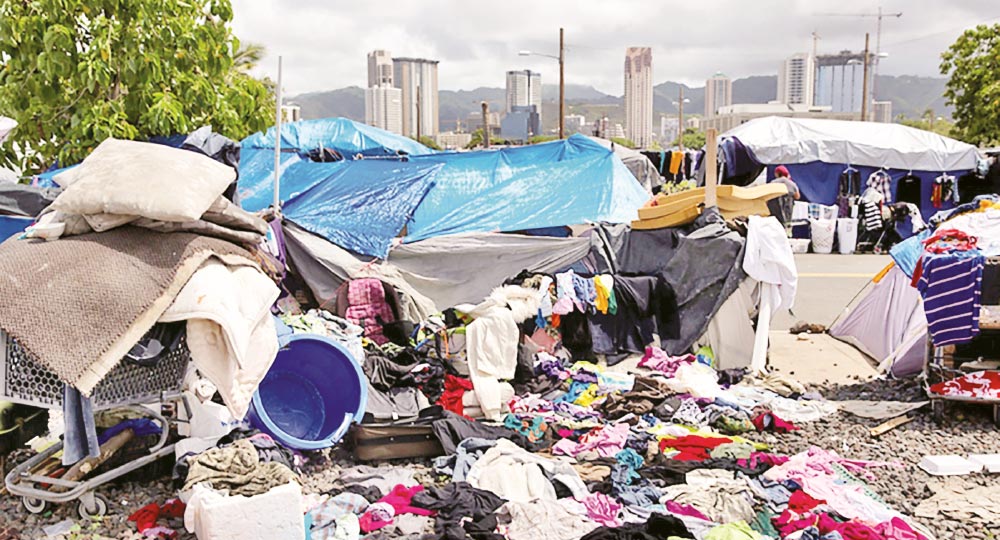
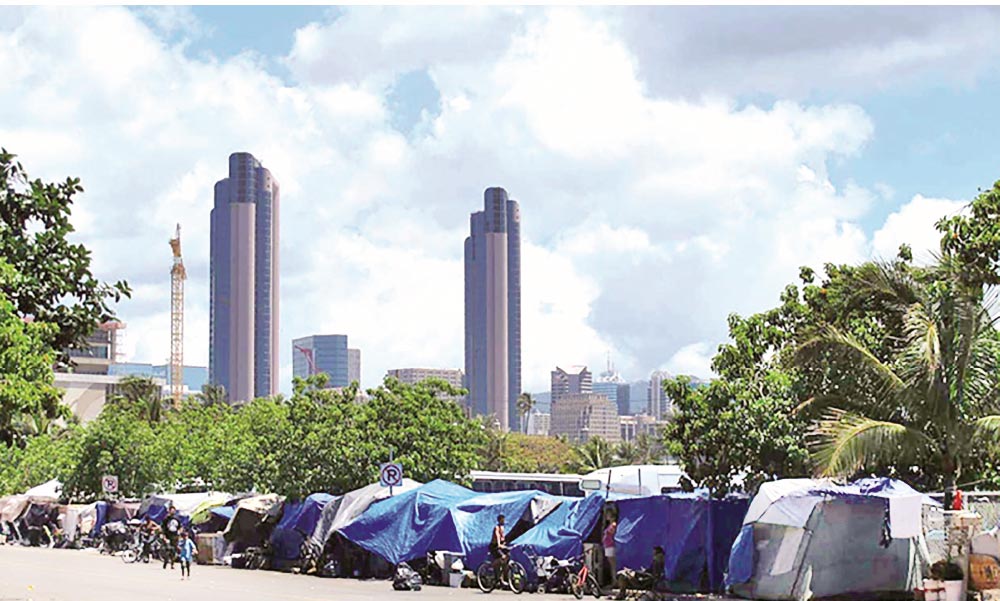
 Silicon Valley created fortunes, Hollywood created global glamour and California built an economic machine larger than the GDP of most countries. Yet on the same streets where luxury apartments rise above Los Angeles, thousands sleep in tents, vehicles and makeshift shelters.
That is the unsettling question at the heart of Why Are Ordinary Americans Living on the Streets? Reality of USA: How can America’s richest state, with an economy exceeding $4.5 trillion, have workers who earn a living yet cannot afford a home?
The answer is more complicated than unemployment, laziness or crime. California’s crisis sits at the intersection of housing scarcity, soaring rents, inequality, mental-health problems, drug addiction, land-use restrictions and weaknesses in the management of public money.
For Bangladesh, the lesson is not to reject capitalism or growth, but to understand that growth without housing, social protection and accountable spending can leave prosperity sitting beside insecurity.
California is now the first US state to cross $4.5 trillion in economic output, according to newly released federal data cited by the state government. Its economy spans technology, entertainment, agriculture, manufacturing, healthcare, finance and professional services. The state says it remains the world’s fourth-largest economy if compared with countries.
Yet GDP does not tell us whether a cleaner can pay rent, whether a delivery worker can survive a medical emergency or whether a family has enough savings to withstand a temporary loss of income.
 The Housing Paradox
Housing is at the centre of California’s contradiction.
Social scientists and economists describe workers in restaurants, retail, delivery services and hospitals who may work full-time but remain unable to secure permanent housing. When rent consumes most of a monthly wage, a broken car, illness or a few missed shifts can turn financial vulnerability into eviction.
Restrictive zoning, lengthy approvals and local resistance to higher-density development can prevent enough homes from being built where jobs are concentrated. Local opposition�"often described as NIMBY, or “Not In My Backyard”�"has also become part of the housing debate.
Scarcity then becomes self-reinforcing. High-income technology workers can bid aggressively for limited homes, while lower-paid workers face overcrowding, long commutes, vehicle living or homelessness. The result is an economy in which employment does not necessarily guarantee housing security.
This is a crucial lesson for Bangladesh. Dhaka and other fast-growing cities need to treat housing as economic infrastructure, not as a private-sector issue to be solved after growth has occurred. Affordable, higher-density housing near employment centres must be planned alongside mass transit, schools, healthcare, drainage and utilities.
Growth Without Inclusion
California demonstrates another uncomfortable truth: aggregate wealth can rise while economic insecurity remains severe.
Silicon Valley has created extraordinary wealth through technology, artificial intelligence, software, venture capital and global platforms. Hollywood has turned entertainment and intellectual property into international exports. Agriculture, aerospace, biotechnology and advanced manufacturing add further economic power.
But prosperity is not distributed evenly.
When a section of the workforce earns hundreds of thousands of dollars, property owners have a strong incentive to serve tenants able to pay the highest rents. Asset values can therefore rise much faster than the purchasing power of ordinary workers.
Bangladesh should pay close attention. If land and property prices in Dhaka rise much faster than wages, economic growth can gradually become exclusionary. A city may become richer on paper while ordinary families become poorer in terms of housing security, commuting time and disposable income.
 The Budgetary Warning
Perhaps the strongest lesson from California concerns public spending.
The California State Auditor found that nearly $24 billion was allocated for homelessness and housing during the five fiscal years from 2018�"19 through 2022�"23. But the audit concluded that the state had not consistently tracked the costs and outcomes of its homelessness programmes. Of five programmes reviewed, two appeared cost-effective, while the state lacked sufficient outcome data to assess the other three.
The deeper problem is governance: a government spending billions on a social crisis must be able to show where the money went, what it purchased, how many people were helped and whether those people remained housed.
This is where Bangladesh should guard against what may be called fiscal decapitalisation�"the erosion of the productive value of public spending when resources are absorbed by administrative layers, duplicated programmes, delays and overheads instead of creating durable assets and measurable outcomes.
Every major social programme should therefore have a clear target, a transparent budget, a single accountable authority, digital expenditure tracking and independent outcome evaluation.
NGOs Can Help�"But Cannot Replace the State
Some American economists are sharply critical of government money being channelled through private NGOs. That criticism requires nuance.
NGOs can be valuable implementers, particularly in outreach, rehabilitation, shelter management and specialised social services. But outsourcing implementation cannot mean outsourcing accountability.
The state must retain ownership of policy, standards, data, procurement and audit. If money passes through several agencies, NGOs and contractors, government must still know exactly how much was spent, on what, where, for whom and with what result.
California’s audit exposed the danger of losing that line of sight. The State Auditor noted that multiple entities are involved in homelessness funding and that the state lacked consistent information needed to evaluate programme effectiveness.
For Bangladesh, the principle should be simple: NGOs may implement; the government must own the outcome.
Fentanyl And the Economics of Addiction
Housing is central, but it is not the whole story.
Both economists and social scientists in their studies highlight fentanyl and the way severe addiction can interact with homelessness, mental illness, poverty and crime. Addiction can destroy income, health and family relationships; street homelessness can then intensify psychological distress and make treatment harder.
The lesson for Bangladesh is particularly important. Drug addiction should not be treated only as a policing issue. Prevention and enforcement against traffickers are essential, but so are treatment, rehabilitation, mental-health services, family support, secure accommodation and pathways back to employment.
The real policy challenge is to prevent these problems from reinforcing one another.
From Proposition 47 to the Theft Reduction Act
California’s experience also highlights how difficult it is to strike the right balance between criminal justice, addiction treatment and public safety.
According to the US State Department, Proposition 47, approved by California voters in 2014, reduced penalties for certain low-level theft and drug offences. In the years that followed, the measure became the focus of intense debate over retail theft, repeat offending and its implications for public safety.
In 2024, California voters approved Proposition 36, the Homelessness, Drug Addiction, and Theft Reduction Act, in response to concerns over these issues. The measure increased penalties for certain repeat theft and drug offences while introducing a more treatment-oriented approach to some drug-possession cases.
Under Proposition 36, certain thefts involving property worth $950 or less can be prosecuted as felonies when the offender has qualifying prior convictions. At the same time, defendants charged with specified drug offences may have their charges dismissed if they successfully complete a court-supervised treatment programme.
The California debate illustrates a broader policy dilemma: reducing penalties without addressing addiction and repeat offending can create public-safety concerns, while relying solely on tougher punishment may do little to solve the underlying causes of drug dependence and homelessness.
For Bangladesh, the message is clear: criminal justice must be connected to treatment capacity.
Punishment may be necessary for organised trafficking, repeat predatory theft and violent crime. But addiction cannot be sentenced out of existence without treatment capacity.
The Six Lessons For Bangladesh
First, build housing before urban growth becomes a social crisis. Affordable, higher-density housing must be integrated into city planning.
Second, do not confuse GDP growth with inclusive development. Economic success should be reflected in real purchasing power, housing security and access to essential services.
Third, prevent fiscal decapitalisation. Public budgets should create measurable social assets and outcomes, not simply larger administrative systems.
Fourth, keep the state accountable when NGOs participate. Government may outsource delivery, but it cannot outsource responsibility for public money.
Fifth, treat addiction as both a security and public-health challenge. Fentanyl demonstrates how quickly drug dependency can interact with homelessness, mental-health problems and crime.
Sixth, align criminal justice with rehabilitation. California’s experience with Proposition 47 and Proposition 36 shows that changing penalties without adequate treatment and social infrastructure produces an incomplete response.
The Ultimate Warning
California is not a failed economy. That is precisely why its homelessness crisis is so revealing.
Its technology companies, universities, farms, entertainment industry and entrepreneurs have created extraordinary productive capacity. But economic power alone does not guarantee social security. The tents on California’s pavements are therefore more than a humanitarian image. They are an economic warning.
For Bangladesh, the danger is not becoming another California. It is repeating the wrong sequence: rapid urban growth, rising land values, insufficient affordable housing, widening inequality, expanding drug risks and large social budgets without rigorous measurement of results.
Bangladesh still has time to choose a different path.
Growth must build homes as well as fortunes. Budgets must produce outcomes as well as expenditure. Drug laws must be backed by treatment. NGOs can assist the state, but cannot replace it. And economic success must ultimately be judged not only by the size of GDP, exports or billion-dollar businesses, but by whether an ordinary working person can afford a decent life.
That is the dark lesson hidden beneath the glitter of America’s richest state�"and one Bangladesh should learn before its own urban prosperity becomes a source of insecurity.
The writer is a veteran financial journalist with nearly four decades of experience covering banking, finance, business and economic policy for leading newspapers, news agencies and television channels. He is currently the Consulting Editor of The Daily Observer and has long been engaged in analysing Bangladesh’s financial and economic landscape. He may be reached at [email protected].

Loading...
Loading...
Also read



Editor : Iqbal Sobhan Chowdhury
Published by the Editor on behalf of the Observer Ltd. from Globe Printers, 24/A, New Eskaton Road, Ramna, Dhaka.
Editorial, News and Commercial Offices : Aziz Bhaban (2nd floor), 93, Motijheel C/A, Dhaka-1000.
Phone: PABX- 41053001-06; Advertisement: 41053012; 01793317829, 01550707291, E-mail: [email protected], [email protected] Online: email: [email protected] 41053014; 01550707297 Advertisement: 01550707296
Published by the Editor on behalf of the Observer Ltd. from Globe Printers, 24/A, New Eskaton Road, Ramna, Dhaka.
Editorial, News and Commercial Offices : Aziz Bhaban (2nd floor), 93, Motijheel C/A, Dhaka-1000.
Phone: PABX- 41053001-06; Advertisement: 41053012; 01793317829, 01550707291, E-mail: [email protected], [email protected] Online: email: [email protected] 41053014; 01550707297 Advertisement: 01550707296


