



| HEADLINE |

|

A Housing Tsunami Bigger Than 2008?
Kiyosaki’s Warning Raises a Global Alarm
Published : Saturday, 17 October, 2026 at 12:00 AM
FARUK AHMED


 The global housing crisis is no longer just about soaring property prices; it is about mounting debt, unaffordable rents and the growing threat to financial stability. From London to Dhaka, the dream of homeownership is slipping beyond the reach of middle-income families, turning the struggle for a roof into a fight for economic survival.
A house should be a family's fortress-a source of security, a lifetime investment and a foundation for the next generation. But when mortgage repayments consume household incomes and property prices move beyond financial reach, that fortress can become a trap.
This is the concern behind a warning from Robert Kiyosaki, bestselling author of Rich Dad Poor Dad, that the next housing crisis could be more devastating than the property-market turmoil associated with 1988 and the global financial catastrophe of 2008.
The prediction is alarming, but it is not an established economic forecast. The timing and scale of any future crisis remain uncertain. Yet the underlying danger is real: when property prices outrun incomes, borrowing becomes excessive and lenders underestimate their exposure, a housing boom can turn into a financial disaster.
The central question is not whether every housing market will collapse. It is whether households, developers and financial institutions can withstand a reversal when the assumptions supporting property prices begin to crumble.
The global financial crisis of 2008 demonstrated how a housing-market collapse can destabilise the entire economy.
Financial institutions packaged mortgages into complex securities, spreading housing-related risks throughout the financial system. When house prices fell and borrowers defaulted, mortgage-backed investments lost value, major institutions collapsed or required extraordinary support, and credit markets came under severe pressure.

The resulting financial shock helped push the world economy into a deep recession.
The lesson was clear: mortgages are not merely private agreements between borrowers and banks. When millions of loans are interconnected through financial institutions and investment markets, widespread defaults can threaten the financial system itself.
The damage extends beyond homeowners. Developers suspend projects, construction workers lose jobs, suppliers face unpaid bills and businesses suffer as credit tightens and household spending declines.
The warning from 2008 is therefore broader than the prospect of falling house prices. It concerns the quality of lending, household indebtedness, banks' capacity to absorb losses and the extent to which economic growth depends on ever-rising property values.
The Dangerous Mathematics Of Expensive Homes
Housing booms often feed on a simple cycle. Cheap credit allows buyers to borrow more, pushing up property prices. Rising valuations encourage further investment, while lenders become increasingly comfortable financing assets that appear to offer ever-greater security.
But the cycle can reverse sharply.
Higher interest rates make mortgages more expensive for new buyers and increase repayments for borrowers with variable-rate loans. Investors refinancing their debts may discover that rental income no longer covers financing costs. Developers face rising borrowing expenses alongside weakening demand, leaving projects delayed and apartments unsold.
When borrowers struggle to repay, lenders face losses precisely when they may need to conserve capital.
Yet expensive housing or higher interest rates alone do not guarantee a crash. The danger becomes acute when inflated valuations coincide with excessive borrowing, stagnant household incomes, weak lending standards and deteriorating credit quality.
“The real warning sign is a property market whose prices depend on debt that households and lenders cannot safely sustain”, Dr Robert Kiyosaki observed. “Nor is every price correction a catastrophe. Falling prices can improve affordability for prospective buyers. The problem arises when the decline triggers widespread defaults, banking distress and a contraction in employment and investment”.
Demographics And Global Uncertainty
Demographic changes can intensify housing pressures. In the United States, the ageing of the baby-boom generation raises questions about future demand, inheritance and the movement of older homeowners into smaller properties. Meanwhile, younger households face barriers to ownership from high prices, existing debts and uncertain employment.
But demographics alone cannot establish that a nationwide crash is inevitable. Population growth, immigration, household formation and restrictions on construction can sustain demand in some locations while other regions experience declining prices.
Housing markets are local, not uniform. A city attracting new jobs and residents may retain strong demand, while a region losing population or economic activity may face unsold homes and falling valuations.
Geopolitical shocks can add to the strain. Conflicts, trade disputes and energy-supply disruptions may raise inflation and construction costs, weaken employment prospects and make lenders more cautious. These pressures can reinforce a downturn, although their impact depends on their duration and the responses of governments and central banks.
Kiyosaki's warning should therefore be treated as a scenario worth examining, not proof that a crisis larger than those of 1988 and 2008 is inevitable.
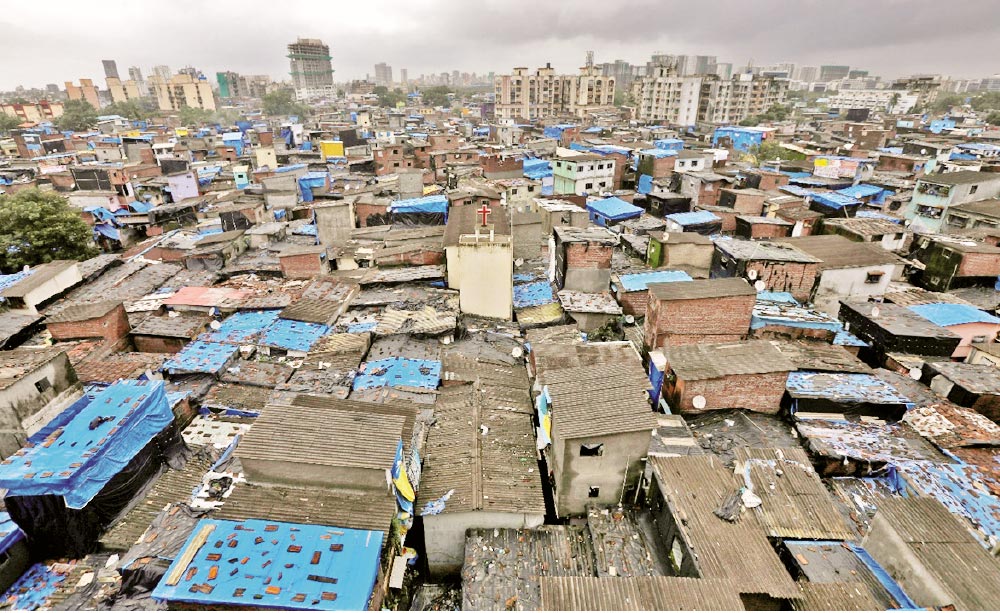 Bangladesh: The Struggle ForA Roof
For Bangladesh, the American mortgage crisis offers important lessons, but not a prediction that the same events will be repeated here. The country's housing market operates under different financing arrangements, land-ownership patterns and regulatory conditions.
Nevertheless, Dhaka's housing challenge is increasingly severe. Scarce urban land, expensive apartments and limited purchasing power place formal homeownership beyond the reach of many middle-income families. Buying a flat can require years of savings and a long-term financial commitment.
The risks extend beyond the purchase price. Buyers often commit substantial advances to apartments under construction, while developers may depend on these payments, bank loans and continuing sales to finance their projects. If sales weaken, credit becomes expensive or construction is delayed, developers can struggle to complete projects. Buyers may then face postponed handovers, additional costs and uncertainty over money already invested.
For a family that has exhausted its savings, sold other assets or borrowed to meet instalments, such delays can cause serious financial distress-even without a nationwide collapse in property prices.
The implications for the financial system deserve closer scrutiny. How much are banks and non-bank financial institutions exposed to developers, land purchases and housing-related lending? Are property valuations realistic? Are lenders adequately assessing borrowers' repayment capacity and the risks of unfinished projects?
These questions require evidence from regulators and financial institutions; an American crisis prediction cannot answer them.
The policy challenge is to support responsible development while making housing more affordable and reducing financial vulnerability.
Preventing A Housing Crisis
No single intervention can eliminate housing-market risk. Prevention requires financial discipline, effective supervision and policies that connect housing supply with genuine household demand.
Homebuyers should assess affordability before anticipating capital gains. Mortgage calculations must include interest, maintenance and service charges, while allowing for emergencies. Buyers of apartments under construction should examine title documents, approvals, developers' track records, payment terms and contractual handover obligations.
Banks and financial institutionsmust assess repayment capacity under adverse conditions, not merely at prevailing interest rates. They should scrutinise collateral valuations, monitor concentrations of property-related lending and maintain adequate capital and provisions against potential losses. Stress tests can expose weaknesses before they threaten financial stability.
Regulators need reliable information on property transactions, valuations and lending exposures. Stronger disclosure, loan classification and supervision can help identify excessive risk early. Targeted prudential measures may be more effective than indiscriminate restrictions that also penalise responsible borrowers.
The governmentmust make affordable housing a central element of urban planning. Better public transport, improved connectivity and development suited to household incomes can ease pressure on scarce urban land. Stronger consumer protection, clearer developer obligations and effective remedies for delayed projects can also reduce the risks borne by homebuyers.
Investors should avoid concentrating their wealth in a single property or asset class. Property can be a legitimate long-term investment, but expected capital gains should not obscure financing costs, liquidity constraints or the possibility of falling valuations.
The objective is not to suppress the property market. It is to ensure that housing finance remains sustainable and that development serves genuine demand rather than depending on continuously rising prices.
Warning, Not Prophecy
Robert Kiyosaki's warning highlights a genuine economic vulnerability: property booms can create an illusion of wealth while debt accumulates beneath the surface. However, the claim that the next housing crisis will surpass the upheavals associated with 1988 and 2008 remains a prediction. The available material does not establish that such a crisis is inevitable or that its scale can be known in advance.
For Bangladesh, the priority is to look beyond headline property prices and examine affordability, developer financing, household debt and the resilience of financial institutions. A housing shortage and a financial crisis are different problems, but they can reinforce each other when expensive property is financed through unsustainable borrowing.
A home should provide security, not become a debt trap. Banks should finance sustainable ownership rather than rely on the assumption that property values will rise indefinitely. Governments must protect financial stability while expanding access to decent, affordable accommodation.
The foundations of a housing crisis are often laid long before prices fall�"when borrowing becomes excessive, valuations lose touch with incomes and faith in perpetual appreciation overwhelms financial prudence.
The real warning is not the certainty of another 2008. It is the risk of failing to recognise the financial vulnerabilities that could turn a property-market correction into a national economic disaster.
The writer is the Consulting Editor of The Daily Observer. He can be reached at [email protected].

Loading...
Loading...
Also read



Editor : Iqbal Sobhan Chowdhury
Published by the Editor on behalf of the Observer Ltd. from Globe Printers, 24/A, New Eskaton Road, Ramna, Dhaka.
Editorial, News and Commercial Offices : Aziz Bhaban (2nd floor), 93, Motijheel C/A, Dhaka-1000.
Phone: PABX- 41053001-06; Advertisement: 41053012; 01793317829, 01550707291, E-mail: [email protected], [email protected] Online: email: [email protected] 41053014; 01550707297 Advertisement: 01550707296
Published by the Editor on behalf of the Observer Ltd. from Globe Printers, 24/A, New Eskaton Road, Ramna, Dhaka.
Editorial, News and Commercial Offices : Aziz Bhaban (2nd floor), 93, Motijheel C/A, Dhaka-1000.
Phone: PABX- 41053001-06; Advertisement: 41053012; 01793317829, 01550707291, E-mail: [email protected], [email protected] Online: email: [email protected] 41053014; 01550707297 Advertisement: 01550707296


