



| HEADLINE |

|

When the Dream of a Home Becomes a Lifetime of Debt in Dhaka
Published : Saturday, 17 October, 2026 at 12:00 AM


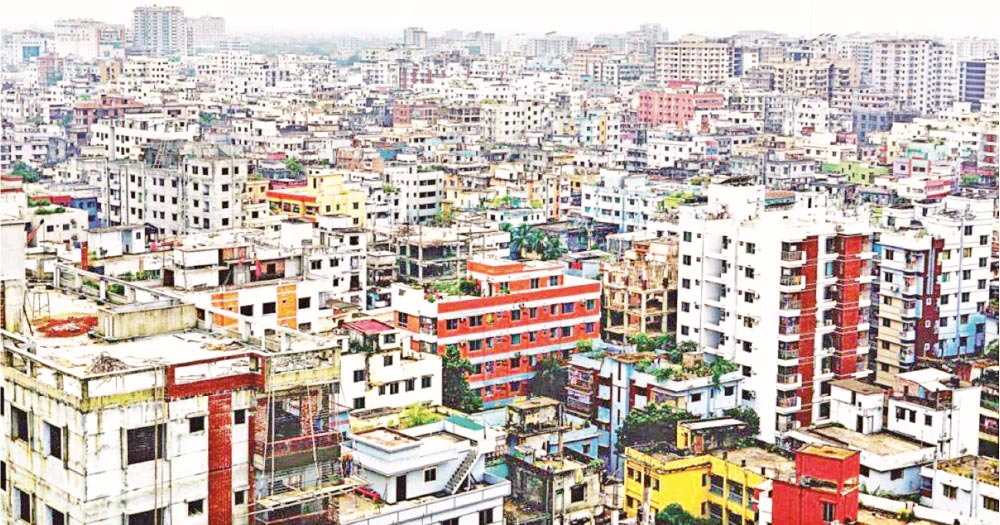 Imagine spending the best years of your life earning money, raising a family and saving every possible taka�"only to discover that the home you desperately need moves further beyond your reach with every passing year.
Your salary rises, but land prices rise faster. You save for an apartment, but the required down payment keeps growing. Rent consumes your monthly income without bringing you closer to ownership. You borrow, sign an agreement and wait, hoping that the property you have paid for will eventually become a home.
This is no longer merely a housing problem. It is a crisis of affordability, financial security and human dignity.
The underlying contradiction is striking: employment and income growth no longer guarantee that people can afford decent accommodation in the places where opportunities exist.
For Bangladesh, particularly Dhaka, the consequences reach beyond individual families. They affect household consumption, labour mobility, social inequality, urban productivity and the country's ambition to build a financially secure middle class.
The fundamental question is becoming unavoidable: Should housing primarily serve as an instrument for accumulating wealth, or should a functioning property market ensure that ordinary people can afford a decent place to live?
Dhaka's affordability trap
Dhaka embodies the contradictions of rapid urbanisation. The capital attracts workers, entrepreneurs, students and professionals seeking employment, education and better opportunities. That concentration creates genuine demand for accommodation, while limited land in accessible locations places upward pressure on prices.
But genuine demand does not explain every price in the market. Land speculation, construction expenses, financing costs, development restrictions, location premiums and expectations of future appreciation can combine to push property values beyond what household incomes can support.
For a salaried family, the arithmetic becomes punishing. Years of savings may still be insufficient for a down payment. Even when financing is available, interest payments, maintenance and service charges can turn ownership into a prolonged financial struggle.
Renting offers no easy escape. Monthly payments absorb income without building an ownership stake, while rent increases can force families to move farther from workplaces, schools and established communities.
The consequences accumulate. Workers endure longer commutes. Parents have less money for education and healthcare. Young adults postpone independent living. Families sacrifice savings to meet basic housing expenses, leaving them more vulnerable to illness, unemployment or other financial shocks.
This is the affordability trap: the more households spend simply to secure shelter, the less they have to build financial security and improve their lives.
A skyline filled with expensive apartment blocks does not necessarily indicate a successful housing market. It may instead reveal a widening gap between the properties developers can sell profitably and the homes ordinary people can afford.
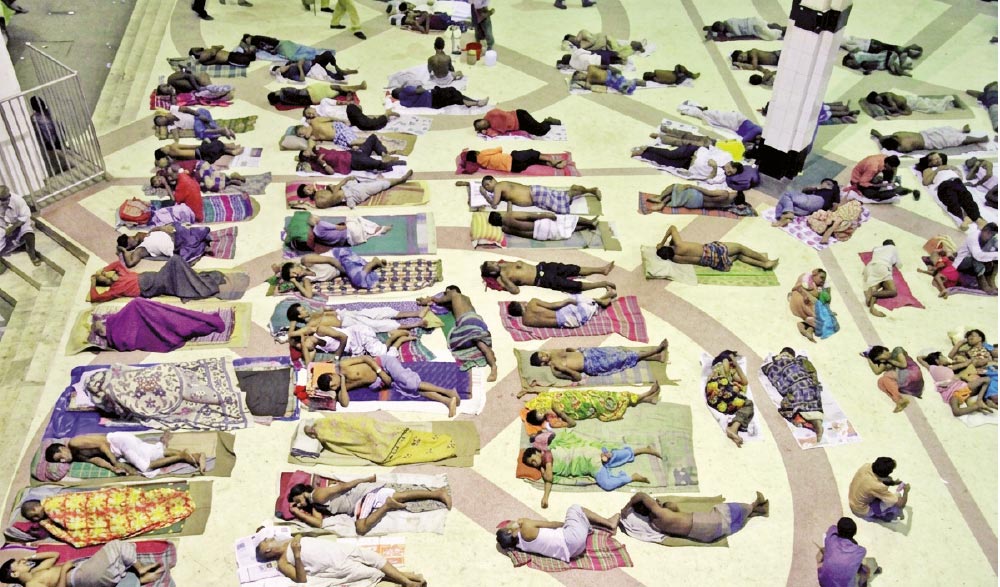 The human cost behind the property prices
The damage is not measured in taka alone.
Uncertainty over rent, mortgage repayments or the completion of an apartment project can undermine family stability. Households struggling to maintain accommodation find it harder to plan their futures, preserve savings or invest in their children's education.
Children may face disrupted schooling when families relocate. Workers may spend hours travelling because affordable homes are unavailable near employment centres. Older people can become isolated when rising costs force families to move away.
Poorly planned development compounds these pressures through congestion, inadequate drainage, limited green spaces and insufficient public transport.
The real cost of housing therefore extends beyond the advertised price of an apartment or the monthly rent of a flat. A cheaper home far from employment may generate substantial transport expenses. A poorly designed building may increase energy costs, while neighbourhoods lacking essential services can diminish residents' quality of life.
The measure of successful housing policy should be whether people can obtain safe, affordable accommodation while retaining sufficient income, time and access to services to live productive lives.
More construction does not automatically mean more affordability
Bangladesh needs responsible property developers. Construction creates employment, supports suppliers and contributes to urban development. Private investment and financial institutions have important roles in expanding the housing stock.
Developers must contend with land acquisition, materials, borrowing costs, regulatory requirements and commercial risks. Their investments must generate sustainable returns. Yet a market dominated by expensive apartments can leave substantial demand from lower- and middle-income households unmet.
The challenge is to make affordable housing commercially viable without compromising construction standards, safety or legal protections.
Smaller, well-designed apartments, cost-efficient construction, rental developments and mixed-income neighbourhoods could widen the range of available options. Better transport connections and infrastructure could make housing in well-connected areas outside the most expensive neighbourhoods more practical.
Transparent partnerships between landowners and developers may also help align commercial returns with genuine housing needs.The objective is not to demonise developers or suppress legitimate investment. It is to correct the imbalance between profitable construction and the unmet demand for homes that ordinary households can afford.
A potential fault line in the financial system
Housing affordability is also a financial-stability issue.
When property prices rise, land and apartments become attractive collateral for lending. Developers borrow to acquire land and finance construction, while buyers may take loans to purchase completed or unfinished properties.
If sales weaken, financing costs increase or prices stagnate, the consequences can spread. Developers may struggle to repay loans, projects can stall and buyers may find it difficult to meet instalments. Banks and non-bank financial institutions can then face deteriorating property-related assets.
This does not mean Bangladesh is inevitably heading towards a housing crash. Its property market differs from the US mortgage system before the 2008 global financial crisis. Nevertheless, the underlying principle applies: property lending must rest on realistic valuations, sound repayment capacity and effective risk management.
Bangladesh Bank and other relevant authorities should closely monitor lenders' exposure to real estate, the quality of collateral, developers' financial condition and the protections available to apartment buyers.
Greater transparency in land ownership, property transactions, valuations and project approvals would help reduce disputes and improve confidence.
The danger is not confined to a sudden collapse in prices. Financial vulnerability can develop gradually when buyers commit excessive portions of their incomes to housing, developers depend on continuous sales to finance construction and lenders underestimate the risks concentrated in their property portfolios.
Preventing such vulnerabilities from becoming systemic is far less costly than dealing with a crisis after defaults spread.
At the heart of Dhaka's housing challenge lies the economics of land.
When roads, transport links, commercial facilities and public infrastructure improve an area, land values can rise. Existing owners may benefit substantially, including from increases generated partly by public investment rather than improvements they have financed themselves.
Meanwhile, families who need to live near those facilities can find themselves priced out.
This raises a difficult policy question: how can cities finance infrastructure and encourage development without allowing the benefits of urban growth to accrue disproportionately to landowners and speculators?
Better land-use planning, transparent property taxation and carefully designed mechanisms to capture part of the increase in land value created by public investment could help. Such measures would require appropriate legal frameworks, administrative capacity and safeguards against unfair burdens.
Urban policy should also discourage speculative practices that obstruct useful development while protecting legitimate ownership rights.
The aim is not to punish landowners for holding valuable assets. It is to ensure that the gains generated by a growing city contribute more broadly to economic and social development.
Affordable housing must also be liveable
A strategy focused exclusively on the number of buildings constructed will overlook the environmental and social costs of urban expansion.
When affordable accommodation is located far from employment centres and reliable public transport, households face longer commutes, higher transport expenses and greater dependence on private vehicles. Congestion increases, commuting time expands and fuel consumption rises.
Poorly planned expansion can also put pressure on wetlands, agricultural land and natural drainage systems. In Dhaka, where flooding and waterlogging are persistent urban concerns, careless development can impose substantial costs on residents.
The alternative is compact, carefully planned neighbourhoods with adequate open spaces, reliable public transport, safe walking routes and access to essential services.
Higher-density housing need not mean overcrowded rooms or imposing towers. Well-designed mid-rise buildings, mixed-use developments and maintained public spaces can accommodate more residents while preserving liveability.
Energy-efficient materials, natural ventilation and sensible building design can also help contain household energy costs.
Affordable housing and environmental sustainability should reinforce each other, not compete for attention.
What Bangladesh must do now
The country needs a coherent housing strategy that treats affordability as an economic priority rather than a secondary social concern.
First, measure the problem accurately.
Bangladesh needs reliable, regularly updated data on property prices, rents, household incomes, vacant homes, housing quality and commuting costs. National averages should not conceal differences between Dhaka, Chattogram, secondary cities and rural areas.
Second, expand housing where jobs and services exist.
Public and private investment should support homes connected to employment, schools, healthcare and transport. A property that appears inexpensive but requires costly, lengthy journeys may impose a much heavier lifetime burden on its occupants.
Low-income workers and households unable to qualify for mortgages need alternatives to expensive private rentals and insecure accommodation. Public support should be transparently targeted and assessed against measurable results.
Longer-term mortgages may help eligible households, but subsidised credit alone cannot solve a shortage of affordable homes. If purchasing power expands without a corresponding increase in supply, additional credit can push prices higher. Financing reforms must therefore accompany land-use and housing-supply measures.
Fifth, protect apartment buyers.
Verifiable project approvals, clear contractual obligations, transparent payment arrangements, safeguards for advance payments and effective dispute resolution can reduce the risks faced by families investing their lifetime savings in unfinished properties.
Finally, broaden the range of housing models.
Smaller apartments, cooperative housing, rental developments, mixed-income communities and transparent public-private partnerships could serve households overlooked by the premium-apartment market.
These reforms will require coordination among government agencies, financial institutions, developers, landowners and urban planners. No single measure can resolve every dimension of the crisis, but a coordinated approach can make housing more affordable while protecting financial stability.
The choice before Bangladesh
Bangladesh faces two competing visions of urban prosperity.
One measures success through rising land values, expensive apartments and impressive skylines�"even when the people who sustain the urban economy struggle to afford a place to live.
The other recognises that a successful city must provide more than valuable property. It must enable people to live securely, reach employment, educate their children and maintain a reasonable standard of living.
Housing reform will not eliminate poverty, congestion or inequality on its own. But affordable, secure and well-planned homes can release household income for productive spending, improve access to employment, reduce commuting burdens and strengthen communities.
For Bangladesh, the stakes are especially high. Housing costs influence the country's ability to build a productive middle class while protecting lower-income households from financial insecurity.
A nation cannot measure housing success by how high apartment prices climb, how many luxury towers rise or how valuable urban land becomes. It must ask whether ordinary people can afford decent homes without sacrificing their children's education, their health, their savings or their future.
The ultimate purpose of a housing market is not merely to create valuable assets. It is to provide homes. Bangladesh's urban development will be judged not only by the cities it builds, but by whether the people who build those cities can afford to live in them.

Loading...
Loading...
Also read



Editor : Iqbal Sobhan Chowdhury
Published by the Editor on behalf of the Observer Ltd. from Globe Printers, 24/A, New Eskaton Road, Ramna, Dhaka.
Editorial, News and Commercial Offices : Aziz Bhaban (2nd floor), 93, Motijheel C/A, Dhaka-1000.
Phone: PABX- 41053001-06; Advertisement: 41053012; 01793317829, 01550707291, E-mail: [email protected], [email protected] Online: email: [email protected] 41053014; 01550707297 Advertisement: 01550707296
Published by the Editor on behalf of the Observer Ltd. from Globe Printers, 24/A, New Eskaton Road, Ramna, Dhaka.
Editorial, News and Commercial Offices : Aziz Bhaban (2nd floor), 93, Motijheel C/A, Dhaka-1000.
Phone: PABX- 41053001-06; Advertisement: 41053012; 01793317829, 01550707291, E-mail: [email protected], [email protected] Online: email: [email protected] 41053014; 01550707297 Advertisement: 01550707296


