



| HEADLINE |

|
Malaysia starts hiring Bangladeshis
Recruitment mechanism and migration costs still unclear
Published : Wednesday, 30 September, 2026 at 12:00 AM
Special Correspondent


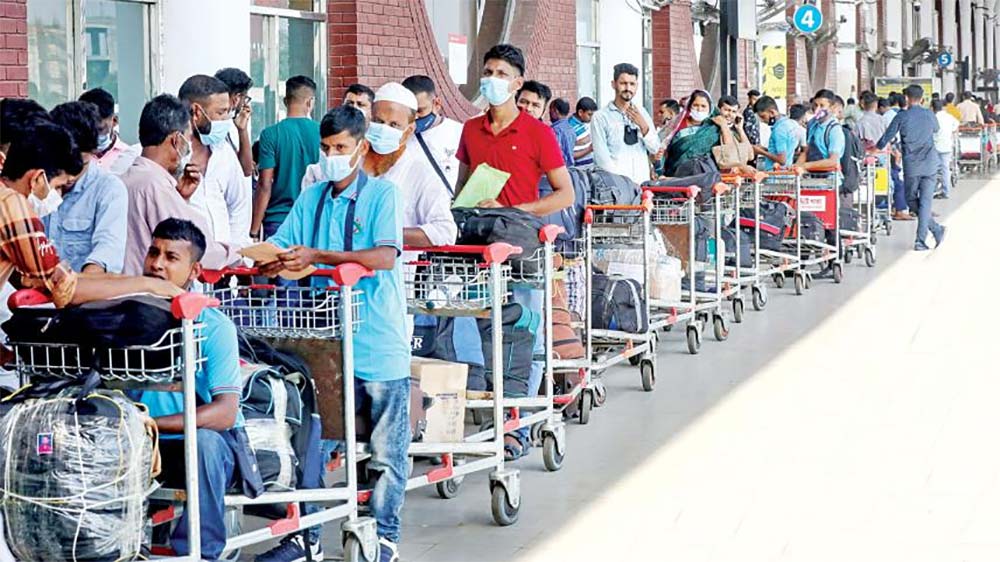 Malaysia’s labour market has effectively reopened to Bangladeshi workers after more than two years, with the Bangladesh High Commission in Kuala Lumpur attesting a demand letter for 28 workers sought by Malaysian supermarket chain NSK Trade City on Monday.
The attestation, issued against a demand from NSK Trade City and processed through Bangladeshi recruiting agency Goodness Services Limited, marks the first reported recruitment-related move since Malaysia suspended new recruitment of Bangladeshi workers on May 31, 2024, according to Bangladesh Embassy sources.
However, the reopening has yet to be accompanied by a formal joint announcement by the two governments, leaving questions over the recruitment mechanism, migration costs and the role of recruiting agencies.
The development follows months of diplomatic efforts to revive the recruitment channel. In April, Malaysia and Bangladesh reaffirmed their commitment to reopening the market based on Malaysia's sectoral needs and agreed to pursue a safer, more transparent and ethical recruitment system.
Prime Minister Tarique Rahman's visit to Malaysia earlier this year, his first foreign trip after taking office, subsequently gave fresh momentum to discussions on the recruitment of Bangladeshi workers.
The Bangladesh government has said Malaysia plans to recruit around 200,000 Bangladeshi workers over six months, with the process expected to begin in phases from the end of September. Another 10,000 workers are expected to receive zero-cost recruitment opportunities, with state-run Bangladesh Overseas Employment and Services Limited (BOESL) expected to play a key role in the initial phase.
Malaysia's Foreign Workers Centralized Management System (FWCMS) had earlier published a list of 25 Bangladeshi recruiting agencies authorised to recruit workers for Malaysia. Goodness Services Limited is among them.
Despite these developments, practical details of the recruitment process remain unclear, including how employers will submit job demands, how workers will be selected, which agencies will handle specific demands and how much migrants will have to pay.
The uncertainty has raised concerns among migration-sector stakeholders that brokers and middlemen could exploit jobseekers through unofficial recruitment channels. Earlier reports also warned that migration costs could rise well above official levels if the process is not tightly regulated.
Malaysian authorities have continued updating their foreign-worker recruitment procedures. The Department of Labour of Peninsular Malaysia (JTKSM) updated its foreign-worker employment and related notices on September 24 and 28. Its publicly available guidance indicates that recruitment involves formal employer applications and designated government systems.
Loading...
Loading...
Also read



Editor : Iqbal Sobhan Chowdhury
Published by the Editor on behalf of the Observer Ltd. from Globe Printers, 24/A, New Eskaton Road, Ramna, Dhaka.
Editorial, News and Commercial Offices : Aziz Bhaban (2nd floor), 93, Motijheel C/A, Dhaka-1000.
Phone: PABX- 41053001-06; Advertisement: 41053012; 01793317829, 01550707291, E-mail: [email protected], [email protected] Online: email: [email protected] 41053014; 01550707297 Advertisement: 01550707296
Published by the Editor on behalf of the Observer Ltd. from Globe Printers, 24/A, New Eskaton Road, Ramna, Dhaka.
Editorial, News and Commercial Offices : Aziz Bhaban (2nd floor), 93, Motijheel C/A, Dhaka-1000.
Phone: PABX- 41053001-06; Advertisement: 41053012; 01793317829, 01550707291, E-mail: [email protected], [email protected] Online: email: [email protected] 41053014; 01550707297 Advertisement: 01550707296


