



| HEADLINE |

|
The Age of Permanent Uncertainty
Published : Wednesday, 30 September, 2026 at 12:00 AM
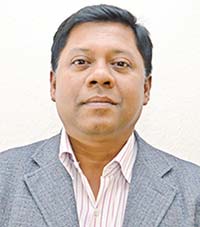
Dr Matiur Rahman


 For decades, Bangladesh’s development story rested on an implicit assumption: that the external world would remain broadly predictable. Markets would expand, globalisation would deepen, technology would create new opportunities, climate risks could be managed, and geopolitical tensions would remain sufficiently distant to avoid derailing domestic progress. That assumption is becoming harder to sustain.
Bangladesh is entering an age of permanent uncertainty, in which several disruptions overlap rather than arrive separately. Geopolitical rivalry, wars, climate change, technological transformation and economic fragmentation are increasingly interacting across borders. The central development question is therefore no longer simply how fast Bangladesh can grow, but how well it can keep progressing when the conditions for growth are constantly changing.
The global economy itself has become less predictable. The International Monetary Fund projects global growth of 3 per cent in 2026 and 3.4 per cent in 2027, while warning that renewed conflict, trade fragmentation and financial-market repricing could weaken the outlook. For an import-dependent economy such as Bangladesh, geopolitical instability can quickly become a domestic problem through energy prices, food costs, shipping disruptions and exchange-rate pressure.
The consequences are already visible. In July 2026, the IMF said Bangladesh faced fiscal, financial-sector and inflation challenges, compounded by the war in the Middle East. It projected growth of 3.5 per cent in FY2027 and below 3 per cent over the medium term without decisive reforms. These are not merely macroeconomic indicators. Slower growth means fewer jobs, weaker public investment and less room to protect households from shocks.
Permanent uncertainty does not mean permanent crisis. It means that development planning based on a single expected future is becoming inadequate. Bangladesh needs policies that work reasonably well across several possible futures: higher energy prices, weaker global demand, extreme climate events, faster automation, geopolitical disruption or tighter fiscal conditions.
Geopolitics adds another layer of uncertainty. Bangladesh sits between major Asian powers and depends heavily on international trade, development finance, energy imports and overseas employment. A world increasingly organised around competing strategic blocs makes neutrality more complicated, even when a country seeks balanced relations with all major partners. Trade, infrastructure, investment, technology and security are becoming more closely connected. Decisions that once looked primarily economic can increasingly carry geopolitical consequences.
Climate change makes this uncertainty structural rather than temporary. Bangladesh has extensive experience adapting to floods, cyclones and river erosion, but the nature of climate risk is changing. The World Bank has described Bangladesh as among South Asia’s most climate-vulnerable countries, with rising heat, severe flooding and increasing salinity already affecting millions. Climate shocks damage crops, homes, infrastructure and health, but they also disrupt education, employment, migration patterns and household savings. For poorer families, a climate event can erase years of gradual economic progress.
The climate-development relationship is therefore changing. Adaptation can no longer be treated as a specialised environmental programme. Roads, embankments, drainage, housing, agriculture, urban planning, health systems and social protection all have to be designed for a more volatile climate. This requires sustained public investment at precisely the moment when fiscal space is constrained.
Technology introduces an unusual combination of opportunity and risk. Artificial intelligence can raise productivity, improve public services, strengthen agriculture and create new export opportunities. The World Bank notes that AI is already reshaping labour markets and that middle-income countries have significant opportunities to adopt affordable technologies. But the same transformation can weaken employment in occupations that are routine and easily automated.
For Bangladesh, this matters enormously. Its development model has benefited from large pools of workers entering manufacturing and service jobs, while millions also depend on migration and remittances. If automation reduces demand for low- and medium-skilled labour faster than education and training systems can respond, the demographic advantage could become harder to convert into broad-based prosperity. The answer is not to resist technology, but to prepare people for it through better schools, technical education, digital skills and lifelong learning.
A deeper technological question is who controls the infrastructure on which the new economy depends. Computing power, data, advanced chips, cloud platforms and leading AI systems remain concentrated in a small number of countries and companies. A country can become a heavy user of technology without becoming technologically sovereign. Bangladesh therefore needs to build capabilities in data governance, cybersecurity, digital public infrastructure, research and locally relevant applications.
The fourth challenge is the changing architecture of globalisation. Bangladesh’s export success, especially in garments, was built on expanding international trade. But trade is increasingly shaped by tariffs, industrial policy, supply-chain diversification, environmental standards and strategic competition. Bangladesh must therefore move beyond dependence on a narrow range of products and markets. Export diversification is not simply an economic ambition; it is a form of resilience.
This is especially important as Bangladesh approaches its post-LDC development phase. Preferential market access, competitiveness, investment and productivity will matter more. The country cannot rely indefinitely on low wages as its principal advantage. Higher productivity, better infrastructure, stronger institutions, reliable energy, skills and regulatory predictability will increasingly determine whether investment comes to Bangladesh or moves elsewhere. The IMF has likewise identified export diversification, stronger governance and financial-sector reform as important to inclusive development.
Permanent uncertainty does not mean permanent crisis. It means that development planning based on a single expected future is becoming inadequate. Bangladesh needs policies that work reasonably well across several possible futures: higher energy prices, weaker global demand, extreme climate events, faster automation, geopolitical disruption or tighter fiscal conditions.
That requires a shift from resilience as emergency response to resilience as a development principle. Public institutions need better data, stronger coordination and the ability to adjust policies quickly. Social protection should be capable of expanding when shocks occur. Infrastructure should be assessed not only for efficiency under normal conditions but also for performance under stress.
Most importantly, Bangladesh must protect the foundations of development: human capability, institutional trust, social cohesion and productive investment. Bangladesh cannot control wars, global interest rates, climate change or artificial intelligence. It can, however, determine how prepared it is when these forces collide.
The age of permanent uncertainty now demands a different development mindset. The objective should not be to predict the future. It should be to build a Bangladesh capable of adapting when predictions fail. In an increasingly unstable world, that capacity may become the most valuable development asset of all.
The writer is a researcher and development professional
Loading...
Loading...
Also read



Editor : Iqbal Sobhan Chowdhury
Published by the Editor on behalf of the Observer Ltd. from Globe Printers, 24/A, New Eskaton Road, Ramna, Dhaka.
Editorial, News and Commercial Offices : Aziz Bhaban (2nd floor), 93, Motijheel C/A, Dhaka-1000.
Phone: PABX- 41053001-06; Advertisement: 41053012; 01793317829, 01550707291, E-mail: [email protected], [email protected] Online: email: [email protected] 41053014; 01550707297 Advertisement: 01550707296
Published by the Editor on behalf of the Observer Ltd. from Globe Printers, 24/A, New Eskaton Road, Ramna, Dhaka.
Editorial, News and Commercial Offices : Aziz Bhaban (2nd floor), 93, Motijheel C/A, Dhaka-1000.
Phone: PABX- 41053001-06; Advertisement: 41053012; 01793317829, 01550707291, E-mail: [email protected], [email protected] Online: email: [email protected] 41053014; 01550707297 Advertisement: 01550707296


