



| HEADLINE |

|

Global Confidence, Domestic Test: Tarique Rahman's Defining Economic Moment
The renewed engagement with the World Bank sends a positive signal that Bangladesh remains firmly on the radar of major international financial institutions despite heightened global uncertainty.
Published : Saturday, 26 September, 2026 at 12:00 AM


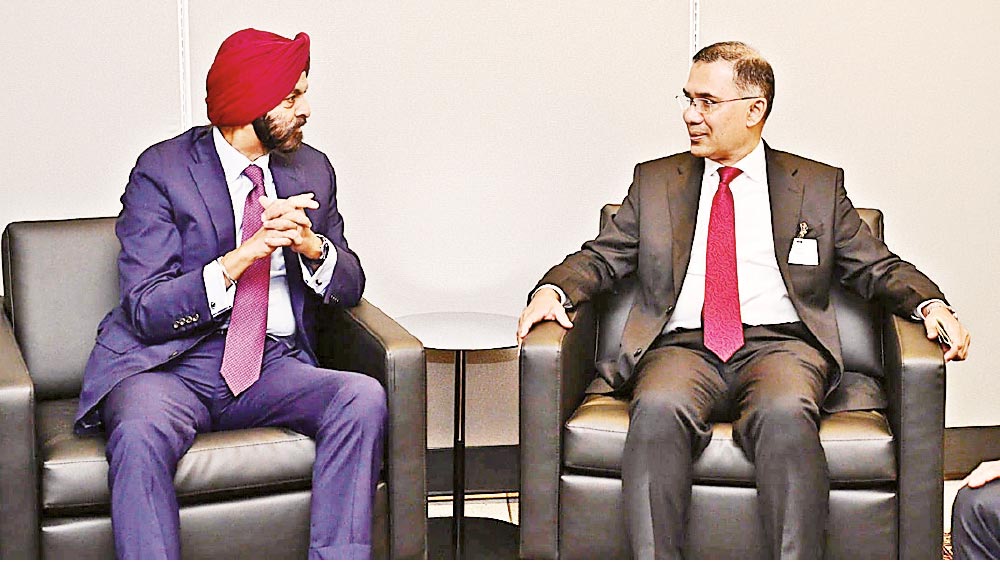 Bangladesh has stepped onto the world's biggest diplomatic stage with an economy seeking confidence�"and left New York with a powerful global endorsement.
Prime Minister Tarique Rahman's economic diplomacy at the UNGA has emerged as one of the defining moments of his administration's first year. His meeting with World Bank Group President Ajay Banga signalled that Bangladesh is once again being viewed as a credible destination for investment, reform and long-term development at a time when wars, volatile oil prices and slowing global growth are unsettling emerging economies.
The significance of the meeting goes well beyond diplomacy. It places Bangladesh's reform agenda under the global spotlight and opens a strategic opportunity for the government to convert international confidence into faster economic recovery, stronger institutions and investment-led growth.
The World Bank's commitment comes at a critical juncture. Bangladesh remains highly exposed to external energy shocks, with imported oil and liquefied natural gas playing a central role in powering industries, transport and electricity generation. Every surge in global fuel prices puts pressure on foreign-exchange reserves, widens the current-account deficit and raises inflation across the economy.
Ajay Banga's assurance that the World Bank is prepared to help Bangladesh strengthen resilience against global energy volatility offers the government valuable policy space. Finance Minister Amir Khosru Mahmud Chowdhury said the support would help Bangladesh cushion external shocks while advancing energy security, employment generation and long-term development priorities.
For Bangladesh's manufacturing sector, where prolonged gas shortages and unreliable power supplies have constrained production and exports, the partnership could become a turning point. Greater cooperation on energy infrastructure, LNG supply security and power-sector reforms has the potential to improve industrial competitiveness and reduce the vulnerability of factories to international fuel market disruptions.
Economists, however, believe the New York breakthrough represents something even bigger than energy cooperation. They see it as the first major international endorsement of Prime Minister Tarique Rahman's broader economic vision�"one focused on restoring macroeconomic stability, strengthening governance and rebuilding investor confidence.
After two difficult years of currency pressure and elevated inflation, Bangladesh's economic indicators are showing encouraging signs of recovery. Remittance inflows through formal banking channels have strengthened, export earnings have remained resilient despite a challenging global market, inflation has eased from earlier highs and Bangladesh Bank has brought greater stability to the foreign-exchange market. The recent appreciation of the Taka against the Indian rupee has further reinforced confidence in the country's regional currency position.
These improvements have helped rebuild trust among development partners and international financial institutions. But economists argue that sustaining this momentum now depends on the government's ability to accelerate structural reforms at home.
Prime Minister Tarique Rahman has placed financial discipline, institutional accountability and private-sector investment at the centre of his economic policy. His administration has pledged to strengthen banking governance, recover laundered assets, reform tax administration, diversify exports, improve the business climate and generate employment through investment-driven growth. The FY2026-27 budget reflects those priorities by linking higher economic growth with financial-sector reform and macroeconomic stability.
The meeting with Ajay Banga effectively elevates those commitments from domestic policy objectives to internationally recognised reform benchmarks.
The banking sector now represents the government's biggest opportunity for transformation. Bangladesh Bank's recent financial stability assessments have highlighted capital shortages and governance weaknesses in several banks, underscoring the urgency of modernising financial regulation. Economists argue that stronger banks are essential for expanding business credit, financing industrial growth and mobilising domestic savings for investment.
Rather than treating banking reform solely as a response to past crises, analysts see it as the foundation for Bangladesh's next phase of growth. Better supervision, stronger corporate governance, faster loan recovery, digital compliance systems and greater transparency could restore confidence across the financial system while improving access to finance for productive businesses.
This direction closely aligns with the World Bank's long-standing emphasis on institutional transparency, financial resilience and governance reforms as drivers of sustainable development.
Another major outcome of the UNGA discussions was the shared emphasis on youth employment. Bangladesh's young population remains one of its greatest competitive advantages, with millions entering the labour force over the coming decade. The World Bank's support for employment initiatives reflects growing recognition that Bangladesh's next growth story must be driven by skills, productivity, entrepreneurship and innovation�"not simply labour-intensive expansion.
The government's parallel discussions with Meta added another dimension to that vision. Talks on artificial intelligence, cybersecurity, digital growth and platform security point towards a strategy of positioning Bangladesh as a regional digital economy. Economists believe partnerships with global technology companies can accelerate digital entrepreneurship, attract technology investment and create high-value employment opportunities beyond traditional manufacturing.
The combination of development finance, energy resilience and digital transformation has the potential to become a new pillar of Bangladesh's economic strategy.
International investors are paying close attention. Bangladesh continues to offer compelling strengths: a large consumer market, a competitive export sector, a young workforce and rapidly expanding digital connectivity. The renewed engagement with the World Bank sends a positive signal that Bangladesh remains firmly on the radar of major international financial institutions despite heightened global uncertainty.
At the same time, investors expect continued progress in regulatory transparency, anti-money-laundering enforcement, tax administration and ease of doing business. Bangladesh Bank's recent initiatives to strengthen foreign-exchange management and tighten oversight of trade-based money laundering have been welcomed by analysts as important steps towards a more transparent and rules-based financial system.
The government's greatest advantage today is timing. International confidence has returned before global economic conditions become even more challenging. That confidence gives Bangladesh an opportunity to pursue reforms from a position of partnership and credibility rather than crisis management.
Prime Minister Tarique Rahman's UNGA diplomacy has therefore achieved more than securing international goodwill. It has strengthened Bangladesh's global economic standing at a time when competition for investment and development finance is intensifying across emerging markets.
The next chapter will be written in Dhaka. Faster reforms in banking governance, investment facilitation, energy security, digital transformation and institutional accountability can convert today's international confidence into stronger growth, higher employment and a more resilient economy.

Loading...
Loading...
Also read






Editor : Iqbal Sobhan Chowdhury
Published by the Editor on behalf of the Observer Ltd. from Globe Printers, 24/A, New Eskaton Road, Ramna, Dhaka.
Editorial, News and Commercial Offices : Aziz Bhaban (2nd floor), 93, Motijheel C/A, Dhaka-1000.
Phone: PABX- 41053001-06; Advertisement: 41053012; 01793317829, 01550707291, E-mail: [email protected], [email protected] Online: email: [email protected] 41053014; 01550707297 Advertisement: 01550707296
Published by the Editor on behalf of the Observer Ltd. from Globe Printers, 24/A, New Eskaton Road, Ramna, Dhaka.
Editorial, News and Commercial Offices : Aziz Bhaban (2nd floor), 93, Motijheel C/A, Dhaka-1000.
Phone: PABX- 41053001-06; Advertisement: 41053012; 01793317829, 01550707291, E-mail: [email protected], [email protected] Online: email: [email protected] 41053014; 01550707297 Advertisement: 01550707296


