



| HEADLINE |

|

Água Viva: The Lost Art of Noticing About The World
Água Viva (New Directions, 2012)
Published : Saturday, 10 October, 2026 at 12:00 AM
Clarice Lispector


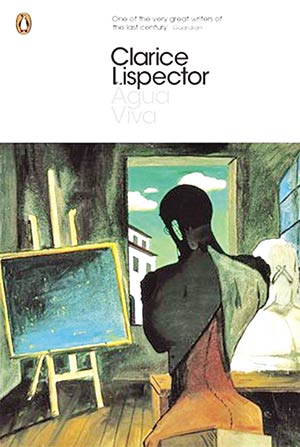 Most days, I know what a stranger does in a day before I notice what the light looks like outside my own window or the bird who always comes by. Reminding me that the one in front of us waits to be looked at, to be noticed. Água Viva (1973) by Clarice Lispector refuses to look away at what the world has offered to us. It is not a traditional narrative driven novel but rather treated as a prose poem or novel essay. Água Viva itself means both ‘living water’ and ‘jellyfish’ in Portuguese and the book moves the way its title suggests, like soft, fluid, drifting without a fixed destination and it refuses to arrive because it learns to see. You can’t see the world while rushing through it but only by drifting-like a painter, like a jellyfish. Through a character of unfiltered painter’s eyes, Lispector’s writing soulfully captures the smallest beauty of life and brings fragments of nature that we almost forget of its existence where we come from. This masterpiece serves the radical invitation to take a moment from scrolling and work and notice the raw existence right in front of us.
 The early part of the book goes around how the painter leaves the brushes and starts painting through her words. To express what she feels is everything at the core of her mind and soul.
The painter does not select only the parts of a face or a body that can flatter her art-but extends that unflinching attention to existence itself. She describes a single drop of lemon juice falling onto a raw oyster and watching it flinch because the acid touches the flesh and suddenly she remembers-this was a living thing, created by God and she was eating it. This quiet moment holds both horror and fascination but the painter’s eye looks at the world without filtering it, accepting the beauty of the biological reality of life even if it feels strange or uncomfortable. It made me question-How many things did I see today that I actually looked at? Most of what I know about the world this week came through glass. Perhaps just looking at one thing until it becomes real again to my eyes.
She looks upon the white rose of divine peace and the yellow rose of happy alarm simply to know them. There is something quietly revolutionary about the act of admiring a flower for no reason beyond its existence without measuring its value, assigning it a purpose or expecting anything in return. The book quietly challenges our obsession with speed and productivity where even our smallest actions are expected to prove their worth through money or measurable achievement. We live in a race where our surroundings ask us the same question of everything we do: What does it produce? What does it earn? The painter in Água Viva observes the world for no profit at all-not with her writing, not with her painting. But in her eyes, she appreciates the world around her.
Reviewed by Mohaimin Sultana Miva
Lispector reminds us to respect the material on its own terms. For her, every syllable matters as much as every stroke matters to a painter which shows us that language is a living body, not just a tool for our own necessity. Ironically, as human beings, we are forever asking the world to honor our presence but we always move through a world of trees, air, the raw matter of life and colors as if none of it were alive. Água Viva asks us to slow down enough to notice the difference-to let both language and landscape retain their strangeness instead of flattening them only into use.
“To live this life is more an indirect remembering than direct living” -The line arrives almost as the book’s best insights. It is a startling reframing of what it means to be present, what it feels like to see nature in our bare eyes and remembering the special feeling a few years later instead of a glass screen which our hands are carrying most of the time. What I have understood through Lispector’s writing is that consciousness is the art of remembering what we are still living.
The painter eventually talks about this reasoning to the reader themselves. “What if we are the question?” -Before reading this line, I kind of expected that just like every other fiction book, it will solve my questions or wonders toward some final understanding, some sense that the search will finally lead somewhere. But it did not. Instead, what I received is that perhaps we are not the ones meant to answer the question, but the ones being questioned. Meaning, our life is not an assignment to complete and answer its question, submit and move on. It is something you inhabit over time rather than something you attain, like a body or a season. The searching does not end because the searching is the living.
Just like a change in weather announces itself through the body before the mind has made sense of it-Água Viva asks us something similar from its reader: to experience its feeling before trying to explain it, page by page. But its questions continue to work on us after the book is closed: Can we encounter the world without needing to make it obedient to our understanding? Can we remain unfinished to ourselves, open rather than resolved? Lispector quietly tells us that we already know how. What we have forgotten is how to listen and notice. The book leaves you with strangely ordinary things-the seasons of the moon and flowers, subterranean creatures, a bird landing without purpose-reminding you that not everything needs to lead somewhere.
Nothing is resolved or tied up neatly and somehow that feels more honest. To teach us to slow down enough to see what is already there: the world in its small changes, its surprises, its fleeting beauty. It’s the things that happen without asking to be understood. Maybe putting down the phone. And looking at the window, the tree, whatever is already there. Some things only need to be noticed.
The reviewer is a student in the Department of English at Southeast University

Loading...
Loading...



Editor : Iqbal Sobhan Chowdhury
Published by the Editor on behalf of the Observer Ltd. from Globe Printers, 24/A, New Eskaton Road, Ramna, Dhaka.
Editorial, News and Commercial Offices : Aziz Bhaban (2nd floor), 93, Motijheel C/A, Dhaka-1000.
Phone: PABX- 41053001-06; Advertisement: 41053012; 01793317829, 01550707291, E-mail: [email protected], [email protected] Online: email: [email protected] 41053014; 01550707297 Advertisement: 01550707296
Published by the Editor on behalf of the Observer Ltd. from Globe Printers, 24/A, New Eskaton Road, Ramna, Dhaka.
Editorial, News and Commercial Offices : Aziz Bhaban (2nd floor), 93, Motijheel C/A, Dhaka-1000.
Phone: PABX- 41053001-06; Advertisement: 41053012; 01793317829, 01550707291, E-mail: [email protected], [email protected] Online: email: [email protected] 41053014; 01550707297 Advertisement: 01550707296


