



| HEADLINE |

|

Alef flying car soars over Tesla, claiming 'we are the first'
Published : Sunday, 18 October, 2026 at 12:50 PM
Observer Online Report


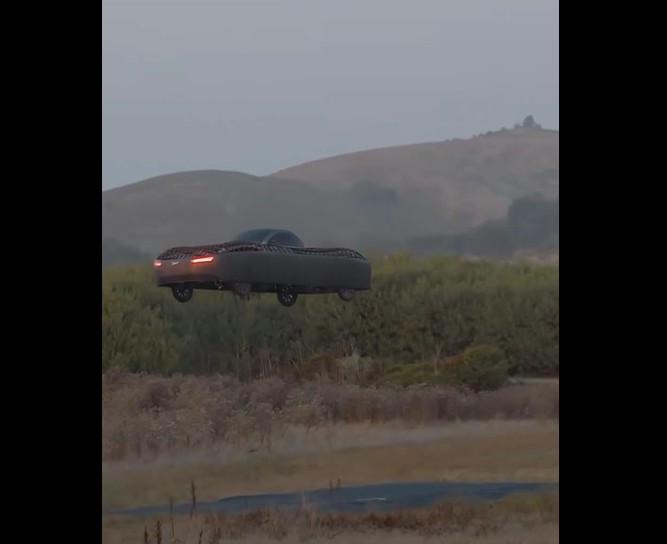
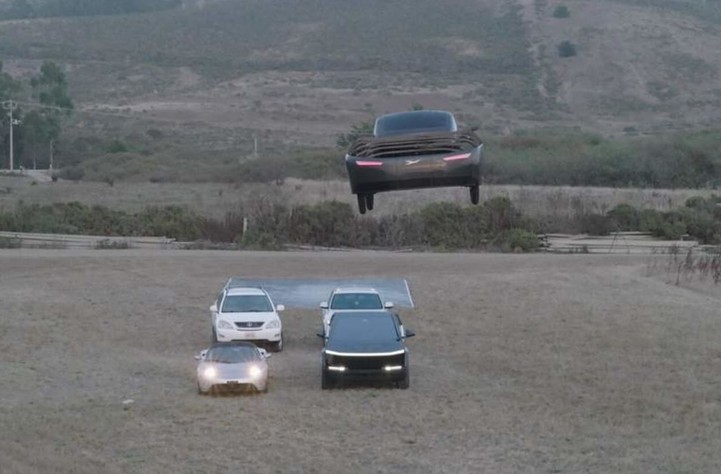
US-based Alef Aeronautics has taken a playful swipe at Tesla after releasing a video showing its electric flying car soaring over a Tesla Roadster and Cybertruck, declaring that it has spent 11 years developing the technology and welcoming Elon Musk’s company to the emerging race.
The California-based company released the video as a demonstration of its flying car’s capabilities, positioning itself as an early contender in a field that has attracted renewed attention following Tesla’s demonstrations of the next-generation Roadster.
According to an Al Jazeera report published on October 17, Alef Chief Executive Officer Jim Dukhovny said the company was pleased to welcome Tesla to the flying-car competition, adding that the entry of a major manufacturer could benefit the industry.
Although both companies are exploring ways to combine cars with flight, their technologies differ significantly.
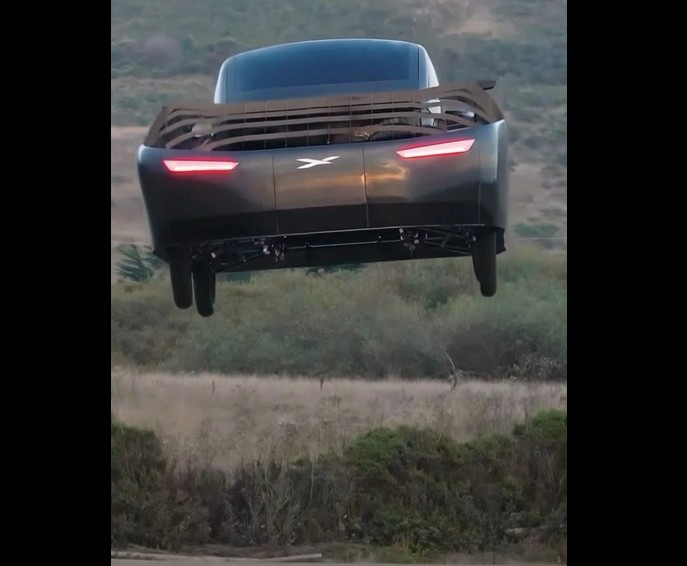
Alef’s vehicle is designed to operate on public roads and take off vertically before flying through the air. According to the company’s website, its body is engineered to function like a wing during flight, while an electric propulsion system with multiple motors provides lift.
Tesla’s latest Roadster demonstration, by contrast, has focused on the vehicle’s ability to perform brief aerial manoeuvres. According to the Associated Press, Tesla has discussed using cold-gas thrusters and a specialised suction system as part of the technology.
However, questions remain about the Roadster’s production timeline, regulatory approval and commercial availability. Musk has said production of the next-generation Roadster is not expected to begin before 2028.
Alef Aeronautics was founded in 2015 by Jim Dukhovny, Konstantin Kisly, Pavel Markin and Oleg Petrov. Their goal was to develop a vehicle that could be driven and parked like a conventional car but also take off vertically when needed.
The company’s development timeline includes a small-scale prototype in 2016, flight testing of a full-size structure in 2018 and a full-size prototype flight in 2019. The company formally adopted the Alef name in 2022.
Its planned vehicle is intended to combine road mobility with vertical take-off and flight, potentially offering an alternative to conventional transport. However, successful test flights do not necessarily mean the technology is ready for everyday use.
Alef still faces challenges involving aviation safety, regulatory approval, manufacturing costs and reliability under real-world conditions before it can bring the vehicle into widespread commercial use.
Dukhovny believes interest from a major player such as Tesla could draw more investment and public attention to flying-car technology. Competition between companies could also accelerate technological development and efforts to establish regulations for the emerging category of vehicles.
A costly road to commercialisation
Despite the excitement surrounding flying cars, several hurdles remain before they can become a practical option for daily commuting.
These include ensuring air safety, coordinating road and aviation regulations, training operators, maintaining vehicles and bringing prices within reach of ordinary consumers.
The California-based company released the video as a demonstration of its flying car’s capabilities, positioning itself as an early contender in a field that has attracted renewed attention following Tesla’s demonstrations of the next-generation Roadster.
According to an Al Jazeera report published on October 17, Alef Chief Executive Officer Jim Dukhovny said the company was pleased to welcome Tesla to the flying-car competition, adding that the entry of a major manufacturer could benefit the industry.
The video was more than a promotional stunt, according to Alef. The company said it also marked the 1,000th test flight of its flying car. In an earlier demonstration, one of its vehicles was also shown flying over a Tesla Cybertruck.
Two companies, two different approaches
Although both companies are exploring ways to combine cars with flight, their technologies differ significantly.
Alef’s vehicle is designed to operate on public roads and take off vertically before flying through the air. According to the company’s website, its body is engineered to function like a wing during flight, while an electric propulsion system with multiple motors provides lift.
Tesla’s latest Roadster demonstration, by contrast, has focused on the vehicle’s ability to perform brief aerial manoeuvres. According to the Associated Press, Tesla has discussed using cold-gas thrusters and a specialised suction system as part of the technology.
However, questions remain about the Roadster’s production timeline, regulatory approval and commercial availability. Musk has said production of the next-generation Roadster is not expected to begin before 2028.
The distinction is significant: Alef is pursuing a fully functional flying car designed for both road travel and flight, while Tesla’s recent demonstration has centred on the Roadster’s proposed aerial capabilities.
From prototype to flying-car ambitions
Alef Aeronautics was founded in 2015 by Jim Dukhovny, Konstantin Kisly, Pavel Markin and Oleg Petrov. Their goal was to develop a vehicle that could be driven and parked like a conventional car but also take off vertically when needed.
The company’s development timeline includes a small-scale prototype in 2016, flight testing of a full-size structure in 2018 and a full-size prototype flight in 2019. The company formally adopted the Alef name in 2022.
Its planned vehicle is intended to combine road mobility with vertical take-off and flight, potentially offering an alternative to conventional transport. However, successful test flights do not necessarily mean the technology is ready for everyday use.
Alef still faces challenges involving aviation safety, regulatory approval, manufacturing costs and reliability under real-world conditions before it can bring the vehicle into widespread commercial use.
Dukhovny believes interest from a major player such as Tesla could draw more investment and public attention to flying-car technology. Competition between companies could also accelerate technological development and efforts to establish regulations for the emerging category of vehicles.
A costly road to commercialisation
Despite the excitement surrounding flying cars, several hurdles remain before they can become a practical option for daily commuting.
These include ensuring air safety, coordinating road and aviation regulations, training operators, maintaining vehicles and bringing prices within reach of ordinary consumers.
Alef’s vehicle has been reported to carry an estimated price tag of around $299,999, putting it well beyond the reach of most buyers.
For now, the latest demonstration highlights the growing ambitions of the flying-car industry rather than its readiness for mass adoption. Alef’s claim to an early lead may draw attention, but whether its technology can become a commercially viable transport option will depend on far more than impressive videos and successful test flights.

Loading...
Loading...
Also read









Editor : Iqbal Sobhan Chowdhury
Published by the Editor on behalf of the Observer Ltd. from Globe Printers, 24/A, New Eskaton Road, Ramna, Dhaka.
Editorial, News and Commercial Offices : Aziz Bhaban (2nd floor), 93, Motijheel C/A, Dhaka-1000.
Phone: PABX- 41053001-06; Advertisement: 41053012; 01793317829, 01550707291, E-mail: [email protected], [email protected] Online: email: [email protected] 41053014; 01550707297 Advertisement: 01550707296
Published by the Editor on behalf of the Observer Ltd. from Globe Printers, 24/A, New Eskaton Road, Ramna, Dhaka.
Editorial, News and Commercial Offices : Aziz Bhaban (2nd floor), 93, Motijheel C/A, Dhaka-1000.
Phone: PABX- 41053001-06; Advertisement: 41053012; 01793317829, 01550707291, E-mail: [email protected], [email protected] Online: email: [email protected] 41053014; 01550707297 Advertisement: 01550707296


