



| HEADLINE |

|

Bangladesh’s $1 Billion Semiconductor Gamble
Can Engineering Talent Spark the Next Export Revolution?
Can Bangladesh turn its army of engineers into a global technology powerhouse? With semiconductor exports targeted to surge from just $6–10 million to $1 billion by 2030, the country is racing to break free from its dependence on labour-intensive exports and claim a place in the trillion-dollar chip industry.
Published : Saturday, 24 October, 2026 at 12:00 AM
FARUK AHMED


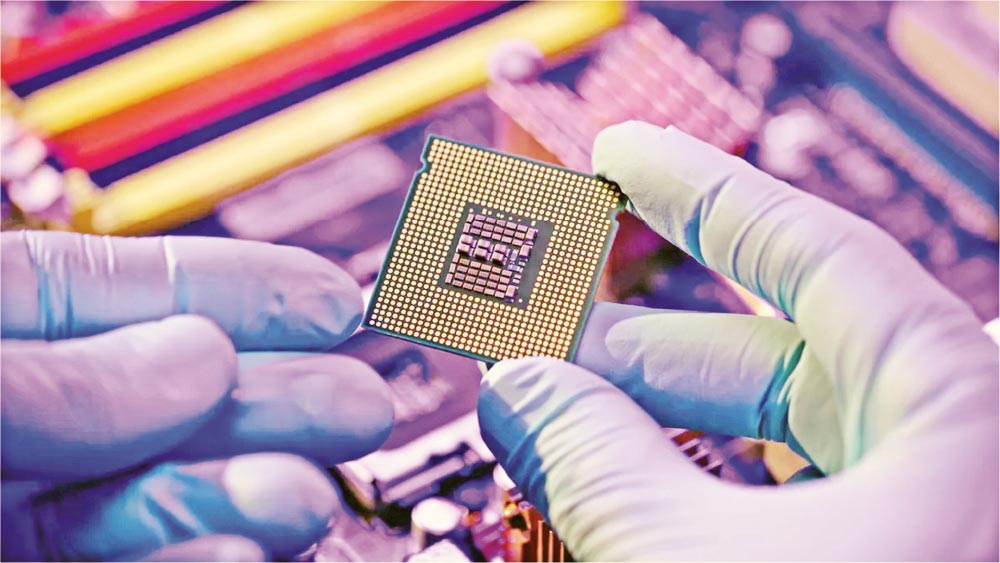

Bangladesh stitched its way into the global economy. Now, it wants to engineer its way into the future.
Prime Minister Tarique Rahman in July 24 unveiled a roadmap to build a globally competitive semiconductor sector through investment, innovation, skills development and international partnerships. “The semiconductor industry could emerge as Bangladesh's next promising economic sector after the RMG industry”, he said while addressing the inaugural ceremony of the National Semiconductor Symposium and BEAR (Bangladesh Electronics, AI and Robotics) Summit-2026 at the Novo Theatre in the capital.
Experts involved in the process said Bangladesh now wants a place at that high-tech frontier, targeting $1 billion in annual semiconductor exports and 10,000 skilled jobs by 2030.The leap is breathtaking. From estimated annual semiconductor exports of just $6 million to $10 million, the country must build an industry capable of competing in one of the world's most technologically demanding markets within a few years.
“Yet Bangladesh is not starting from zero. Its growing pool of engineers, emerging chip-design capabilities and connections with international technology companies offer a foundation on which a new export industry could be built”, a BUET engineer said.
The opportunity is to transform engineering talent into export earnings, high-skilled employment and technological independence. The challenge is to turn that potential into commercially competitive businesses before the 2030 deadline arrives.
Yet, haunted by its bitter experience with ICT parks, Bangladesh faces a defining test: can it replicate its garment miracle in silicon "or will its semiconductor dream become another costly casualty of grand promises and failed execution?
The $1 Billion Challenge
Semiconductors are the invisible engines of the modern economy. Without them, smartphones cannot process information, data centres cannot power artificial intelligence, modern vehicles cannot operate their sophisticated electronic systems, and telecommunications networks cannot function as they do today.
As countries race to secure chip supplies and develop domestic technological capabilities, semiconductors have become more than a commercial opportunity. They are a strategic asset.
For Bangladesh, entering this industry could diversify exports, create highly skilled jobs and reduce dependence on labour-intensive manufacturing. But the distance between the current export base and the 2030 target is formidable.
The good news is that Bangladesh does not need to build an entire semiconductor industry from scratch "or manufacture the world's most advanced chips "to participate in the global market.
The semiconductor value chain spans chip design, intellectual-property development, electronic design automation, verification, wafer fabrication, testing, packaging and assembly. Each segment offers different opportunities, costs and technological barriers.
Advanced fabrication plants can require multibillion-dollar investments and exceptionally sophisticated infrastructure. Chip design and specialised engineering services offer a potentially more accessible starting point for a country with a growing engineering workforce.
Bangladesh's most practical route may therefore be to build expertise where its existing capabilities offer a competitive advantage, win international contracts and gradually move towards more complex activities.
The objective should not be to imitate every semiconductor powerhouse. It should be to secure a valuable, sustainable place in the global supply chain.
 Engineering Talent: The Decisive Advantage
Bangladesh's greatest potential asset is its people.
The country produces thousands of engineering graduates every year, while an emerging community of semiconductor specialists is beginning to establish its credentials. Invest Bangladesh has reported a pool of more than 700 chip designers, providing an initial foundation for the industry's expansion.
However, the number of graduates or designers alone cannot determine success. Semiconductor engineering requires specialised expertise in very-large-scale integration (VLSI), digital and analogue circuit design, physical design, verification, electronic design automation (EDA) and chip testing.
International customers demand precision, reliability, technical competence and strict protection of intellectual property. Engineers must be able to work with advanced design tools, meet demanding specifications and deliver commercially viable solutions.
This is where universities and industry must work together. Engineering education needs to move beyond theoretical instruction towards practical laboratory experience, industry-standard software, applied research and direct engagement with international companies.
Training must also be linked to actual market demand. Producing more qualified engineers will have limited economic value if domestic companies cannot secure projects that allow those skills to be deployed.
There are encouraging signs. Local chip-design firms are seeking opportunities in the international semiconductor ecosystem. Ulkasemi has been associated with Taiwan Semiconductor Manufacturing Company's Design Centre Alliance, while Neural Semiconductor is cited as another participant in advanced chip-design services.
Such developments indicate that Bangladesh has begun establishing a foothold. The next challenge is to turn individual achievements into a broader ecosystem of competitive firms, experienced engineers, research institutions and international partnerships.
The distinction matters: a few successful companies can demonstrate possibility, but a sustainable industry requires scale.
Incentives Must Deliver Investment
Recognising the opportunity, the National Semiconductor Task Force, led by the Bangladesh Investment Development Authority (BIDA), has been working on measures to accelerate industry development.
Proposals associated with the 2026 budget include a 1 per cent customs duty on eligible raw-material imports, VAT exemptions and a proposed 25 per cent cash incentive for semiconductor exports. Longer-term recommendations have also included potential tax exemptions, duty relief on chip-related inputs and improved access to financing.
These measures could reduce operating costs and help local firms compete for international business. But the precise status of each proposal matters: recommendations, budget proposals and formally implemented incentives are not interchangeable.Investors need clear eligibility rules, predictable tax treatment and confidence that support will remain consistent over the life of a project.
Access to capital is equally important. Semiconductor businesses must invest in specialised software, equipment, skilled personnel, research and development before they can build a substantial revenue stream. Conventional bank lending may not adequately accommodate the risks and long development cycles associated with technology ventures.
A dedicated semiconductor financing facility, as proposed by industry policymakers, could help provide venture capital and longer-term funding. Shared design laboratories equipped with advanced EDA tools could also allow universities, researchers and start-ups to access expensive technology without each institution bearing the full cost.
But incentives cannot substitute for commercial discipline. Public support should be tied to measurable outcomes, including private investment, international contracts, skilled employment and export growth.
The real test of an incentive package is not how attractive it looks on paper, but whether it persuades capable companies to invest, innovate and compete.
Can Kaliakair Become A Technology Hub?
Bangladesh's high-tech infrastructure, including the 355-acre facility at Kaliakair, Gazipur, could contribute to its ambitions if developed around the practical needs of technology businesses.
A successful semiconductor hub requires far more than land and buildings. It needs reliable electricity, high-speed connectivity, specialised laboratories, access to finance, effective intellectual-property protection and close links between universities and companies.It must also offer an environment in which domestic and foreign firms can recruit skilled professionals, conduct research and secure customers.
The performance of such a facility should be measured by the businesses it attracts, the investment it mobilises, the export contracts it generates and the skilled jobs it creates "not simply by its physical size or inauguration.
Bangladesh's previous experience with high-tech projects offers an important warning. Infrastructure does not automatically create an industry. Without commercially viable businesses and sustained private-sector participation, even expensive facilities can fall short of their original promises.
Semiconductor policy must therefore begin with industry demand and work backwards towards the infrastructure, skills and financing required to meet it.
Beyond Garments, Towards Higher-Value Exports
Bangladesh should not frame semiconductors as a replacement for garments. The apparel industry remains indispensable to employment, foreign exchange earnings and manufacturing development.
Instead, the country should use its existing industrial experience as a platform for technological upgrading. Automation, robotics, artificial intelligence, industrial sensors and digital production systems can improve garment-sector productivity while creating demand for more sophisticated engineering and electronics capabilities. Stronger links between manufacturers, universities and technology companies could help bridge the gap between traditional exports and emerging industries.
The wider objective is to move towards higher-value activities in which skills, research and intellectual property generate a greater share of export earnings.
This transition will require sustained investment in engineering education, research facilities, reliable infrastructure and institutions capable of implementing policy consistently. It will also require retaining skilled professionals and creating opportunities for them to build careers and businesses at home.
Bangladesh must measure progress through results: rising export revenues, competitive companies, growing private investment, stronger research capabilities and sustainable skilled employment.
The Silicon Opportunity Is Real
Bangladesh's $1 billion semiconductor ambition is daunting, but the opportunity deserves to be pursued with seriousness rather than dismissed because the target is difficult.
The country has an emerging talent base, early industry experience and potential entry points into a global technology ecosystem. These are foundations "not guarantees of success.
The immediate priority is to turn them into a coherent industrial strategy, backed by credible financing, internationally competitive skills, private investment and measurable commercial milestones.
Bangladesh has stitched its name into the world market. Now it must prove that its engineers can design their way into the silicon age. The $1 billion dream will become reality only when ambition is matched by expertise, investment and execution.
The writer is the Consulting Editor of The Daily Observer. He can be reached at [email protected].

Loading...
Loading...
Also read





Editor : Iqbal Sobhan Chowdhury
Published by the Editor on behalf of the Observer Ltd. from Globe Printers, 24/A, New Eskaton Road, Ramna, Dhaka.
Editorial, News and Commercial Offices : Aziz Bhaban (2nd floor), 93, Motijheel C/A, Dhaka-1000.
Phone: PABX- 41053001-06; Advertisement: 41053012; 01793317829, 01550707291, E-mail: [email protected], [email protected] Online: email: [email protected] 41053014; 01550707297 Advertisement: 01550707296


