



| HEADLINE |

|

Bangladesh’s EU apparel exports slide 11.67pc
Published : Saturday, 24 October, 2026 at 1:25 PM
Observer Online Report


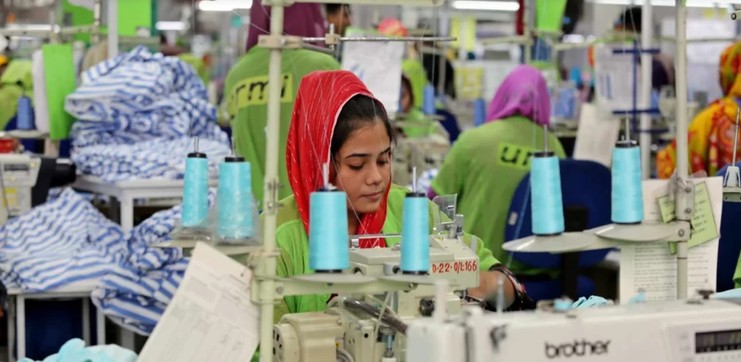
Bangladesh’s garment exports to the European Union fell 11.67 per cent year-on-year in January-August 2026, as China strengthened its dominance and Vietnam expanded shipments in a market showing signs of recovery.
Bangladesh exported apparel worth €11.93 billion to the 27-nation bloc during the eight-month period, down from €13.50 billion a year earlier, a decline of €1.57 billion, according to Eurostat data compiled by Bangladesh Apparel Voice.
The EU imported apparel worth a total of €60.29 billion from countries worldwide during the period, down 3.83 per cent year-on-year by value and 2.57 per cent by volume. The average price per kilogram of imported clothing also declined 1.29 per cent.
The figures point to a widening gap between the gradual recovery in European apparel demand and Bangladesh’s export performance, as falling prices and intensifying competition weigh on the country's garment industry.
European market recovers, but exporters remain under pressure
The EU apparel import market suffered a sharp downturn early in 2026, with imports falling by nearly 10 per cent year-on-year between January and April. January alone saw a 15.48 per cent decline.
Conditions began improving in May. Between May and August, EU apparel imports increased by approximately 2.6 per cent compared with the same period in 2025, bringing the cumulative decline for the first eight months to 3.83 per cent.
The recovery followed a year of stronger demand in 2025, when EU apparel imports increased by 2.1 per cent to €90 billion, alongside economic growth of 1.5 per cent.
Chinese exporters, facing higher US tariffs, redirected more shipments towards Europe last year. China's apparel export volume to the EU consequently rose 11.64 per cent, leaving European retailers with relatively high inventory levels entering 2026.
At the same time, higher energy costs linked to conflict in the Middle East squeezed household purchasing power, while inflation and weakening consumer confidence prompted retailers to exercise caution over new orders.
Improved spring retail sales and preparations for the autumn-winter season subsequently helped lift imports from May through August.
Lower prices deepen Bangladesh’s export slump
Bangladesh's decline in export earnings reflects not only reduced shipment volumes but also a substantial fall in average prices.
The volume of apparel imported from Bangladesh by the EU fell 4.58 per cent year-on-year to 866.76 million kilograms during January-August.
Meanwhile, the average export price dropped 7.43 per cent to €13.76 per kilogram.
The combined effect of lower volumes and prices pushed Bangladesh's export earnings down by 11.67 per cent, significantly more than the contraction in the overall EU import market.
Bangladesh's share of the EU apparel import market also shrank, falling from 21.5 per cent in January-August 2025 to 19.8 per cent in the same period this year.
The country's exports had declined 19 per cent during the first two months of 2026. Although the pace of contraction subsequently eased, the cumulative performance remained weak.
China captures nearly one-third of EU apparel imports
China emerged as the strongest performer among the major suppliers to the European market, increasing apparel exports by 2.38 per cent to €19.71 billion in January-August.
Its share of total EU apparel imports rose from 30.7 per cent to 32.7 per cent, consolidating its position as the bloc's largest supplier.
China was also the only major supplier in the comparison to record growth in both export value and volume, according to the compiled data.
Vietnam also registered growth, with apparel exports to the EU rising 4.46 per cent to €3 billion. The country's average export price increased by 10.11 per cent, suggesting an improvement in the value of its shipments.
Pakistan recorded a mixed performance. Its apparel export volume increased 3.82 per cent, but average prices fell 12.96 per cent to €10.88 per kilogram, the lowest among the major suppliers listed in the analysis.
Meanwhile, apparel exports to the EU from Türkiye, India, Sri Lanka and Indonesia declined by around 11 per cent each.
The contrasting performances underscore the competitive pressure facing Bangladesh, particularly as China expands its market share and Vietnam combines export growth with higher average prices.
Economic outlook offers limited relief
The European Commission's spring 2026 economic forecast projected EU economic growth of 1.1 per cent in 2026, rising to 1.4 per cent in 2027. Inflation was forecast to ease to 2.4 per cent.
However, the outlook depends partly on energy prices remaining stable. A prolonged conflict in the Middle East could increase energy, shipping and insurance costs, while further weakening consumer demand.
The commission estimated that the conflict could reduce EU economic growth in 2026 by 0.3 percentage points.
Bangladesh Apparel Voice also reported that protests over the cost of living in France on October 17 disrupted retail activity, with around 1,500 shops reportedly affected and average daily sales at clothing stores falling 14 per cent. Protests were also reported in Belgium, Italy and Portugal.
If Christmas-season sales disappoint, European retailers could reduce new apparel orders in early 2027, adding to the uncertainty facing Bangladeshi manufacturers.
Trade policy changes could intensify competition
Upcoming changes to the EU's preferential trade arrangements, expected to take effect from January 2027, could have important implications for Bangladesh's apparel exports. Plans for an India-EU free trade agreement could also reshape the competitive landscape, depending on the final terms and implementation.
These developments make it increasingly important for Bangladesh to strengthen its competitiveness beyond price alone.
Mohiuddin Rubel, a former director of the Bangladesh Garment Manufacturers and Exporters Association (BGMEA) and founder and chief executive officer of Bangladesh Apparel Voice, told Bangla Tribune that although demand in the European market was gradually recovering, Bangladesh's exports remained under pressure.
The sharper decline in export earnings reflected falling average selling prices, he said, adding that manufacturers needed to focus not only on increasing shipment volumes but also on moving towards higher-value products.
Rubel noted that China's growing exports and Vietnam's improving performance were making competition tougher for Bangladesh. Energy prices, transportation costs and uncertainty among European buyers could also affect future shipments.
He stressed the need to strengthen long-term relationships with buyers, diversify products, improve production capacity and ensure timely deliveries.
Rubel further warned that potential changes in EU trade policy in 2027 and a possible free trade agreement with India could create additional competitive challenges. Bangladesh, he said, must closely monitor market developments and improve product quality, productivity and operational efficiency.
The challenge ahead
The EU apparel market is showing signs of recovery, but Bangladesh is losing ground in value terms as shipments shrink and average prices decline.
China's expanding market share, Vietnam's export growth and potential changes in European trade policy are adding to the challenges facing Bangladesh's garment industry.
For exporters, the immediate priority is to protect market share while improving unit prices and moving towards higher-value products. Sustaining competitiveness in Europe will depend on whether Bangladesh can translate its manufacturing scale and supply capabilities into stronger pricing power and more resilient export growth.

Loading...
Loading...
Also read







Editor : Iqbal Sobhan Chowdhury
Published by the Editor on behalf of the Observer Ltd. from Globe Printers, 24/A, New Eskaton Road, Ramna, Dhaka.
Editorial, News and Commercial Offices : Aziz Bhaban (2nd floor), 93, Motijheel C/A, Dhaka-1000.
Phone: PABX- 41053001-06; Advertisement: 41053012; 01793317829, 01550707291, E-mail: [email protected], [email protected] Online: email: [email protected] 41053014; 01550707297 Advertisement: 01550707296


