



| HEADLINE |

|

Global commodity prices projected to rise 23pc : World Bank
Published : Saturday, 31 October, 2026 at 6:49 PM
Observer Online Report


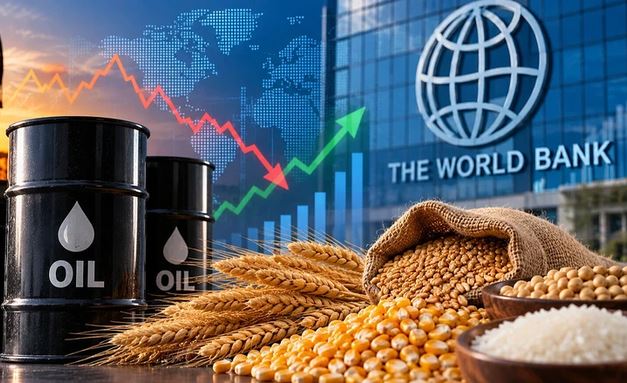
Collected Photo
Global commodity prices are projected to increase 23 per cent in 2026, marking their second-highest level since 2013, as geopolitical tensions, supply-side constraints and adverse weather conditions fuel price pressures across energy, food and industrial metals markets, according to the World Bank.
In its October Commodity Markets Outlook, the World Bank warned that rising input costs and trade disruptions could intensify inflationary pressures, undermine food security and constrain global economic growth. However, easing supply constraints could trigger a 7 per cent decline in commodity prices in 2027, followed by a further 8.8 per cent contraction in 2028.
Ayhan Kose, the World Bank's deputy chief economist, said multiple supply-side shocks were simultaneously affecting commodity markets, with higher energy costs and trade disruptions transmitting price pressures across the global economy.
Energy prices face sharp upward pressure
Global energy prices are forecast to increase 32 per cent in 2026, while worldwide crude oil supply is projected to contract by 5.5 million barrels per day, or 5.2 per cent. Excluding the pandemic-induced downturn in 2020, this would mark the steepest annual decline in more than four decades.
Brent crude is expected to average $91 per barrel in 2026, compared with $69 in 2025, before easing to $79 in 2027 and $70 in 2028.
Meanwhile, disruptions to liquefied natural gas (LNG) shipments through the Strait of Hormuz could push European gas prices up 58.3 per cent to $19 per million British thermal units.
Food, metals markets face cost pressures
Food commodity prices are projected to rise 10.3 per cent in 2026 and a further 7.2 per cent in 2027, driven by disruptions to Black Sea grain shipments, elevated energy costs and adverse weather conditions.
Grain prices are forecast to increase 14.1 per cent this year, while wheat prices could surge 28 per cent. Fertiliser prices are also expected to climb 14.3 per cent, adding to agricultural production costs.
The World Bank cautioned that an escalation of Middle East conflicts, prolonged disruptions to Russian oil supplies and El Niño-related crop losses could push food prices in 2027 up 12 per cent above the baseline projection. An estimated 779 million people worldwide faced food insecurity in 2025.
Industrial metals and minerals prices are projected to rise 24.5 per cent to record highs, supported by growing demand from renewable energy, electric vehicles and data centres. Copper prices are expected to average $13,200 per tonne.
Gold prices are also forecast to average $4,600 per troy ounce in 2026, representing a 33.6 per cent increase from the previous year, as geopolitical uncertainty strengthens safe-haven demand.
The World Bank Group has already extended $8.7 billion in assistance to 25 countries to help mitigate the economic fallout from the Middle East conflict.
-AH

Loading...
Loading...
Also read









Editor : Iqbal Sobhan Chowdhury
Published by the Editor on behalf of the Observer Ltd. from Globe Printers, 24/A, New Eskaton Road, Ramna, Dhaka.
Editorial, News and Commercial Offices : Aziz Bhaban (2nd floor), 93, Motijheel C/A, Dhaka-1000.
Phone: PABX- 41053001-06; Advertisement: 41053012; 01793317829, 01550707291, 01550707296
E-mail: [email protected], [email protected]. [email protected], [email protected], [email protected], [email protected], Online-email: [email protected]


