



| HEADLINE |

|

Dengue cases on the rise at Ghoraghat
Published : Monday, 2 November, 2026 at 12:00 AM
Our Correspondent


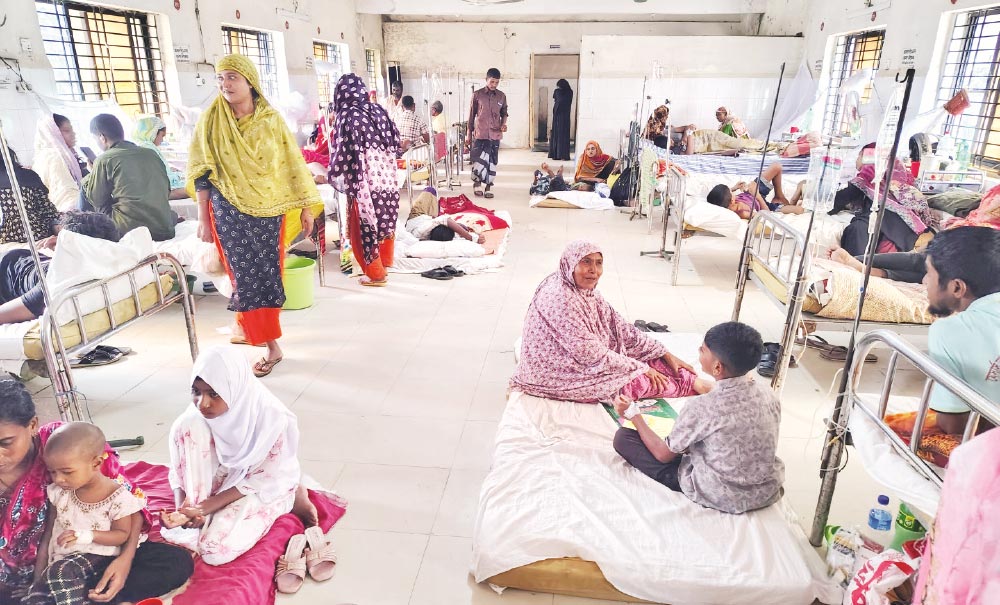 GHORAGHAT, DINAJPUR, Nov 1: The number of dengue patients is gradually increasing in Ghoraghat Upazila of Dinajpur.
Although dengue patients are being treated at the hospital, allegations have arisen that some of them are unwilling to use mosquito nets.
Concerned persons fear that sleeping without mosquito nets in disregard of doctors' advice may increase the risk of infection for the affected patients as well as others.
Such a picture was seen during a visit to Ghoraghat Upazila Health Complex on Thursday.
According to hospital sources, a total of 114 dengue patients have been detected in the upazila from June to date.
Among them, 1 patient was admitted in June, 2 in July, 13 in August, 45 in September and 53 patients have been admitted to the hospital in the current month of October.
At present, 12 dengue patients are undergoing treatment at the Upazila Health Complex. Among them, 5 new patients were admitted on Wednesday.
Nurses on duty at the hospital said arrangements have been made to keep dengue patients inside mosquito nets.
However, many sleep after removing the mosquito nets. Despite repeated advice, some of them are not following the instructions.
This leaves the risk of mosquito bites and there is a fear that efforts to prevent dengue infection may be hampered.
Priyank Kundu Rupom, Upazila Health and Family Planning Officer (Acting) of Ghoraghat, said in this regard that along with following doctors' advice to prevent dengue, it is very important to protect oneself from mosquito bites.
In particular, it must be ensured that dengue patients stay inside mosquito nets. Alongside this, effective steps need to be taken to prevent mosquito breeding in the surroundings.
He also said that as the number of dengue patients in Ghoraghat is increasing, it is important to raise awareness among the general public. At the same time, patients undergoing treatment at the hospital must also follow the rules.
It is possible to prevent the spread of dengue through everyone's collective awareness and the adoption of necessary preventive measures.

Loading...
Loading...
Also read



Editor : Iqbal Sobhan Chowdhury
Published by the Editor on behalf of the Observer Ltd. from Globe Printers, 24/A, New Eskaton Road, Ramna, Dhaka.
Editorial, News and Commercial Offices : Aziz Bhaban (2nd floor), 93, Motijheel C/A, Dhaka-1000.
Phone: PABX- 41053001-06; Advertisement: 41053012; 01793317829, 01550707291, 01550707296
E-mail: [email protected], [email protected]. [email protected], [email protected], [email protected], [email protected], Online-email: [email protected]


