



| HEADLINE |

|

New Zealand election heads for hung parliament amid tight race
Published : Saturday, 7 November, 2026 at 5:13 PM
Observer Online Report


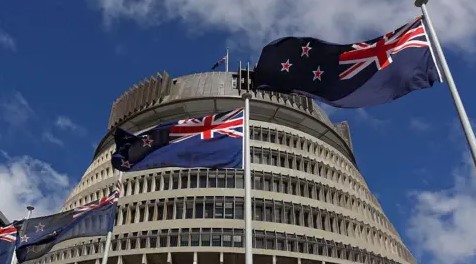
New Zealand's ruling National Party and opposition Labour Party are locked in a tight race as vote counting progresses, with neither side securing a clear lead in the closely contested general election.
More than half of the votes had been counted by Saturday (November 7), with the two parties receiving nearly equal shares, raising the possibility that smaller parties could play a decisive role in forming the next government.
Preliminary results released by the New Zealand Electoral Commission showed that the three-party coalition led by the National Party could secure a parliamentary majority by just one seat.
However, the seat projection could change as vote counting remains underway.
Meanwhile, the centrist Opportunity Party is on course to cross the 5 per cent threshold required to enter parliament, potentially making it an influential player in post-election negotiations.
If neither major party secures a clear majority, the Opportunity Party's support could become crucial in forming the next government.
Amid indications of a hung parliament, Labour leader Chris Hipkins stressed the need for political compromise, saying all parties in the new parliament would have to work together and reach common ground.
The election has been widely described as a ‘supermarket election’, with rising living costs and grocery prices emerging as major concerns for voters.
Competition among supermarket chains also featured prominently in the campaign, as voters weighed which political coalition could better ease the pressure of rising household expenses.
The ruling National Party pledged to control government spending, restore fiscal balance and expand the national pension programme.
In contrast, Labour promised to reduce healthcare and transport costs.
Former New Zealand MP and minister Peter Dun said the policy positions of the two major parties were broadly similar.
He believes this has contributed to growing support among younger voters for smaller parties, including the Green Party, ACT New Zealand, New Zealand First and the Opportunity Party.
New Zealand holds general elections every three years under a mixed-member proportional (MMP) voting system, in which voters cast separate ballots for a local candidate and a political party. All votes are counted by hand.
The Electoral Commission aims to release preliminary results from 95 per cent of polling places by Saturday night. Final results, including overseas votes, are scheduled to be announced on November 27.
However, Peter Dun warned that negotiations among political parties to form a new government could continue for several weeks.
- MaT

Loading...
Loading...
Also read







Editor : Iqbal Sobhan Chowdhury
Published by the Editor on behalf of the Observer Ltd. from Globe Printers, 24/A, New Eskaton Road, Ramna, Dhaka.
Editorial, News and Commercial Offices : Aziz Bhaban (2nd floor), 93, Motijheel C/A, Dhaka-1000.
Phone: PABX- 41053001-06; Advertisement: 41053012; 01793317829, 01550707291, 01550707296
E-mail: [email protected], [email protected]. [email protected], [email protected], [email protected], [email protected], Online-email: [email protected]


