



| HEADLINE |

|

State Minister announces sweeping primary education reforms
Published : Sunday, 8 November, 2026 at 10:56 AM
Observer Online Report


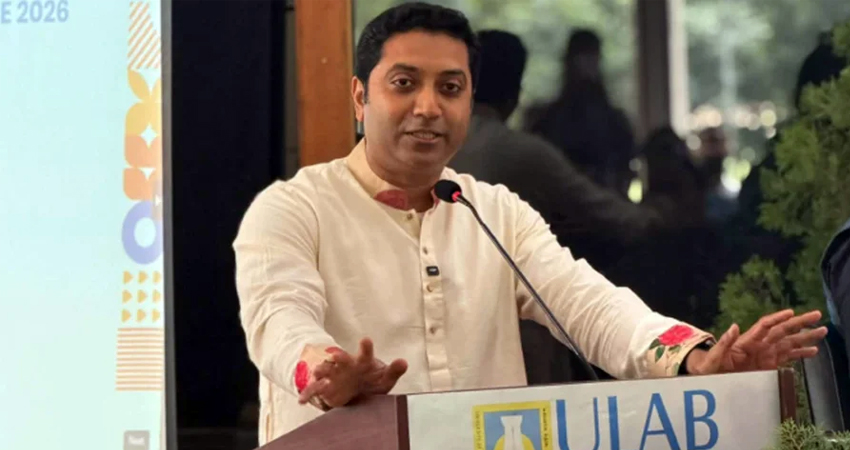
Collected Photo
The government is working towards introducing a new competency-based and child-friendly curriculum in primary schools by 2028, tailored to the age, capability, and learning needs of students, State Minister for Primary and Mass Education Bobby Hajjaj has said.
In a recent interview with the national news agency BSS, the State Minister detailed the government's comprehensive plans to ensure the quality of primary education, expand the nationwide mid-day meal programme, integrate classroom technology, and implement structural reforms.
New Curriculum by 2028
The National Curriculum and Textbook Board (NCTB) has been tasked with formulating a refined curriculum that eliminates disparities in learning hours across schools while making lessons more scientific, comprehensible, and engaging.
The State Minister noted that the government is fostering a joyful classroom environment where children can learn through play, utilizing educational toys alongside textbooks. Special emphasis is being placed on foundational skills in Bengali, mathematics, and English, supported by digital content, practical learning, and participation in science and math olympiads as well as cultural activities.
Nationwide Mid-Day Meal Programme by 2027
Highlighting student retention and nutritional security as top priorities, Hajjaj stated that the mid-day meal programme—currently active in 151 upazilas—is slated for nationwide expansion. A new Development Project Proposal (DPP) is underway to cover all government primary schools, ensuring nutritious midday meals for 100 percent of children by 2027.
Food quality and distribution transparency are strictly monitored through 'Mothers' Committees' under a zero-tolerance policy.
Digital Ecosystem and Infrastructure
To empower educators digitally, the government is pursuing the 'One Teacher, One Tab' and 'Smart Classroom' initiatives. Developed in collaboration with global tech giants like Google, the centralized digital ecosystem will enable real-time tracking of syllabus completion and student comprehension. Additionally, off-grid schools in remote areas will receive solar panels and bandwidth through a joint agreement with the Power Division.
Emphasizing a holistic approach, Hajjaj underscored that curriculum, teacher training, monitoring, infrastructure, and technology must be prioritized simultaneously. Infrastructure development will extend beyond basic construction to ensure child-friendly facilities, safe drinking water, and geographical adaptability for flood-prone and hilly regions, aligned with the directives of Prime Minister Tarique Rahman.
-EM

Loading...
Loading...
Also read








Editor : Iqbal Sobhan Chowdhury
Published by the Editor on behalf of the Observer Ltd. from Globe Printers, 24/A, New Eskaton Road, Ramna, Dhaka.
Editorial, News and Commercial Offices : Aziz Bhaban (2nd floor), 93, Motijheel C/A, Dhaka-1000.
Phone: PABX- 41053001-06; Advertisement: 41053012; 01793317829, 01550707291, 01550707296
E-mail: [email protected], [email protected]. [email protected], [email protected], [email protected], [email protected], Online-email: [email protected]


