



| HEADLINE |

|

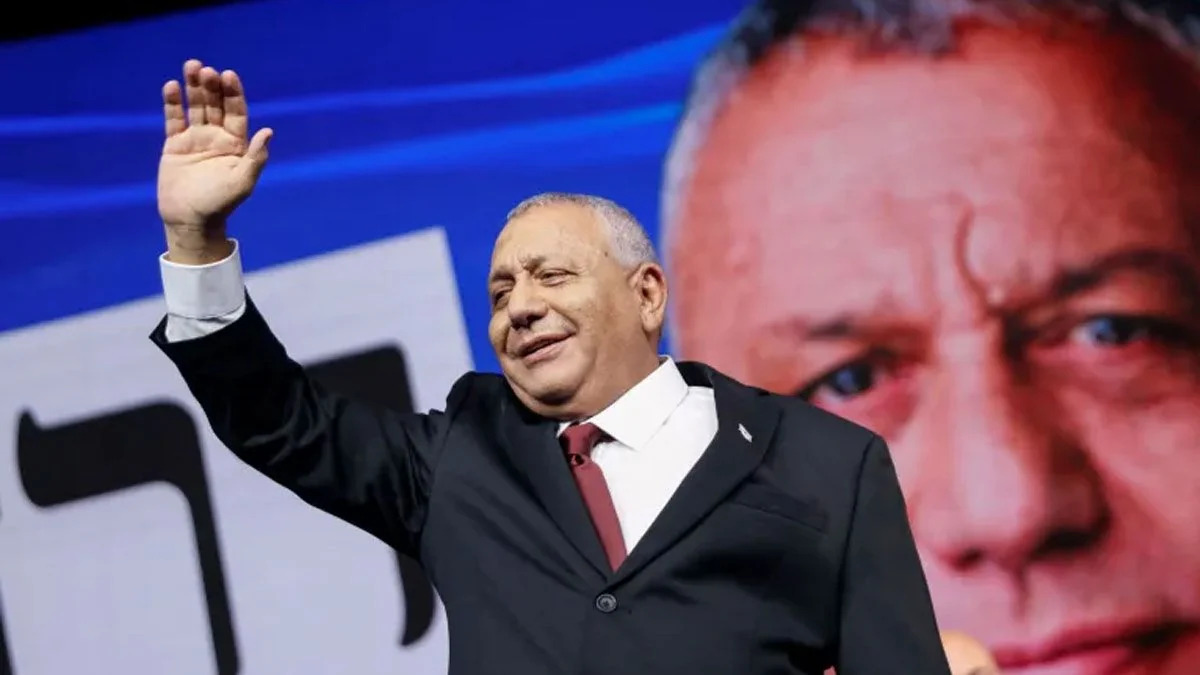
Eisenkot tasked with forming Israel's next government
Published : Sunday, 8 November, 2026 at 8:03 AM
Observer Online Report


Collected Photo
Israeli President Isaac Herzog has officially decided to invite opposition leader Gadi Eisenkot to form the country's next coalition government following an inconclusive general election.
The decision comes after neither incumbent Prime Minister Benjamin Netanyahu nor Eisenkot secured an absolute majority in the 120-seat Knesset. Following extensive consultations with various political factions, President Herzog chose the former military chief to take the first attempt at coalition building.
Eisenkot will now have 28 days to assemble a government, with the possibility of a 14-day extension if required.
In a statement posted on X (formerly Twitter), Eisenkot wrote, "The time has come to form a national emergency government. I will do everything in my power while honoring the public's trust."
No single political party has ever won an outright majority in Israel's political history, making coalition governments a necessity.
In the latest election, Netanyahu's right-wing Likud party and its ultra-Orthodox and far-right allies secured 53 seats. Meanwhile, Eisenkot's centrist Yashar party and its aligned opposition bloc won 48 seats.
The election yielded a significant breakthrough for two Arab alliances—the United Arab List and the Joint List—which collectively secured a record 19 seats due to increased voter turnout among Arab citizens.
The result positions the Arab parties as potential kingmakers, despite prior pledges by most Jewish political factions ruling out a coalition with them.
President Herzog announced his decision after consultations revealed Eisenkot had secured the support of 67 lawmakers, compared to 46 for Netanyahu.
A statement from the President's Office confirmed that both leaders had been notified. Under Israeli law, the president is not required to task the leader of the largest party with forming a government, but rather the candidate deemed most capable of building a viable coalition.
Three potential political scenarios remain open: a national unity government combining Netanyahu and Eisenkot, a right-wing coalition led by Netanyahu (requiring defectors from Eisenkot's bloc), or an Eisenkot-led government backed by Arab parties. Eisenkot may also attempt to negotiate with ultra-Orthodox parties to secure the required majority.
The move mirrors past efforts to resolve political gridlock, such as the 2020 power-sharing agreement between Netanyahu and Benny Gantz. President Herzog has continuously emphasized the need to avoid another snap election, noting during consultations that political parties must recognize that not all campaign promises can be preserved under current realities.
-SA

Loading...
Loading...
Also read



Editor : Iqbal Sobhan Chowdhury
Published by the Editor on behalf of the Observer Ltd. from Globe Printers, 24/A, New Eskaton Road, Ramna, Dhaka.
Editorial, News and Commercial Offices : Aziz Bhaban (2nd floor), 93, Motijheel C/A, Dhaka-1000.
Phone: PABX- 41053001-06; Advertisement: 41053012; 01793317829, 01550707291, 01550707296
E-mail: [email protected], [email protected]. [email protected], [email protected], [email protected], [email protected], Online-email: [email protected]


