



| HEADLINE |

|
Begum Khaleda Zia: A life of struggle, leadership and unbreakable resolve


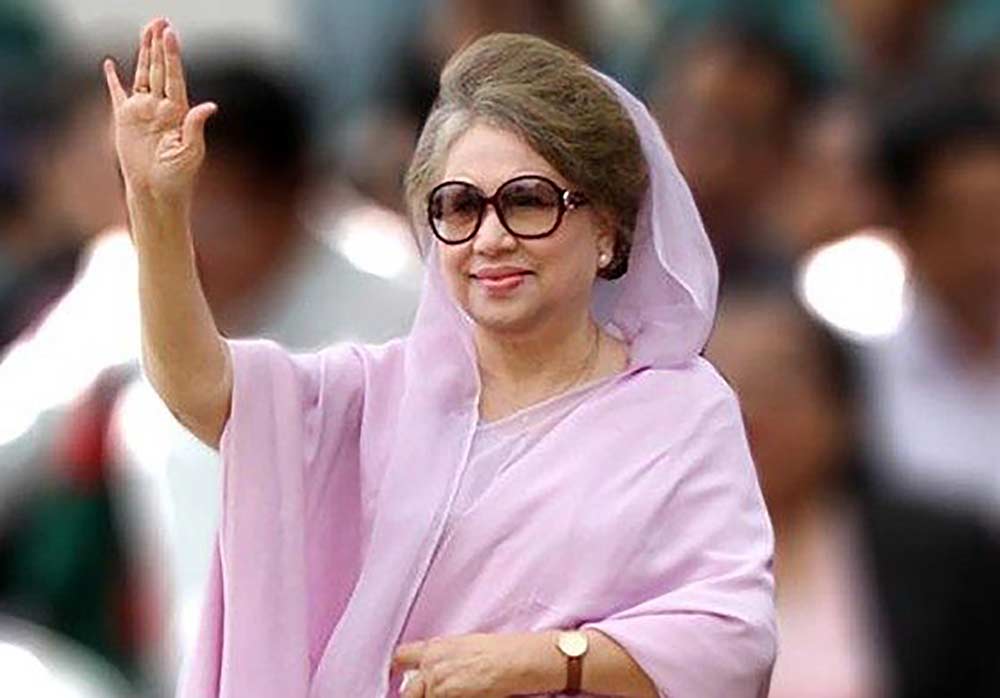 After
overcoming prolonged obstacles, resistance, and personal adversity,
Begum Khaleda Zia rose to become the first woman Prime Minister of
Bangladesh, etching her name in history as the second elected female
head of government in the Muslim world. Her journey was neither easy nor
ordinary; it was shaped by sacrifice, courage, and an unwavering
commitment to democracy and the people of Bangladesh.
After
overcoming prolonged obstacles, resistance, and personal adversity,
Begum Khaleda Zia rose to become the first woman Prime Minister of
Bangladesh, etching her name in history as the second elected female
head of government in the Muslim world. Her journey was neither easy nor
ordinary; it was shaped by sacrifice, courage, and an unwavering
commitment to democracy and the people of Bangladesh.Emerging as a beacon of hope during the democratic movements of the 1980s, Begum Khaleda Zia became a symbol of resistance against authoritarian rule. At a time when the nation was grappling with political uncertainty and the suppression of democratic rights, her leadership inspired millions. She played a decisive role in transforming Bangladesh from a presidential system to a parliamentary democracy, a shift that restored the people's voice and strengthened democratic institutions. This transition remains one of her most significant political contributions, shaping the country's governance framework for generations to come.
Begum Khaleda Zia's public identity encompassed many roles-First Lady, politician, opposition leader, and national stateswoman. Yet beyond the political arena, she was, above all, a mother of two sons. Her personal life was marked by profound pain and emotional endurance. During the terminal illness of her younger son, Arafat Rahman "Koko," she was not permitted to be by his side. The cruel reality of politics meant that she could only see her son after his death. This loss left a permanent scar, one no mother should ever have to bear.
Her elder son, Tarique Rahman, spent many years in forced exile in London, separated from his mother and homeland. The pain of being distanced from her child added another layer to her suffering. At any moment, she could have chosen to leave the country to escape this relentless anguish. Instead, she stayed. She remained rooted in Bangladesh, holding firmly to her uncompromising principles and her sense of duty toward the nation. Her decision to endure, rather than flee, revealed a depth of resilience that defined her character.
Repeated imprisonment further tested her strength. Each incarceration was intended to silence her, to break her spirit.
Instead, these experiences made her more tolerant, more resolute, and more courageous. Adversity did not diminish her resolve; it refined it. Time and again, she emerged from confinement with renewed determination to continue her political struggle, proving that leadership is not measured by comfort, but by perseverance in the face of hardship.
Nothing-neither personal grief nor political persecution-could deter Begum Khaleda Zia from serving her country. She was not merely a woman leader occupying a powerful office; she was a trailblazer who demonstrated that women in Bangladesh are capable of leading the nation with strength and conviction. At a time when politics was overwhelmingly male-dominated, her ascent challenged entrenched norms and inspired countless women to envision themselves as leaders, decision-makers, and agents of change.
Her legacy extends beyond electoral victories and constitutional reforms. It lies in the example she set: that dignity can be maintained amid suffering, that principles can be upheld even under pressure, and that love for one's country can outweigh personal loss. Begum Khaleda Zia's life story is one of endurance-of standing firm when circumstances demanded surrender, and of choosing service over self-preservation.
In the narrative of Bangladesh's political history, Begum Khaleda Zia remains a defining figure. Her journey reflects not only the struggle for democracy, but also the quiet strength of a woman who bore immense personal pain without abandoning her responsibility to the nation. She stands as a testament to resilience, leadership, and the enduring power of conviction-an inspiration not just for women, but for all who believe in courage, democracy, and unwavering commitment to one's ideals.
Loading...
Loading...
Also read



Editor : Iqbal Sobhan Chowdhury
Published by the Editor on behalf of the Observer Ltd. from Globe Printers, 24/A, New Eskaton Road, Ramna, Dhaka.
Editorial, News and Commercial Offices : Aziz Bhaban (2nd floor), 93, Motijheel C/A, Dhaka-1000.
Phone: PABX- 41053001-06; Online: 41053014; 01550707296 Advertisement: 41053012; 01550707291
E-mail: [email protected] [email protected]
Published by the Editor on behalf of the Observer Ltd. from Globe Printers, 24/A, New Eskaton Road, Ramna, Dhaka.
Editorial, News and Commercial Offices : Aziz Bhaban (2nd floor), 93, Motijheel C/A, Dhaka-1000.
Phone: PABX- 41053001-06; Online: 41053014; 01550707296 Advertisement: 41053012; 01550707291
E-mail: [email protected] [email protected]


