



| HEADLINE |

|
Melting Arctic ice threatens global ecosystem
Published : Monday, 5 January, 2026 at 12:00 AM
Motaher Hossain


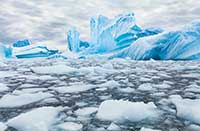
 Climate change is rapidly transforming the frozen Arctic, producing consequences that extend far beyond the polar region and threaten ecosystems across the globe. Rising global temperatures, largely driven by human-induced carbon emissions, are causing Arctic ice to melt at an unprecedented pace. Alongside glaciers and sea ice, permafrost-soil that has remained frozen for thousands of years-is thawing rapidly. This thawing process releases toxic minerals that were previously locked beneath the frozen soil, allowing them to flow into rivers, streams, and freshwater systems. Scientists warn that these changes pose serious environmental risks and could have far-reaching impacts on the global ecosystem, affecting even distant, climate-vulnerable countries such as Bangladesh.
Reports from United States federal scientists, along with studies conducted by international research institutions, indicate that more than 200 rivers in Alaska have already been contaminated by toxic minerals released from melting permafrost. These alarming findings have drawn attention and concern from scientists worldwide. Bangladeshi researchers, in particular, fear that the same processes driving Arctic ice loss are accelerating the melting of Himalayan glaciers. Together, Arctic and Himalayan ice melt contribute significantly to global sea-level rise, posing an existential threat to low-lying coastal nations like Bangladesh. Environmental scientist Professor Dr. Ainun Nishat has described the release of toxic water from thawing Arctic permafrost as "a blow on top of an already deadly wound" for countries already facing severe climate risks.
Recent studies show that the Arctic experienced record-breaking temperatures and unusually heavy rainfall over the past year. These extreme conditions have dramatically accelerated the thawing of permafrost-ground that has remained frozen year-round for centuries. As the ice embedded within this soil melts, mineral-rich water is released and flows into nearby rivers and freshwater systems. In northern Alaska alone, this process has spread toxic substances into more than 200 river systems, threatening the survival of salmon and other aquatic species that are critical to local ecosystems and Indigenous communities.
The findings were presented at the annual conference of the American Geophysical Union in New Orleans. The research was conducted under the supervision of the U.S. National Oceanic and Atmospheric Administration (NOAA), with contributions from scientists across the United States, Canada, Europe, and NASA. This broad collaboration reflects a strong global scientific consensus on the seriousness of Arctic climate change.
The report documents rapid environmental changes across the Arctic, from Norway's Svalbard archipelago to Greenland's massive ice sheets and the tundra regions of Canada and Alaska. NOAA's acting chief scientist, Steve Thur, emphasized that the Arctic has a powerful influence on the world's climate system. The study revealed that between October 2024 and September 2025, Arctic surface temperatures were the highest recorded in the past 125 years, underscoring the accelerating pace of climate change in this critical region.
Field investigations confirmed rust-colored water seeping directly from hillsides and emerging through tundra soil. This acidic water kills insects and small aquatic organisms that form the base of the Arctic food chain. Salmon and other fish rely on these organisms for survival, and nearly 10,000 people in the region depend on salmon for food and income. In 2024, the once-clear Akillik River in Kobuk Valley National Park suddenly turned orange during the summer, killing all fish and aquatic life within the river.
The melting of Arctic ice and the release of toxic water from thawing permafrost represent a global crisis, not just a regional one. The Arctic plays a critical role in regulating Earth's climate, acting as a natural thermostat that influences weather patterns and ocean currents worldwide. Scientists stress that urgent and coordinated global action is necessary to reduce carbon emissions and slow warming. Without such efforts, the world risks being pushed toward yet another large-scale environmental disaster-one that will strike the most vulnerable nations first and with devastating force.
The writer is Editor, ClimateJournal24.com and General Secretary, Bangladesh Climate Change Journalist Forum (BCCJF)
Loading...
Loading...
Also read



Editor : Iqbal Sobhan Chowdhury
Published by the Editor on behalf of the Observer Ltd. from Globe Printers, 24/A, New Eskaton Road, Ramna, Dhaka.
Editorial, News and Commercial Offices : Aziz Bhaban (2nd floor), 93, Motijheel C/A, Dhaka-1000.
Phone: PABX- 41053001-06; Advertisement: 41053012; 01793317829, 01550707291, E-mail: [email protected], [email protected] Online: email: [email protected] 41053014; 01550707297 Advertisement: 01550707296
Published by the Editor on behalf of the Observer Ltd. from Globe Printers, 24/A, New Eskaton Road, Ramna, Dhaka.
Editorial, News and Commercial Offices : Aziz Bhaban (2nd floor), 93, Motijheel C/A, Dhaka-1000.
Phone: PABX- 41053001-06; Advertisement: 41053012; 01793317829, 01550707291, E-mail: [email protected], [email protected] Online: email: [email protected] 41053014; 01550707297 Advertisement: 01550707296


