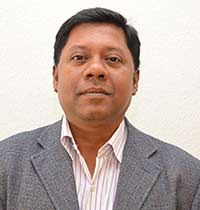
January 15, 2026, was an ordinary Thursday on the calendar, but an extraordinary and unsettling afternoon inside the Dhaka Metropolitan Sessions Judge's Court. As the clock struck 12:22 pm, the usual crowd of litigants, lawyers and onlookers filled the balcony. Yet amid the noise of routine judicial business, an eerie stillness gathered around one particular dock. Standing there was a man long known not for crime or controversy, but for classrooms, books, research and ideas-Professor Abul Barkat, retired professor of Economics at the University of Dhaka.
The contrast was painful. The familiar image of a thoughtful teacher in modest attire had been replaced by a bulletproof vest, a helmet, and iron handcuffs clasped around a visibly frail body. In the impersonal machinery of the legal process, decades of scholarship, teaching, research and public contribution had been reduced to a single word: accused. Still, beneath the rigid formalities of the court, a profoundly human tragedy quietly unfolded.
Just behind the dock stood Professor Barkat's daughter, Aroni Barkat. For any child, a father is a source of strength and dignity. To see that father paraded in public like a hardened criminal is an emotional wound that words cannot easily capture. Aroni's eyes welled repeatedly with tears. She tried to turn her face away, attempting to shield her father from the sight of her pain, fearing that her weakness might deepen his own despair.
But a teacher's eyes are trained to notice, and a father's heart is quick to feel. In the midst of legal discussions with his lawyers, Professor Barkat glanced back and saw his daughter crying. At that moment, the accomplished economist, known for his analytical rigour, could no longer hold himself together. Tears rolled down his face. He stopped speaking. Father and daughter looked at each other in silence, their shared grief filling the courtroom. Many present felt a sudden tightening in the chest. Unable to bear the sight any longer, Aroni withdrew into a corner of the court. What was meant to be a legal hearing briefly transformed into a stark portrait of human suffering.
This scene has raised uncomfortable questions within the legal and academic communities. Why has a distinguished scholar, who spent his life immersed in research and teaching, been confined in prison for seven months while others accused in the same case are on bail or remain absconding? Relatives point to a harsh and revealing reality: Professor Barkat lacks both political leverage and financial capacity. In a system where justice often demands money, networks and procedural savvy, an honest academic finds himself at a severe disadvantage.
Professor Barkat has lived a simple life. He does not possess the resources to engage high-profile legal counsel or navigate the intricate, often opaque pathways that ease bail. Despite his deep understanding of the national economy, he and his family struggle to manage the relatively modest but decisive legal costs required for his release. His predicament exposes a wider truth: for ordinary and principled citizens, justice can become an exhausting and unequal struggle.
The manner in which he was produced before the court only intensified public unease. He was brought from jail in the morning and later escorted into the courtroom wearing a helmet, a bulletproof vest and handcuffs. For a man whose lifelong weapons were books and arguments, the display felt excessive and degrading. A lawyer present asked pointedly why a university teacher was being treated like a terrorist. Officially, such measures are justified in the name of security, but many could not escape the feeling that public humiliation had been normalised.
Legally, every person is presumed innocent until proven guilty. Yet in practice, Professor Barkat appeared to be enduring a form of punishment before any verdict. His former students, who came to see him, watched in quiet distress, sensing not only his personal humiliation but an affront to the dignity of the teaching profession itself.
According to the Anti-Corruption Commission, Professor Barkat and others are accused of facilitating the embezzlement of Tk 297.38 crore from Janata Bank. This amount rises to Tk 531 crore with interest. On that day, the court took cognisance of the charge sheet, issued warrants against the absconding accused, and set March 4 as the next hearing date. The legal process will, as it should, continue. Yet the question of equal treatment before the law remains unresolved.
Now 72, Professor Barkat is not only a senior citizen but a patient battling serious health conditions, including heart disease, post-stroke complications, lung infections and uncontrolled diabetes. Prison life, with its limited medical facilities, poses a grave risk to his survival. If a lifelong teacher and freedom fighter were to die in custody due to inadequate care, the tragedy would extend far beyond one family-it would stain the moral conscience of the nation.
This is why the call for his release on humanitarian grounds carries such urgency. It is not an argument against justice, but an appeal for compassion within it. Law devoid of humanity risks becoming cruelty.
The tears shed at 12:22 pm that afternoon were not merely personal. They symbolised deeper anxieties about fairness, dignity and the value society places on those who dedicate their lives to knowledge and public service. When the hearing ended at 12:35 p.m., and Professor Barkat was led back to prison, helmeted and handcuffed once more, many wondered what kind of society allows such scenes to become routine.
Whether Professor Abul Barkat is ultimately found guilty or innocent will be decided by the courts. But the manner in which he has been treated has already left a lasting wound among educators and conscious citizens. That afternoon was more than a court proceeding; it was a sombre reminder of how easily rigid systems can overshadow respect, humanity and moral responsibility. The hope now is that justice, tempered with compassion, will yet prevail.
The writer is a researcher and development professional





