
Eid is the greatest religious festival for Muslims. It is not merely a religious observance; it is a celebration of emotions, love, family bonds, and a return to one's roots. Throughout the year, millions of people live in cities and towns in pursuit of their livelihoods. As Eid approaches, they eagerly set out for their villages and hometowns. Some long to see their aging mothers, some wish to visit their fathers' graves, while others carry new clothes and gifts for their children. Ideally, this homebound journey should symbolize joy, hope, and reunion. Sadly, however, in Bangladesh, Eid travel is increasingly becoming synonymous with grief, tragedy, and death.
Every year, the days before and after Eid are marked by horrifying news of road crashes. Bus-truck collisions, motorcycle accidents, and overcrowded vehicles plunging into ditches have become recurring headlines. A person who begins the day with dreams of reuniting with loved ones often returns home lifeless. A child waiting eagerly for a father's embrace may never again walk beside him to Eid prayers. A mother who prepares festive meals for her children may suddenly find her home overwhelmed by sorrow.
Road accidents have emerged as one of Bangladesh's most serious public safety crises. The situation becomes even more alarming during Eid, when the scale of fatalities reaches tragic proportions. Statistics clearly indicate that these incidents are not isolated events but a recurring national tragedy.
According to the Road Safety Foundation, Bangladesh recorded 6,927 road accidents in 2024, resulting in 7,294 deaths and more than 12,000 injuries. Among the victims were 1,152 children and 893 women. Motorcycle accidents alone claimed 2,609 lives, accounting for nearly 36 percent of all road fatalities. In addition, 1,535 pedestrians lost their lives on the roads.
Ahead of this year's Eid-ul-Adha, a tragic truck accident in Tangail that killed at least 15 passengers shocked the nation. Most of the victims were working-class people returning home to celebrate Eid with their families. Preliminary investigations suggest that driver fatigue or loss of control may have contributed to the accident.
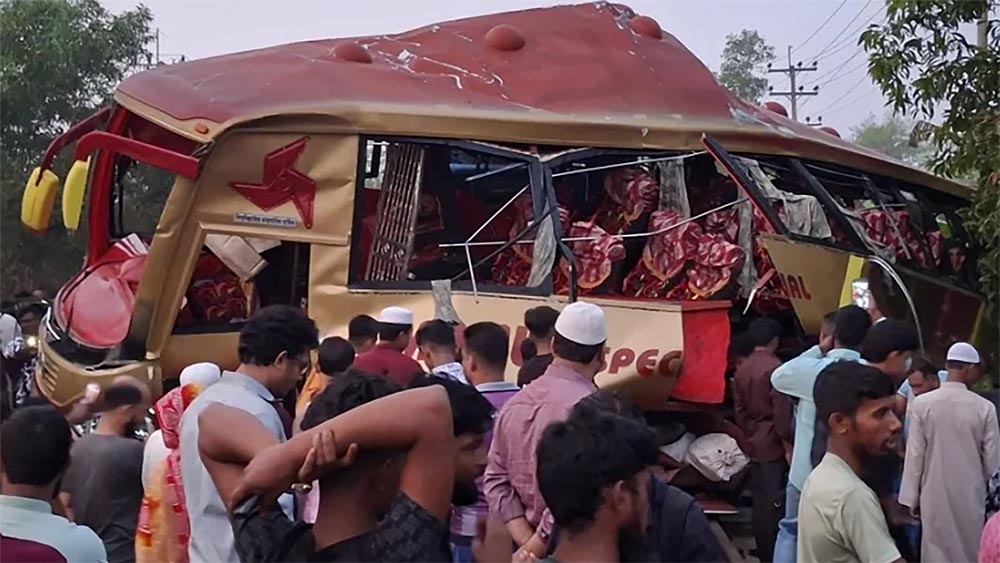
Research conducted by Bangladesh Police indicates that excessive speed is responsible for nearly 42 percent of road accidents. Other major causes include unskilled drivers, vehicle overloading, unfit vehicles, and violations of traffic regulations. Even today, many drivers operate vehicles without adequate training. It is common for drivers to remain behind the wheel for 12 to 16 consecutive hours. International studies have repeatedly demonstrated that fatigue, exhaustion, and reduced concentration significantly increase the risk of accidents. Yet the issue of driver rest and working conditions remains largely neglected.
Many countries around the world have demonstrated that road accidents are not an inevitable fate. Through strict law enforcement, technology-based monitoring systems, improved infrastructure, automated speed control mechanisms, professional driver training, and strong accountability measures, they have significantly reduced road fatalities. Bangladesh must now treat road safety as a national priority. Seasonal campaigns and temporary mobile courts during Eid are not enough. What is needed is a comprehensive and long-term strategy.
First, authorities must strictly prohibit carrying passengers in cargo vehicles and take decisive action against overloading. Second, a zero-tolerance policy must be adopted against unfit vehicles. Third, professional training and regulated working hours for drivers should be made mandatory. Fourth, technology-driven monitoring and enforcement mechanisms should be expanded across highways. Fifth, the quantity and quality of public transportation must be improved so that people are not forced to rely on unsafe alternatives.
Our goal should be to build a Bangladesh where the journey home during Eid is a journey of life, love, and safe reunion-not a procession of coffins. Every life lost on the road is far more than a statistic; it is an irreplaceable loss to a family, a tragedy for society, and a reminder of our collective failure. Only when people can travel safely and return home to their loved ones will the true spirit and joy of Eid be fully realized.
The writer is Assistant Professor & Head, Department of Sociology, Rosey Mozammel Women's Honours College





