



| HEADLINE |

|
Dhaka-18 awaits polls as campaign clock runs out


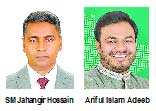 With just one day left before the 13th National Parliament election, campaigning in Dhaka-18 has reached a peak, as candidates intensify outreach across Uttara, Turag, Khilkhet, Uttarkhan, and Dakshinkhan. The constituency now anxiously awaits polling day amid a sharply focused contest, emerging as a key electoral battleground where voter turnout and practical solutions dominate campaign narratives.
The Bangladesh Nationalist Party (BNP) candidate, S.M. Jahangir Hossain, launched his final campaign push by urging citizens to vote after years of limited electoral participation. He pledged to improve infrastructure, including roads, gas and water supply, and promised tougher action against drugs and extortion if his party comes to power.
National Citizens Party (NCP) candidate Ariful Islam Adeeb, backed by an 11-party alliance, centred his campaign on local governance and service delivery. Emphasising traffic management, improved utilities, public security, and social welfare, he pledged inclusive development across the constituency.
The race narrowed significantly after Nagorik Oikya Dal president Mahmudur Rahman Manna withdrew from the contest, citing the high financial burden of campaigning in a large constituency with more than 650,000 voters. Election Commission data show that several other candidates also pulled out, intensifying direct competition.
Political observers say Dhaka-18 reflects the capital's evolving electoral culture, where voters increasingly demand concrete development plans over traditional party rhetoric. The constituency spans modern residential zones in Uttara and Turag alongside underdeveloped neighbourhoods such as Uttarkhan and Dakshinkhan, placing infrastructure and urban services at the heart of the campaign.
Residents identify traffic congestion, flood control, healthcare, and public safety as top concerns. Despite the presence of private hospitals, many rely on the Bangladesh-Kuwait Friendship Government Hospital, which struggles with limited capacity-highlighting the need for stronger public healthcare services as polling day approaches.
Loading...
Loading...



Editor : Iqbal Sobhan Chowdhury
Published by the Editor on behalf of the Observer Ltd. from Globe Printers, 24/A, New Eskaton Road, Ramna, Dhaka.
Editorial, News and Commercial Offices : Aziz Bhaban (2nd floor), 93, Motijheel C/A, Dhaka-1000.
Phone: PABX- 41053001-06; Advertisement: 41053012; 01793317829, 01550707291, E-mail: [email protected], [email protected] Online: email: [email protected] 41053014; 01550707297 Advertisement: 01550707296
Published by the Editor on behalf of the Observer Ltd. from Globe Printers, 24/A, New Eskaton Road, Ramna, Dhaka.
Editorial, News and Commercial Offices : Aziz Bhaban (2nd floor), 93, Motijheel C/A, Dhaka-1000.
Phone: PABX- 41053001-06; Advertisement: 41053012; 01793317829, 01550707291, E-mail: [email protected], [email protected] Online: email: [email protected] 41053014; 01550707297 Advertisement: 01550707296


