



| HEADLINE |

|

Don't let fuel syndicate emerge



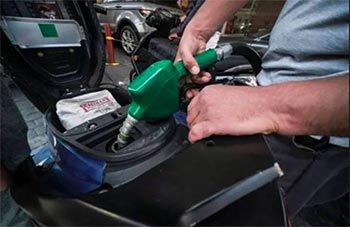
 Bangladesh stands at a critical energy crossroads. As fuel crisis emerges, the fragile foundations of our fuel supply are being brutally exposed for United States-Israel war on Iran war. A fuel shortage is never politely contained within the walls of storage depots. Its toxic impact bleeds instantly onto the factory floors, silences agricultural irrigation pumps, exponentially inflates transport costs, and decisively erodes our export competitiveness. The symptoms are already visible and alarming. Recently, Petrobangla was forced into the desperate position of slashing gas supplies to fertilizer plants. Simultaneously, the Bangladesh Petroleum Corporation (BPC) imposed draconian rationing, limiting motorcycles to two litres and private cars to ten. When private Inland Container Depots (ICDs) face an abrupt suspension of diesel deliveries, it is not merely an energy glitch-it is a direct strike at our trade lifelines. Emergency imports, such as the 5,000 tons of diesel brought via the Parbatipur pipeline, provide temporary anesthesia, but they do nothing to cure the underlying disease.
Undeniably, global geopolitical turbulence exacerbates this domestic turmoil. Recent disruptions in the Strait of Hormuz, delaying essential Saudi crude and Qatari LNG shipments, have tightened the international market. Yet, external shocks alone cannot explain the sheer panic and disproportionate chaos currently gripping our supply chain. These international events merely provide a convenient smokescreen for a far more insidious domestic reality: profound internal manipulation.
 This is where the true peril lies. A deeply cynical, calculated game is being played in the shadows of the energy sector. A powerful syndicate of opportunists recently attempted to corner the newly formed government into an unjustified price hike-a familiar trap designed to secure windfall profits under the guise of "global market adjustments." Fortunately, the current administration has demonstrated the political acumen to refuse this snare.
However, we must bravely confront the historical pattern. Looking back over the past two decades, a chilling consistency emerges. Severe market anomalies and manufactured fuel crises are almost invariably orchestrated immediately following a national election or major political transition. These market manipulators are the ultimate political chameleons. They seamlessly embed themselves within every successive regime, maintaining an unbreakable grip on distribution channels. They do not merely exploit the system's weaknesses; they are the architects of the cartel that controls it.
Once these actors inject fear into the market, consumer psychology shifts dramatically. Local queues form, selective selling begins, and artificially inflated prices trigger a psychological scarcity that is infinitely more damaging than any actual physical deficit. Shrewd players lift far more than they genuinely need, rogue dealers divert subsidized supply to the black market, and rumors do the rest.
Let us speak the unspoken truth: the architects of this chaos are not invisible ghosts. To the people of this country, their identities are an open secret. History has repeatedly recorded their insatiable greed during times of national vulnerability. There is scarcely any need to name them aloud, for their predatory tactics are recognizable to every citizen.
Today's administrative blind spots inevitably become tomorrow's severe supply risks. Unchecked vulnerabilities will rapidly metamorphose into industrial paralysis, hyperinflation, massive job losses, and profound public unrest. The question is no longer whether deep reform is necessary, but how decisively the state is prepared to act against those holding the sector hostage. If Bangladesh does not initiate a profound reconstruction of its energy governance right now, this shock will bypass the fuel pumps and strike directly at the very heart of our food security, our industrial base, and our daily survival. The time for discussion has definitively passed; the time for resolute, uncompromising state
The writer is an entrepreneur

Loading...
Loading...
Also read



Editor : Iqbal Sobhan Chowdhury
Published by the Editor on behalf of the Observer Ltd. from Globe Printers, 24/A, New Eskaton Road, Ramna, Dhaka.
Editorial, News and Commercial Offices : Aziz Bhaban (2nd floor), 93, Motijheel C/A, Dhaka-1000.
Phone: PABX- 41053001-06; Advertisement: 41053012; 01793317829, 01550707291, E-mail: [email protected], [email protected] Online: email: [email protected] 41053014; 01550707297 Advertisement: 01550707296
Published by the Editor on behalf of the Observer Ltd. from Globe Printers, 24/A, New Eskaton Road, Ramna, Dhaka.
Editorial, News and Commercial Offices : Aziz Bhaban (2nd floor), 93, Motijheel C/A, Dhaka-1000.
Phone: PABX- 41053001-06; Advertisement: 41053012; 01793317829, 01550707291, E-mail: [email protected], [email protected] Online: email: [email protected] 41053014; 01550707297 Advertisement: 01550707296


