



| HEADLINE |

|

Third-gender people at Gurudaspur find dignity in death
Published : Sunday, 5 April, 2026 at 12:00 AM
Our Correspondent


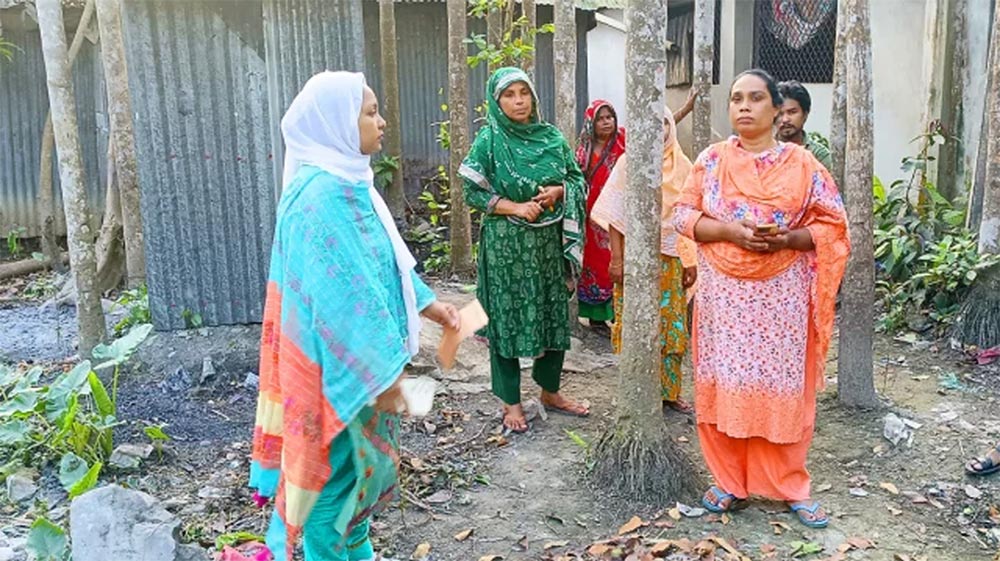 GURUDASPUR, NATORE, Apr 4: For the third-gender community in Gurudaspur Upazila of Natore, dignity in death has long been denied. Marginalised in life, they were also excluded from society's cemeteries, forced to endure humiliation even in their final journey.
Three years ago, Shohar, a 30-year-old member of the community, died on a cold winter night. His family was refused permission to bury him in the local graveyard. With no alternative, they laid him to rest in their own yard. Similar indignity was faced by the father of Guru Mata Nodi Sarkar, who was denied burial simply because he was the parent of a hijra child.
Recalling these painful memories, Nodi Sarkar said: "Our suffering never ends. But to be denied, a place even after death was unbearable."
That cycle of exclusion has now been broken. Thanks to the initiative of Upazila Nirbahi Officer (UNO) Fahmida Afroz, a permanent cemetery has been allocated for the third-gender community. Four decimals of land have been purchased in Kumar Khali Village of Biaghat Union, where members of the community will now be buried with dignity.
Local sources said, the land was bought from businessman Taufiq Ali for Tk 5.1 lakh. A committee was formed to oversee the purchase, and on March 31, the land deed was formally handed over to Guru Mata Nodi Sarkar.
There are around 45 members of the hijra community in Gurudaspur, most living in poverty, social neglect, and insecure housing. Yet, they see the cemetery as a major achievement - a symbol of recognition and humanity.
Community members Nupur, Sonali, Soukhin, Madhabi, Eti, and Dipar voiced their long-standing frustration: "We did not choose to be hijra. Society uses us when convenient but abandons us in hardship. To be denied burial was the greatest insult."
UNO Fahmida Afroz said: "It is deeply painful and inhumane that third-gender people were not allowed burial in cemeteries. I felt compelled to act. At least now they will have a permanent resting place. We also plan future initiatives for rehabilitation and employment."
For the community, the four decimals of land represent far more than soil-it is dignity, recognition, and humanity. After years of rejection, they can finally say: "In death, we will rest in our own soil."
Loading...
Loading...
Also read



Editor : Iqbal Sobhan Chowdhury
Published by the Editor on behalf of the Observer Ltd. from Globe Printers, 24/A, New Eskaton Road, Ramna, Dhaka.
Editorial, News and Commercial Offices : Aziz Bhaban (2nd floor), 93, Motijheel C/A, Dhaka-1000.
Phone: PABX- 41053001-06; Advertisement: 41053012; 01793317829, 01550707291, E-mail: [email protected], [email protected] Online: email: [email protected] 41053014; 01550707297 Advertisement: 01550707296
Published by the Editor on behalf of the Observer Ltd. from Globe Printers, 24/A, New Eskaton Road, Ramna, Dhaka.
Editorial, News and Commercial Offices : Aziz Bhaban (2nd floor), 93, Motijheel C/A, Dhaka-1000.
Phone: PABX- 41053001-06; Advertisement: 41053012; 01793317829, 01550707291, E-mail: [email protected], [email protected] Online: email: [email protected] 41053014; 01550707297 Advertisement: 01550707296


