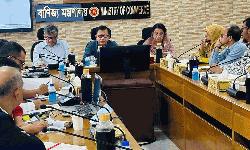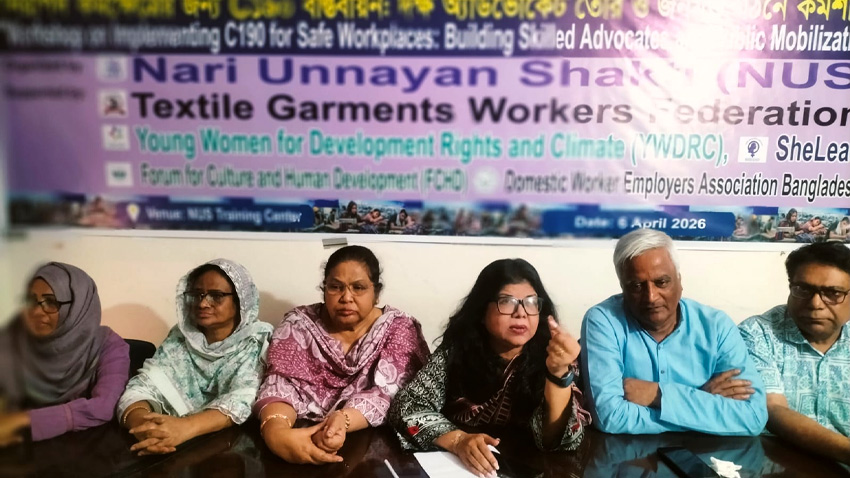
A collaborative workshop focused on eliminating workplace violence and sexual harassment against women wrapped up at the NUS Training Center in the capital's Banasree, following two days of intensive discussions and advocacy training.
Nari Unnayan Shakti spearheaded the event with backing from multiple organizations, including the Textile Garments Workers Federation, Domestic Worker Employers Association Bangladesh, SheLead, Forum for Culture and Human Development, and Young Woman for Development Rights and Climate.
The workshop, titled "Implementing International Labour Organization (ILO) ILO Convention 190 to Prevent Violence and Sexual Harassment Against Women at Workplace: Building Skilled Advocates and Public Mobilization" aimed to build expertise around ILOC 190, equipping participants with advocacy skills to influence policy development and foster collaboration between civil society groups, labor organizations, and government officials toward creating harassment-free work environments.
Dr. Afroja Parvin emphasized during her presidential address that workplace safety represents a basic entitlement rather than a privilege, stressing the urgent need for Convention 190 implementation to guarantee dignified working conditions particularly for female employees.
Chief guest Abul Hossain, a freedom fighter and labor advocate, underscored that worker protection is essential for sustainable economic progress, noting that laborers form the foundation of national prosperity.
Dr. Sultan Muhammad Razzak framed the issue as extending beyond labor concerns into human rights territory, calling for Bangladesh to meet international benchmarks.
Additional speakers included Quazi Dilruba Jefu from the Domestic Worker Employers Association, Shahida Wahab representing the Forum for Culture and Human Development, and representatives from SheLead and Young Woman for Development Rights and Climate.
Workshop participants outlined numerous obstacles confronting female workers throughout Bangladesh, ranging from sexual harassment and psychological abuse to inadequate safety measures, wage inequities, delayed compensation, insufficient grievance procedures, employment instability, mandatory excessive overtime, and absence of legal safeguards in informal employment sectors. Many women reportedly stay silent about violations fearing termination.
The gathering produced a comprehensive list of action items directed at the Bangladesh government, calling for an immediate implementation timeline for Convention 190, legal coverage extension to informal workers, six-month maternity leave provisions, mandatory workplace childcare facilities in accordance with existing regulations, functioning complaint systems including anti-harassment committees, gender-segregated restroom facilities, institutional gender policies, and nationwide educational initiatives.
Workshop attendees pledged continued advocacy work, public education campaigns, and sustained pressure on decision-makers to guarantee secure and respectful workplace conditions for all workers, with particular attention to women's protection.