



| HEADLINE |

|

Those selling ‘July spirit’ now ride Prado, not rickshaw: BNP lawmaker
Published : Thursday, 25 June, 2026 at 6:10 PM
Observer Online Desk


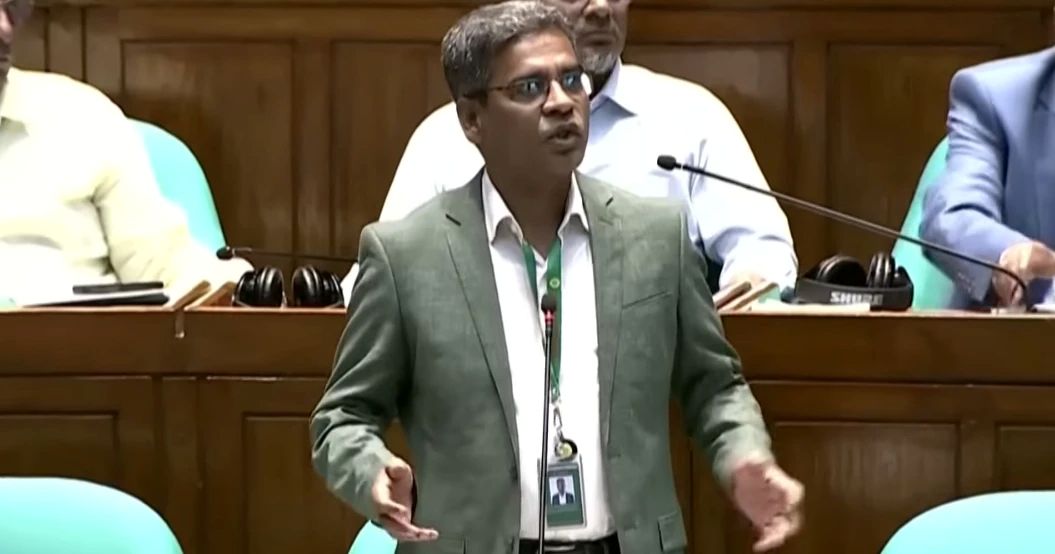
Ruling party lawmaker Mohammad Akhtaruzzaman Bachchu (Mymensingh-10) on Thursday said those who sell the July spirit now ride on Prado vehicles, though once they used to ride on rickshaws.
“I would like to make a request to those who sell the July spirit. Many of them used to ride on rickshaws, but now they ride Prado vehicles. And they sell the July spirit,” he told Parliament.
The lawmaker made this remark participating in the general discussion on the proposed national budget for 2026-2027 fiscal year.
Akhtaruzzaman Bachchu said many members in the House had actively participated in the July movement. “But many people sell the July spirit. We do not sell the July spirit; we embody it. July is not something that can be sold,” he said.
Noting that many of those who claim to represent the July spirit often go live on social media, he urged them to go live from their residences so that people could see how their lives have changed.
“They occasionally go live. If they showed the houses they now live in by going live from there, the nation could see where they now stay and how much things have changed (to them),” he said.
The Mymensingh-10 lawmaker questioned why their friends from the opposition bench seem to be a little bit upset regarding the proposed budget despite the prices of 60 essential commodities being decreased by the budgetary measures.
The Mymensingh-10 lawmaker also questioned why opposition lawmakers are upset with the proposed budget despite budgetary measures that reduced the prices of around 60 essential commodities.
Noting that the prices of only two items - cigarettes and liquor - had increased under the budget, he said, “The general people of the country have accepted this budget. But our friends in the opposition term it a ‘chanachur-type budget’. We know chanachur is eaten by children, and adults also eat it. But adults usually eat chanachur after consuming certain other things. I do not know if that is why they are unhappy.”
Joining the budget discussion, opposition Jamaat-e-Islami lawmaker Abdul Baten (Dhaka-16) said there is little good news for middle-income and low-income people in this budget.
He questioned how much benefit could be achieved by easing conditions for large loan defaulters while imposing additional tax burdens on small businesses.
Pointing out that VAT, one of the government’s principal sources of revenue, is a regressive tax, Abdul Baten said its impact falls equally on both rich and poor people, but the burden is felt most heavily by lower-income groups.
He also demanded an increase in budgetary allocation for the defence sector, noting that its share in the proposed budget had declined in percentage terms.
Loading...
Loading...
Also read



Editor : Iqbal Sobhan Chowdhury
Published by the Editor on behalf of the Observer Ltd. from Globe Printers, 24/A, New Eskaton Road, Ramna, Dhaka.
Editorial, News and Commercial Offices : Aziz Bhaban (2nd floor), 93, Motijheel C/A, Dhaka-1000.
Phone: PABX- 41053001-06; Advertisement: 41053012; 01793317829, 01550707291, E-mail: [email protected], [email protected] Online: email: [email protected] 41053014; 01550707297 Advertisement: 01550707296
Published by the Editor on behalf of the Observer Ltd. from Globe Printers, 24/A, New Eskaton Road, Ramna, Dhaka.
Editorial, News and Commercial Offices : Aziz Bhaban (2nd floor), 93, Motijheel C/A, Dhaka-1000.
Phone: PABX- 41053001-06; Advertisement: 41053012; 01793317829, 01550707291, E-mail: [email protected], [email protected] Online: email: [email protected] 41053014; 01550707297 Advertisement: 01550707296


