



| HEADLINE |

|

Parliament moves to repeal interim judicial ordinances, passes 7 bills
Published : Monday, 6 April, 2026 at 11:21 PM
Observer Online Report


Law Minister tables three bills to nullify Supreme Court and rights commission reforms while seven other bills pass without debate
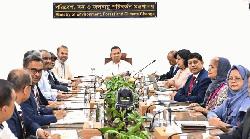
The national parliament on Monday witnessed the introduction of three bills seeking to repeal ordinances issued during the interim government's tenure concerning the Supreme Court's independent secretariat, judge appointments, and the National Human Rights Commission.
Law Minister Asaduzzaman presented the bills separately in the House, which will be debated later this week, likely on Thursday or Friday. The bills include the Supreme Court Secretariat Repeal Bill, the Supreme Court Judge Appointment Repeal Bill, and the National Human Rights Commission Repeal and Revival Bill.
The latter aims to restore the 2009 law governing the commission.
The proposed laws include the Supreme Court Secretariat Repeal Bill, the Supreme Court Judges Appointment Repeal Bill, and the National Human Rights Commission Repeal and Reinstatement Bill. Opposition members had raised objections to repealing these ordinances during discussions in a parliamentary special committee.
When the Supreme Court-related bills were introduced, opposition lawmakers reiterated their objections. The law minister acknowledged that dissenting notes had been recorded by opposition members in the committee but said he was formally placing the bills in Parliament and requested the Speaker to schedule them for debate.
Meanwhile, Parliament passed seven bills on Monday, including the Representation of the People Amendment Bill, which expands the powers of the Election Commission in several areas. None of the bills were debated.
Six of the passed bills approve ordinances issued during the interim government, while another repeals the National Parliament Secretariat Interim Special Provisions Ordinance.
Presided over by Deputy Speaker Kayser Kamal, the House passed the bills through voice votes after they were placed by the law minister. As there were no proposed amendments, the bills were approved clause by clause without discussion, in line with recommendations from the parliamentary special committee.
During the passage of the Voter List Amendment Bill, Jamaat-e-Islami MP Saiful Alam Khan raised a point of order, alleging that members had not received copies of the bill three days in advance as required. He said lawmakers had only just received a 49-page document, making it difficult to participate in discussion.
In response, the Speaker acknowledged the rule but noted that special powers allow exceptions.
Chief Whip Nurul Islam later explained that 133 ordinances must be passed by April 9, and due to time constraints, it was not possible to distribute all documents in advance. He expressed regret and said bills agreed upon unanimously in committee should be passed first, while those with dissent or amendments would be presented separately by Tuesday.
Earlier, Land Minister Mizanur Rahman Mintu introduced the Land Use Control and Agricultural Land Protection Bill 2026. The Speaker did not announce any decision on the bill.
A key provision from the earlier ordinance �" restricting tobacco cultivation on multi-crop agricultural land �" has been removed in the proposed bill. The parliamentary special committee had recommended amending this clause.
According to committee recommendations, of the 133 ordinances issued during the interim government, 98 should be approved as is, 15 with amendments, four repealed, and 16 replaced later with stronger legislation.
There was brief confusion during the session over the introduction of bills. At one point, the deputy speaker invited the law minister to present the Supreme Court Judges Appointment Repeal Bill, but the minister mistakenly referred to the Supreme Court Secretariat Repeal Bill.
The Speaker corrected him, but the minister repeated the error before the bill was ultimately accepted under the correct title.
Later, the deputy speaker formally called for the Secretariat Repeal Bill, which was then properly introduced.
Deputy Speaker Kayser Kamal later apologized for the procedural mix-up during the proceedings.
The national parliament on Monday witnessed the introduction of three bills seeking to repeal ordinances issued during the interim government's tenure concerning the Supreme Court's independent secretariat, judge appointments, and the National Human Rights Commission.
Law Minister Asaduzzaman presented the bills separately in the House, which will be debated later this week, likely on Thursday or Friday. The bills include the Supreme Court Secretariat Repeal Bill, the Supreme Court Judge Appointment Repeal Bill, and the National Human Rights Commission Repeal and Revival Bill.
The latter aims to restore the 2009 law governing the commission.
The proposed laws include the Supreme Court Secretariat Repeal Bill, the Supreme Court Judges Appointment Repeal Bill, and the National Human Rights Commission Repeal and Reinstatement Bill. Opposition members had raised objections to repealing these ordinances during discussions in a parliamentary special committee.
When the Supreme Court-related bills were introduced, opposition lawmakers reiterated their objections. The law minister acknowledged that dissenting notes had been recorded by opposition members in the committee but said he was formally placing the bills in Parliament and requested the Speaker to schedule them for debate.
Meanwhile, Parliament passed seven bills on Monday, including the Representation of the People Amendment Bill, which expands the powers of the Election Commission in several areas. None of the bills were debated.
Six of the passed bills approve ordinances issued during the interim government, while another repeals the National Parliament Secretariat Interim Special Provisions Ordinance.
Presided over by Deputy Speaker Kayser Kamal, the House passed the bills through voice votes after they were placed by the law minister. As there were no proposed amendments, the bills were approved clause by clause without discussion, in line with recommendations from the parliamentary special committee.
During the passage of the Voter List Amendment Bill, Jamaat-e-Islami MP Saiful Alam Khan raised a point of order, alleging that members had not received copies of the bill three days in advance as required. He said lawmakers had only just received a 49-page document, making it difficult to participate in discussion.
In response, the Speaker acknowledged the rule but noted that special powers allow exceptions.
Chief Whip Nurul Islam later explained that 133 ordinances must be passed by April 9, and due to time constraints, it was not possible to distribute all documents in advance. He expressed regret and said bills agreed upon unanimously in committee should be passed first, while those with dissent or amendments would be presented separately by Tuesday.
Earlier, Land Minister Mizanur Rahman Mintu introduced the Land Use Control and Agricultural Land Protection Bill 2026. The Speaker did not announce any decision on the bill.
A key provision from the earlier ordinance �" restricting tobacco cultivation on multi-crop agricultural land �" has been removed in the proposed bill. The parliamentary special committee had recommended amending this clause.
According to committee recommendations, of the 133 ordinances issued during the interim government, 98 should be approved as is, 15 with amendments, four repealed, and 16 replaced later with stronger legislation.
There was brief confusion during the session over the introduction of bills. At one point, the deputy speaker invited the law minister to present the Supreme Court Judges Appointment Repeal Bill, but the minister mistakenly referred to the Supreme Court Secretariat Repeal Bill.
The Speaker corrected him, but the minister repeated the error before the bill was ultimately accepted under the correct title.
Later, the deputy speaker formally called for the Secretariat Repeal Bill, which was then properly introduced.
Deputy Speaker Kayser Kamal later apologized for the procedural mix-up during the proceedings.

Loading...
Loading...
Also read








Editor : Iqbal Sobhan Chowdhury
Published by the Editor on behalf of the Observer Ltd. from Globe Printers, 24/A, New Eskaton Road, Ramna, Dhaka.
Editorial, News and Commercial Offices : Aziz Bhaban (2nd floor), 93, Motijheel C/A, Dhaka-1000.
Phone: PABX- 41053001-06; Advertisement: 41053012; 01793317829, 01550707291, E-mail: [email protected], [email protected] Online: email: [email protected] 41053014; 01550707297 Advertisement: 01550707296
Published by the Editor on behalf of the Observer Ltd. from Globe Printers, 24/A, New Eskaton Road, Ramna, Dhaka.
Editorial, News and Commercial Offices : Aziz Bhaban (2nd floor), 93, Motijheel C/A, Dhaka-1000.
Phone: PABX- 41053001-06; Advertisement: 41053012; 01793317829, 01550707291, E-mail: [email protected], [email protected] Online: email: [email protected] 41053014; 01550707297 Advertisement: 01550707296


