



| HEADLINE |

|

US energy deal 'hits sovereignty'
Debapriya warns ahead of budget
Published : Sunday, 19 April, 2026 at 12:00 AM
Business Correspondent


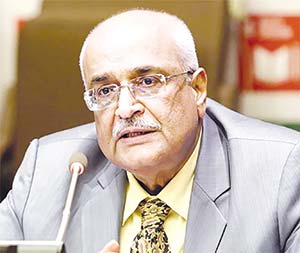 A proposed US-linked energy trade agreement has triggered a fierce debate over Bangladesh's economic independence, with leading economist Dr Debapriya Bhattacharya warning that the deal risks striking at the very core of national sovereignty.
Speaking at a pre-budget "shadow parliament" Saturday in the city organised by Debate for Democracy in Dhaka, the Distinguished Fellow of the Centre for Policy Dialogue (CPD) delivered a blunt assessment.
"The agreement compromises our energy sovereignty," he said. "If we need external permission to decide from whom we purchase oil, that is not economic cooperation-it is a constraint on independence."
His remarks come at a critical juncture as the government prepares the FY2026-27 budget under mounting fiscal strain and geopolitical uncertainty.
According to Dr Debapriya, the country has steadily drifted away from domestic resource development, leaving itself exposed to global price shocks and external pressures. Any agreement that further entrenches this dependence, he argued, risks locking the economy into a cycle of long-term fragility. He was particularly critical of past energy policies, especially over the last 17 years, which he described as "controversial and misleading". "Despite possessing domestic gas reserves, Bangladesh failed to invest adequately in exploration, weakening state-owned entities such as BAPEX and allowing import-driven interests to dominate the sector", he said.
"By turning BAPEX into a toothless tiger and prioritising imports over production, we have institutionalised dependency," he said, warning that such a trajectory now threatens to erode not just economic efficiency but sovereign control.
The economist framed the issue in stark systemic terms. Energy and banking, he said, function as the "two lungs" of the economy, while public financial management-encompassing revenue, expenditure and deficit financing-serves as its "heart". With both lungs under stress and the heart under pressure, the economy, in his words, is "struggling to breathe".
His concerns extend beyond energy policy into the broader reform agenda, where he sees troubling inertia.
He questioned why loan disbursements from the International Monetary Fund have stalled and why reform proposals prepared during the final phase of the interim administration remain largely unimplemented.
"Reform without execution is meaningless," he cautioned, pointing to a widening gap between policy rhetoric and actual delivery.
The debate also cast a spotlight on fiscal credibility ahead of the national budget. Dr Debapriya raised doubts about the financial sustainability of various proposed social schemes-including family, farmer and sports cards-warning that ambitious promises without clear funding strategies could deepen fiscal imbalances. Instead, he urged the government to adopt a more strategic approach: "Take a short step back to prepare for a long jump."
The upcoming budget, he argued, must clearly articulate a five-year economic vision, rather than relying on short-term populist measures.
On the energy front, he outlined three urgent priorities: ensure that taxes collected from lower-income groups are not used to subsidise the wealthy, accelerate investment in domestic gas exploration, and secure energy imports at competitive and affordable rates.
The wider discussion reflected growing unease among policymakers and analysts. Participants highlighted persistent governance gaps, weak revenue mobilisation and policy inconsistency as key risks undermining economic stability.
Concerns were also raised over the lack of transparency surrounding major agreements, with calls for full disclosure before any commitments are finalised.
Presiding over the event, Debate for Democracy Chairman Hasan Ahmed Chowdhury Kiron noted that the government has inherited a fragile economy now further strained by prolonged instability in the Middle East.
Disruptions in energy supply, he said, are already pushing up production costs and intensifying inflationary pressures.
The shadow parliament debate-titled "Economic security can be achieved by ensuring energy security in the next budget"-saw Jatiya Kabi Kazi Nazrul Islam University defeat Stamford University Bangladesh, reflecting strong engagement from the country's youth on issues of national policy and governance.
Yet beyond the debating floor, the implications are far-reaching. The controversy signals a decisive shift in Bangladesh's economic discourse, where energy policy is no longer a technical matter but a question of sovereignty, strategy and survival.
As the budget approaches, the stakes are clear. The choices made now will determine not only the country's energy trajectory but also the extent to which it retains control over its own economic destiny.
In Dr Debapriya's stark warning lies a broader message: economic decisions taken under external influence may deliver short-term relief, but they risk imposing long-term costs that no nation can afford.

Loading...
Loading...



Editor : Iqbal Sobhan Chowdhury
Published by the Editor on behalf of the Observer Ltd. from Globe Printers, 24/A, New Eskaton Road, Ramna, Dhaka.
Editorial, News and Commercial Offices : Aziz Bhaban (2nd floor), 93, Motijheel C/A, Dhaka-1000.
Phone: PABX- 41053001-06; Advertisement: 41053012; 01793317829, 01550707291, E-mail: [email protected], [email protected] Online: email: [email protected] 41053014; 01550707297 Advertisement: 01550707296
Published by the Editor on behalf of the Observer Ltd. from Globe Printers, 24/A, New Eskaton Road, Ramna, Dhaka.
Editorial, News and Commercial Offices : Aziz Bhaban (2nd floor), 93, Motijheel C/A, Dhaka-1000.
Phone: PABX- 41053001-06; Advertisement: 41053012; 01793317829, 01550707291, E-mail: [email protected], [email protected] Online: email: [email protected] 41053014; 01550707297 Advertisement: 01550707296


