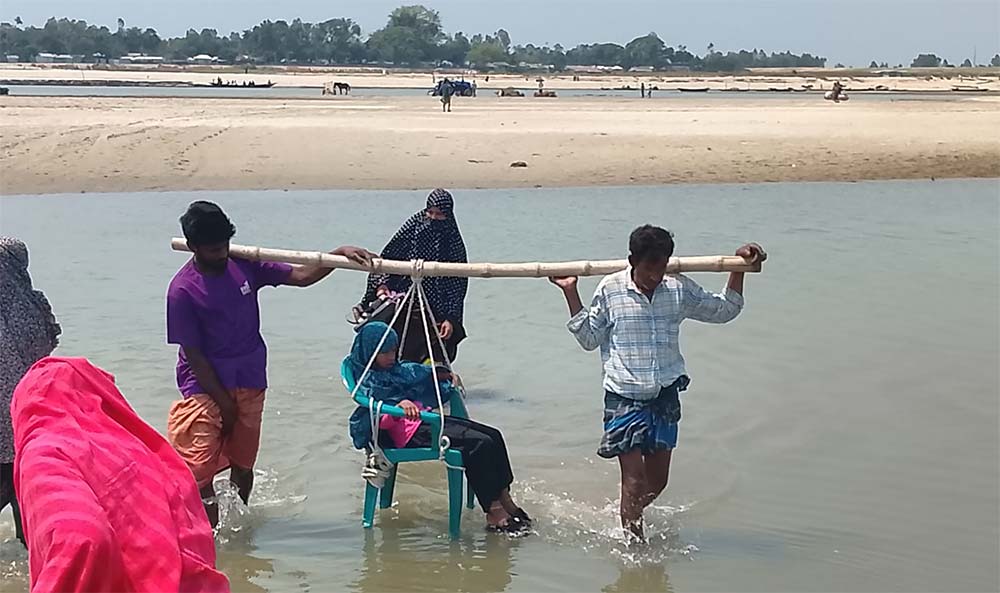
GAIBANDHA, Apr 19: In an era of modern medicine where talk revolves around high-speed ambulances and helicopter services, the reality in Pipulia Char of Gaibandha's Phulchhari Upazila remains frozen in time. Here, there are no roads and no vehicles.
For the critically ill, the only hope of reaching a hospital rests on a single plastic chair suspended from a bamboo pole.
Although Pipulia Char is not geographically far from the district headquarters, the vast, arid stretches of the Brahmaputra riverbed and its water channels act as a formidable barrier. Images from the area depict a harrowing scene: two men carrying a bamboo pole on their shoulders, with a plastic chair tied to it using ropes. Seated in that chair is an ailing woman.
Shouldering this heavy burden, they trek mile after mile across the scorching sands of the char to reach the riverbank.
Local residents say that transporting pregnant women or dying patients across this rugged terrain is extremely hazardous.
While boats are available during the monsoon, the dry season forces inhabitants to traverse miles of burning sand on foot. The delay is often fatal; many lose their lives on the way before ever reaching a medical facility.
The people of these remote char areas lack access to developed community clinics or basic primary healthcare. Consequently, even minor ailments can turn into life-threatening conditions. The makeshift "ambulance"-a plastic chair and a bamboo pole-is more than just a vehicle; it is a living testament to the helplessness and deprivation of the people in this region.
Residents of Pipulia Char are demanding the establishment of at least one functional transport link or a permanent healthcare centre within the char. As the light of modernity reaches almost every corner of the country, a haunting question remains: why must these people continue to endure such primitive hardships just to stay alive?





