



| HEADLINE |

|

Dhaleshwari near ecological collapse as Savar Tannery CETP falls short
Published : Saturday, 23 May, 2026 at 12:00 AM
Md Himel Hasnat Rafi


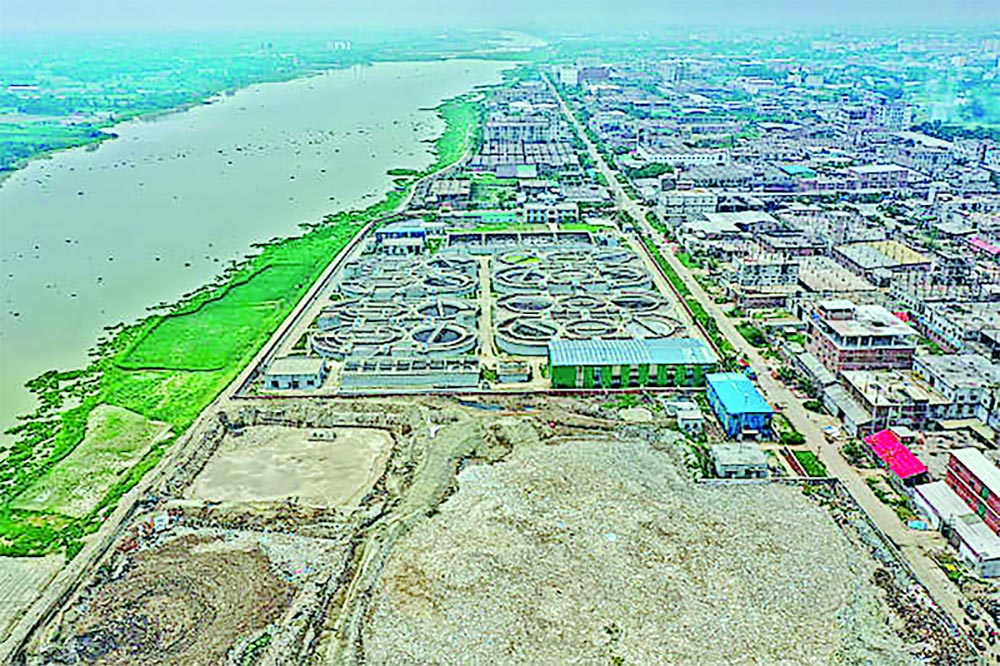 Nearly a decade after Bangladesh relocated its leather industry from Hazaribagh to save the Buriganga River, another major waterway - the Dhaleshwari - is now facing a similar environmental crisis, raising concerns that pollution was not eliminated but simply displaced.
Flowing alongside the Savar Tannery Industrial Estate, the Dhaleshwari is increasingly overwhelmed by toxic discharge from relocated tanneries. The Central Effluent Treatment Plant (CETP), designed as the backbone of the environmental safeguard system, is operating far below required efficiency during peak production periods, while pollution levels continue to exceed safe limits by alarming margins.
* CETP was officially declared capable of treating 25,000 cubic metres of wastewater per day
* Its actual treatment capacity is only 14,000-18,000 cubic metres per day
* Around 45,000 cubic metres of wastewater are generated daily during Eid-ul-Azha
* BOD in Dhaleshwari water was recorded at 308, over ten times the permissible limit of 30
* TSS measured 162 against the allowable limit of 100
* Chloride concentration reached 4,100, more than double the safe threshold of 2,000
A relocation plan that shifted the burden
When 162 tanneries were moved from Hazaribagh to Hemayetpur in Savar in 2017, the CETP was presented as the key solution to prevent untreated industrial waste from entering river systems. Built on 17 acres within the 200-acre tannery estate along the Dhaleshwari, the plant was officially declared capable of treating 25,000 cubic metres of wastewater per day.
But independent assessments later showed its actual capacity is only 14,000 to 18,000 cubic metres daily - far below the nearly 45,000 cubic metres of wastewater generated during peak periods such as Eid-ul-Azha.
According to CETP Managing Director Md Golam Shahnewaz, the system was incomplete from the beginning.
"The central sedimentation system, tertiary treatment facilities and chrome recovery system were all missing," he said. "There were many design flaws."
He also noted that the facility was built under environmental standards set in 1997, while updated regulations introduced in 2023 impose stricter requirements that the plant is yet to meet.
Pollution levels far beyond safe limits
Environmental monitoring conducted last August shows the river is under severe stress.
Biochemical Oxygen Demand (BOD) was recorded at 308, more than ten times the permissible limit of 30. Total Suspended Solids (TSS) stood at 162 against the allowable limit of 100, while chloride concentration reached 4,100 - over double the safe threshold of 2,000.
Experts say the high chloride levels stem mainly from hide preservation processes, for which the CETP lacks proper treatment mechanisms.
Although chromium, pH and oil-grease levels remain within acceptable ranges, environmental specialists warn that extreme BOD, TSS and chloride pollution alone are enough to trigger long-term ecological collapse.
A field visit to the industrial estate found cracked discharge pipes leaking effluents into soil, while open drains carried black wastewater directly toward the river.
Communities living with a dying river
For residents along the Dhaleshwari, pollution is no longer an environmental warning but a daily hardship.
Villagers say the river, once central to bathing, fishing and household use, has become unusable due to foul odour, polluted water and the disappearance of aquatic life. Fish populations have collapsed, while respiratory illnesses are reportedly increasing in nearby settlements.
Riverbanks near the industrial zone are now littered with leather scraps and industrial waste. Two open dumping yards beside the river continue to receive untreated solid waste from CETP operations and tannery trucks.
During monsoon rains, waste flows directly into the river, while in dry seasons it seeps into surrounding soil and water bodies. Open burning of leather waste also sends toxic smoke across nearby villages.
Dr Mashura Shammi, Professor of Environmental Science at Jahangirnagar University, said the damage is severe and systemic.
"Because heavy metals like chromium and large amounts of organics are entering the water, the oxygen level drops to a point where nothing can survive," she said.
She added that the relocation simply transferred the environmental burden.
"They destroyed the Buriganga, and now they have come to destroy the Dhaleshwari," she said. "Dhaleshwari is connected, so the pollution destroys it here and then flows back into the Buriganga."
She also warned that contamination is already affecting nearby agricultural land, including rice fields and vegetable farms, and called for immediate adoption of Zero Liquid Discharge systems along with mandatory salt and chromium recovery.
"There must be absolutely zero discharge," she said.
Export ambitions undercut by pollution
The crisis is also weakening Bangladesh's leather export potential.
Of 147-148 operational tanneries in Savar, only one has obtained certification from the Leather Working Group (LWG), the internationally recognised standard required for high-value export markets in Europe and North America. Nationwide, only eight tanneries hold such certification.
Industry stakeholders say this has significantly reduced export earnings. Bangladesh currently earns around $10-15 per unit of leather, compared to $30-35 in India, where compliance levels are stronger.
Commerce and Industries Minister Khandaker Abdul Muktadir acknowledged the sector's untapped potential.
"If we were able to export all the leather produced in Bangladesh, this sector could become an export industry worth at least 12 billion dollars," he said.
Temporary fixes ahead of Eid peak waste
With Eid-ul-Azha approaching - the industry's highest waste-generating period - authorities have announced short-term measures, including free salt distribution to madrasas and orphanages to improve hide preservation before processing.
Officials also plan to stagger tannery discharge to reduce pressure on the CETP during peak days.
Longer-term steps include an EU-funded technical review of the CETP by Italian consultancy Ital Progetti, expected by June or July. The government is also considering allowing 20-30 tanneries to install individual treatment plants, though only two of six approved units have been implemented so far.
CETP Managing Director Golam Shahnewaz said around 4,000 metric tonnes of chrome shaving waste have been converted into exportable material through a Chinese partner, while leather scraps are being reused for gelatin and glue production.
However, nearly 70 percent of waste - including sludge and fleshing waste - still has no sustainable disposal solution.
He also argued that tanneries are not the only source of pollution, citing untreated discharges from upstream textile, dyeing and garment factories.
A river waiting for policy action
Environmentalists warn that without urgent infrastructure upgrades, enforcement and technological reform, the Dhaleshwari will continue to absorb untreated industrial waste during its most vulnerable season.
For now, plans remain on paper. The pollution continues to flow.

Loading...
Loading...
Also read



Editor : Iqbal Sobhan Chowdhury
Published by the Editor on behalf of the Observer Ltd. from Globe Printers, 24/A, New Eskaton Road, Ramna, Dhaka.
Editorial, News and Commercial Offices : Aziz Bhaban (2nd floor), 93, Motijheel C/A, Dhaka-1000.
Phone: PABX- 41053001-06; Advertisement: 41053012; 01793317829, 01550707291, E-mail: [email protected], [email protected] Online: email: [email protected] 41053014; 01550707297 Advertisement: 01550707296
Published by the Editor on behalf of the Observer Ltd. from Globe Printers, 24/A, New Eskaton Road, Ramna, Dhaka.
Editorial, News and Commercial Offices : Aziz Bhaban (2nd floor), 93, Motijheel C/A, Dhaka-1000.
Phone: PABX- 41053001-06; Advertisement: 41053012; 01793317829, 01550707291, E-mail: [email protected], [email protected] Online: email: [email protected] 41053014; 01550707297 Advertisement: 01550707296


