



| HEADLINE |

|

Sheikh Hasina says she will return by December, surrender to court with AL leaders
Published : Friday, 10 July, 2026 at 4:22 PM
Observer Online Report


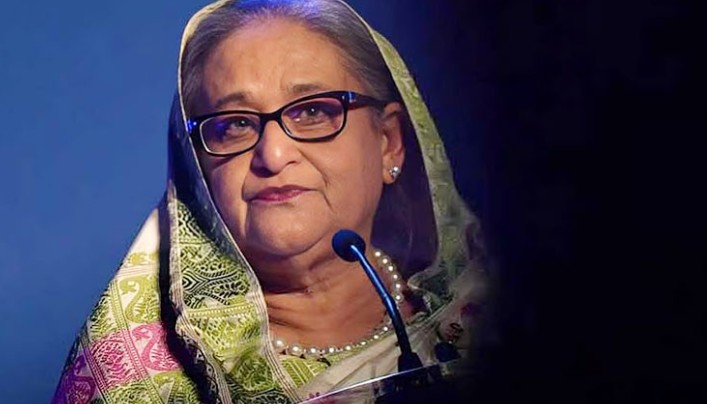
Former prime minister Sheikh Hasina, who has been living in exile in India and has been sentenced to death in absentia in a crimes against humanity case, has said she plans to return to Bangladesh by December and surrender before a court.
In an exclusive interview with Reuters, Hasina said she would return alongside senior Awami League leaders currently living abroad. The nearly hour-long telephone interview, conducted on Thursday night, was her first direct interview with an international media outlet since she was ousted from power on August 5, 2024, during the student-led mass uprising and fled the country.
Although Hasina had earlier indicated in a written interview with NDTV that she intended to return this year, this is the first time she has suggested a timeframe.
Awami League remains banned in Bangladesh, while Hasina, 78, has been sentenced to death in absentia by the International Crimes Tribunal (ICT).
"If I return to the country, they can arrest me, even kill me. But I have to go," she told Reuters.
Explaining her decision, Hasina said, "The leaders and workers of my party are being subjected to extreme oppression. If death comes, I want it to come on the soil of my own country, where my parents lie, where their blood was shed."
Last November, the ICT sentenced Hasina to death in absentia after finding her guilty of ordering a deadly crackdown on the 2024 student movement.
According to a UN report, around 1,400 people were killed during the unrest. Hasina has consistently denied allegations that she ordered the killings.
India's decision to shelter Hasina has strained relations between Dhaka and New Delhi, with Bangladesh repeatedly requesting her extradition.
"They want to bring me back. They are repeatedly writing to India to send me back. But I will go myself," she said.
Reuters reported that Hasina's return could further reshape Bangladesh's political landscape as the BNP-led government seeks to stabilise the country after two years of political turmoil. It also noted that her return could influence relations between Bangladesh and India.
There was no immediate response from the Bangladesh government's spokesperson or India's Ministry of External Affairs to Hasina's remarks.
Hasina said cases had been filed against nearly all Awami League leaders and activists, forcing many into hiding.
"I have told everyone, this time I will return home. You will also have to return one day. We will all surrender to the court together," she said.
However, she did not specify the exact date of her return or identify the court where she intends to surrender.
"I believe in justice. Once the trial process begins, people will see how farcical this court is�"and I want to prove that," she said.
Hasina also denied holding any secret discussions with the Bangladesh government or any foreign government regarding her return.
"Democracy, voting rights, the political rights of the Awami League, and justice are not subjects of any secret discussions," she said.
The former prime minister said she was not concerned about imprisonment, noting that she had previously been jailed after returning from exile in 1981 for protesting military rule and again in 2007 under the military-backed caretaker government on corruption charges.
Reflecting on her departure from Bangladesh in August 2024, Hasina said she fled out of fear for her life as protesters advanced towards her residence.
"When a government remains in power for a long time, mistakes can happen. No government is above mistakes. However, it is for the people to judge what was right or wrong. I leave that judgment to them," she said.
Despite the ban on Awami League activities, Hasina said she had already announced an online meeting with party leaders from 125 of the country's 300 parliamentary constituencies as part of efforts to reorganise the party.
Calling for the ban to be lifted, she said, "They may have punished me and I may not be able to participate in the elections. But why should they ban the Awami League? If we have done something wrong, let the people decide."
Reuters also noted that former home minister Asaduzzaman Khan Kamal, who is also living in India and has been sentenced to death in absentia, could not be reached for comment. The news agency said it was also unable to contact other Awami League leaders.

Loading...
Loading...
Also read







Editor : Iqbal Sobhan Chowdhury
Published by the Editor on behalf of the Observer Ltd. from Globe Printers, 24/A, New Eskaton Road, Ramna, Dhaka.
Editorial, News and Commercial Offices : Aziz Bhaban (2nd floor), 93, Motijheel C/A, Dhaka-1000.
Phone: PABX- 41053001-06; Advertisement: 41053012; 01793317829, 01550707291, E-mail: [email protected], [email protected] Online: email: [email protected] 41053014; 01550707297 Advertisement: 01550707296
Published by the Editor on behalf of the Observer Ltd. from Globe Printers, 24/A, New Eskaton Road, Ramna, Dhaka.
Editorial, News and Commercial Offices : Aziz Bhaban (2nd floor), 93, Motijheel C/A, Dhaka-1000.
Phone: PABX- 41053001-06; Advertisement: 41053012; 01793317829, 01550707291, E-mail: [email protected], [email protected] Online: email: [email protected] 41053014; 01550707297 Advertisement: 01550707296


