



| HEADLINE |

|

Post-harvest mango losses must stop
Published : Monday, 1 June, 2026 at 12:00 AM
Dr M Shahidul Islam


 Mango, popularly known as the "King of Fruits," occupies a special place in the agriculture, economy, nutrition and culture of Bangladesh. With its attractive flavor, delicious taste and rich nutritional value, mango is one of the most widely consumed seasonal fruits in the country. Beyond its popularity as a table fruit, mango has become an important commercial crop contributing to rural livelihoods, employment generation and agribusiness development. Bangladesh possesses highly favorable agro-climatic conditions for mango cultivation, and over the years mango farming has expanded remarkably in both traditional and non-traditional growing areas. However, despite significant progress in production, the country still faces major challenges in supply chain management, post-harvest handling, quality control and export competitiveness.
Bangladesh is now recognized as one of the important mango-producing countries in the world. Currently it produces around 2.1 million mt of mangoes annually and ranks approximately 7th in global mango production.Major mango-growing regions include Rajshahi, Chapainawabganj, Naogaon, Dinajpur, Satkhira, Kushtia and Meherpur. In recent years mango cultivation has also expanded into hill districts and other parts of the country due to increasing profitability and rising consumer demand. Mango production has become an important source of seasonal income for thousands of farmers, traders, transport workers and small entrepreneurs. During the harvesting season, mango markets across the country create extensive economic activities involving production, transportation, packaging, wholesaling and retailing.
Bangladesh produces numerous mango varieties, each possessing distinct taste, aroma, texture and market demand. Popular traditional varieties includeLangra, Khirsapat or Himsagar, Gopalbhog, Fazli,Ashwina and Mohanbhog. Improved and commercially important varieties such as Amrapali and Bari Mango series (18nos) are also gaining popularity among farmers because of their better yield, manageable tree size and attractive market value. Among these varieties, Himsagar and Amrapali have shown promising export potential because of their excellent flavor, low fiber content and consumer preference in international markets. Different varieties mature at different times, which helps extend mango availability over a longer marketing season.
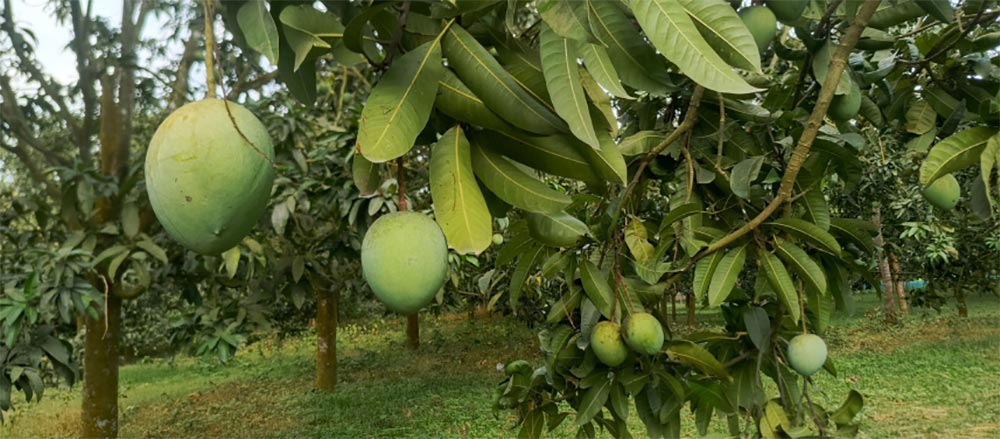 Mango is not only delicious but also highly nutritious. It is an excellent source of vitamins A, C and E, dietary fiber, potassium and antioxidants. Mango consumption helps improve immunity, supports eye health, aids digestion and contributes to overall nutritional well-being. In a country where micronutrient deficiency still affects many people, mango can play an important role in improving dietary diversity and nutrition security. In addition to fresh consumption, mango is increasingly used in processing industries for juice, pulp, pickles, jam, dried mango and other value-added products.
Harvesting and post-harvest management are among the most critical issues in the mango sector. Many farmers harvest fruits prematurely due to market pressure and fear of theft or storm damage. Improper harvesting often reduces fruit quality, taste and shelf life. Mechanical injury during harvesting, transportation and handling further contributes to post-harvest losses. Proper maturity assessment, careful harvesting and grading are therefore essential for maintaining market quality and consumer satisfaction.
The mango supply chain in Bangladesh involves multiple intermediaries including farmers, beparis, aratdars, wholesalers, transporters, retailers and exporters. While this marketing network helps distribute mangoes rapidly across the country, farmers often receive only a limited share of the final consumer price. Weak bargaining power, lack of storage facilities and market information asymmetry frequently place farmers at a disadvantage. Transportation bottlenecks, poor road conditions and inadequate cold chain facilities further increase losses and marketing inefficiencies.
Post-harvest losses of mango in Bangladesh remain significantly high. Lack of modern pack houses, refrigerated transportation, cold storage and scientific packaging systems reduces both quality and market value. Investment in cold chain infrastructure and modern post-harvest technologies such as hot water treatment, vapor heat treatment and improved packaging can greatly reduce losses and extend shelf life. Development of farmer cooperatives and contract farming systems may also help strengthen market access and improve price realization for producers. Quality control and food safety have become major concerns in mango marketing. In the past, public concern regarding the use of harmful chemicals for artificial ripening created negative perceptions among consumers. Although awareness has improved considerably, strict monitoring and enforcement of food safety standards remain essential. Safe pesticide use, residue management, traceability systems and certification under Good Agricultural Practices are necessary to build consumer confidence and support export growth.
The government, private sector and development partners should work together to modernize the mango value chain from production to export. Investment in research, farmer training, infrastructure development, digital marketing systems and agro-processing industries can significantly enhance the economic contribution of the mango sector. Promotion of mango-based small and medium enterprises can also create employment opportunities for rural youth and women.
Mango is far more than a seasonal fruit in Bangladesh. It represents nutrition, culture, employment and economic opportunity. With scientific production practices, efficient supply chain management, improved post-harvest care and strong quality control systems, Bangladesh can transform its mango sector into a highly competitive and export-oriented industry. The country has enormous potential not only to meet growing domestic demand but also to establish itself as a recognized supplier of premium mangoes in international markets.
The writer is an agricultural scientist
Loading...
Loading...
Also read



Editor : Iqbal Sobhan Chowdhury
Published by the Editor on behalf of the Observer Ltd. from Globe Printers, 24/A, New Eskaton Road, Ramna, Dhaka.
Editorial, News and Commercial Offices : Aziz Bhaban (2nd floor), 93, Motijheel C/A, Dhaka-1000.
Phone: PABX- 41053001-06; Advertisement: 41053012; 01793317829, 01550707291, E-mail: [email protected], [email protected] Online: email: [email protected] 41053014; 01550707297 Advertisement: 01550707296
Published by the Editor on behalf of the Observer Ltd. from Globe Printers, 24/A, New Eskaton Road, Ramna, Dhaka.
Editorial, News and Commercial Offices : Aziz Bhaban (2nd floor), 93, Motijheel C/A, Dhaka-1000.
Phone: PABX- 41053001-06; Advertisement: 41053012; 01793317829, 01550707291, E-mail: [email protected], [email protected] Online: email: [email protected] 41053014; 01550707297 Advertisement: 01550707296


