



| HEADLINE |

|
Black pepper farming transforms Bandarban's Ruma, boosting incomes and export hopes


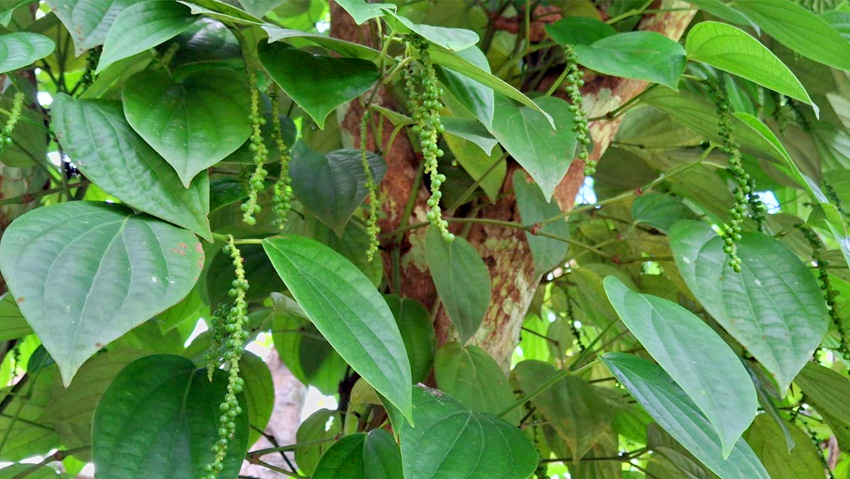
The steep hills of Ruma, a remote upazila in Bangladesh's southeastern Bandarban district, are undergoing a quiet agricultural transformation as farmers shift from largely unused slopes and traditional jhum cultivation to commercial spice farming. At the center of that change is black pepper, a high-value crop that local officials say is creating new income opportunities, reducing poverty and opening up future export prospects.
The transition has been driven by the Agriculture Ministry's project on improved spice varieties and technology extension, along with sustained support from the Department of Agricultural Extension. Farmers in the hill area are receiving improved seedlings, technical guidance, field training and demonstration plots. Officials say the support has helped growers adopt more profitable crops on land that was once either left fallow or used only for low-yield traditional farming.
Black pepper has quickly emerged as one of the most promising crops in the area. The climbing spice plant typically begins yielding within about three years of planting and reaches full production in five years. A mature plant can produce 4 to 5 kilograms of fresh pepper annually, which yields around 1.5 to 2.5 kilograms of dried black pepper after processing. Because the plant can remain productive for 25 to 30 years and can be grown alongside areca nut, mahogany and other trees, farmers say it offers strong long-term returns with relatively low production costs.
One local farmer, Rualton Khum Bom, recently drew attention on social media after sharing his success story. He said he received black pepper demonstration plots from the upazila agriculture office in the 2022-23 and 2023-24 fiscal years and sold 10 kilograms of dried black pepper this year at Tk 950 per kilogram, earning Tk 9,500. While the figure may seem modest, officials say it reflects a growing sense of confidence among hill farmers who are beginning to see clear returns from commercial spice cultivation.
According to the Ruma upazila agriculture office, black pepper was cultivated on nearly 3 hectares of land in fiscal year 2024-25, producing about 1 tonne. In fiscal year 2025-26, cultivation expanded to 3.20 hectares and output rose to around 1.10 tonnes. About 60 farmers have received training on black pepper cultivation this fiscal year, while seedlings for black pepper, ginger and turmeric have also been distributed under the project. Training has covered modern farming methods, disease management and marketing.
For many farmers in Ruma, the shift marks a major change from dependence on jhum farming, where yields were often uncertain and market access limited. Local farmers say black pepper is easier to manage, brings in extra income and helps cover household expenses. They also say government field officers have played an important role by visiting remote plots and offering regular advice.
Dried black pepper is now selling in local markets for Tk 950 to Tk 1,000 per kilogram, making it an increasingly attractive crop in the hill economy. Farmers say irrigation remains a challenge in some areas and have called for solar-powered drip irrigation systems to help raise production further.
Agriculture officials say rising domestic output could eventually reduce Bangladesh's dependence on imported black pepper and save foreign currency. Ruma Upazila Agriculture Officer A K M Faridul Haque said the success of spice cultivation in the hills is more than an agricultural achievement, describing it as a workable model for poverty reduction and sustainable economic development. If government support, training and market linkages continue to expand, he said, Ruma could emerge as one of Bangladesh's key spice-producing regions in the future.
The transition has been driven by the Agriculture Ministry's project on improved spice varieties and technology extension, along with sustained support from the Department of Agricultural Extension. Farmers in the hill area are receiving improved seedlings, technical guidance, field training and demonstration plots. Officials say the support has helped growers adopt more profitable crops on land that was once either left fallow or used only for low-yield traditional farming.
Black pepper has quickly emerged as one of the most promising crops in the area. The climbing spice plant typically begins yielding within about three years of planting and reaches full production in five years. A mature plant can produce 4 to 5 kilograms of fresh pepper annually, which yields around 1.5 to 2.5 kilograms of dried black pepper after processing. Because the plant can remain productive for 25 to 30 years and can be grown alongside areca nut, mahogany and other trees, farmers say it offers strong long-term returns with relatively low production costs.
One local farmer, Rualton Khum Bom, recently drew attention on social media after sharing his success story. He said he received black pepper demonstration plots from the upazila agriculture office in the 2022-23 and 2023-24 fiscal years and sold 10 kilograms of dried black pepper this year at Tk 950 per kilogram, earning Tk 9,500. While the figure may seem modest, officials say it reflects a growing sense of confidence among hill farmers who are beginning to see clear returns from commercial spice cultivation.
According to the Ruma upazila agriculture office, black pepper was cultivated on nearly 3 hectares of land in fiscal year 2024-25, producing about 1 tonne. In fiscal year 2025-26, cultivation expanded to 3.20 hectares and output rose to around 1.10 tonnes. About 60 farmers have received training on black pepper cultivation this fiscal year, while seedlings for black pepper, ginger and turmeric have also been distributed under the project. Training has covered modern farming methods, disease management and marketing.
For many farmers in Ruma, the shift marks a major change from dependence on jhum farming, where yields were often uncertain and market access limited. Local farmers say black pepper is easier to manage, brings in extra income and helps cover household expenses. They also say government field officers have played an important role by visiting remote plots and offering regular advice.
Dried black pepper is now selling in local markets for Tk 950 to Tk 1,000 per kilogram, making it an increasingly attractive crop in the hill economy. Farmers say irrigation remains a challenge in some areas and have called for solar-powered drip irrigation systems to help raise production further.
Agriculture officials say rising domestic output could eventually reduce Bangladesh's dependence on imported black pepper and save foreign currency. Ruma Upazila Agriculture Officer A K M Faridul Haque said the success of spice cultivation in the hills is more than an agricultural achievement, describing it as a workable model for poverty reduction and sustainable economic development. If government support, training and market linkages continue to expand, he said, Ruma could emerge as one of Bangladesh's key spice-producing regions in the future.
Loading...
Loading...
Also read





Editor : Iqbal Sobhan Chowdhury
Published by the Editor on behalf of the Observer Ltd. from Globe Printers, 24/A, New Eskaton Road, Ramna, Dhaka.
Editorial, News and Commercial Offices : Aziz Bhaban (2nd floor), 93, Motijheel C/A, Dhaka-1000.
Phone: PABX- 41053001-06; Advertisement: 41053012; 01793317829, 01550707291, E-mail: [email protected], [email protected] Online: email: [email protected] 41053014; 01550707297 Advertisement: 01550707296
Published by the Editor on behalf of the Observer Ltd. from Globe Printers, 24/A, New Eskaton Road, Ramna, Dhaka.
Editorial, News and Commercial Offices : Aziz Bhaban (2nd floor), 93, Motijheel C/A, Dhaka-1000.
Phone: PABX- 41053001-06; Advertisement: 41053012; 01793317829, 01550707291, E-mail: [email protected], [email protected] Online: email: [email protected] 41053014; 01550707297 Advertisement: 01550707296


